
Sri Guru Tegh Bahadur
History
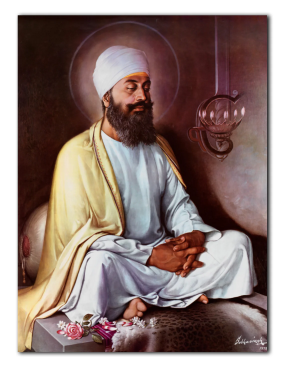
In News
- The Prime Minister addressed the 350th Martyrdom Year (Shaheedi Samagam) of Guru Tegh Bahadur, paying tribute to his sacrifice and highlighting India’s legacy of bravery, harmony, and social unity.
Guru Tegh Bahadur
- He was born in 1621 in Amrits ar to Guru Hargobind, the sixth Sikh Guru.
- At age 13, his bravery in battle earned him the name “Tegh Bahadur” (Brave of the Sword).
- He spent years in meditation at Bakala before being recognized as the ninth Sikh Guru in 1664, after being identified by the trader Makhan Shah.
- His son, Guru Gobind Singh, later honored him as one who gave his head but not his faith, cementing his legacy as “Hind di Chadar” — the protector of India’s conscience and dharma.
Contributions
- He founded Chak Nanki (now Anandpur Sahib) and travelled widely across North and East India, spreading spiritual teachings that emphasized fearlessness (nirbhau), equality, and devotion to one God.
- His message resonated widely during the reign of Mughal emperor Aurangzeb, a period marked by religious tensions and forced conversions.
- When Kashmiri Brahmins sought his protection against persecution, Guru Tegh Bahadur stood up for their religious freedom, challenging Mughal authority.
- Death – He was arrested in Delhi and, after refusing to convert to Islam, was publicly executed in 1675 at Chandni Chowk along with his companions.
- His martyrdom is remembered as a supreme sacrifice for religious liberty.
Cabinet Committee on Security (CCS)
Polity and Governance
Context
- Prime Minister Narendra Modi chaired a meeting of the Cabinet Committee on Security (CCS) to review the evolving situation in West Asia.
Cabinet Committee on Security (CCS)
- It is the apex decision-making body in India responsible for matters related to national security and defence.
- It is chaired by the Prime Minister, it typically includes key ministers such as the Home Minister, Defence Minister, Finance Minister, and External Affairs Minister.
- The National Security Advisor (NSA) acts as a secretary-level coordinator for issues within its purview.
Coconut Promotion Scheme
Schemes
Context
- The 2026-27 Union budget announced a ‘Coconut Promotion Scheme’.
Coconut Promotion Scheme
- Aim: Improving productivity by rejuvenating old, non-productive gardens with high yielding coconut varieties and establishing new plantations along the coast.
- Nodal agency – Coconut Development Board (CDB)
Additional Information – Coconut (Cocos nucifera)
- It is a major perennial horticultural plantation crop of India, predominantly grown in the humid tropics and coastal regions.
- It thrives in well-drained sandy loam soils, high humidity, and temperatures between 27–32°C. It requires plenty of sunlight.
- India is one of the leading producers of coconut globally. Kerala, Tamil Nadu, and Karnataka together contribute about 82–83% of India’s coconut production.


Leave a Reply