
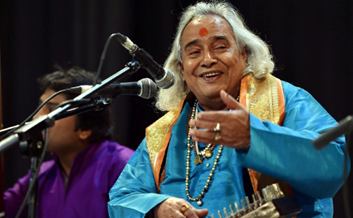
Pandit Chhannulal Mishra
Syllabus: Personality in News
Context
- The Prime Minister has expressed deep sorrow at the passing away of Padma Vibhushan Pandit Chhannulal Mishra ji.
Pandit Chhannulal Mishra (1936–2025)
- Born: He was born on August 3, 1936, in Azamgarh U.P.
- He was a renowned Indian Hindustani classical music singer.
- Known for his mastery in khayal, Kirana gharana, thumri, dadra, and bhajans as well.
- Major Honours: Padma Bhushan (2010), Padma Vibhushan (2020), Sangeet Natak Akademi Fellowship
- Legacy: He is known for rigorous discipline in riyaaz and deep devotion to accuracy.
NATO Pipeline System (NPS)
Syllabus: GS2/IR
In News
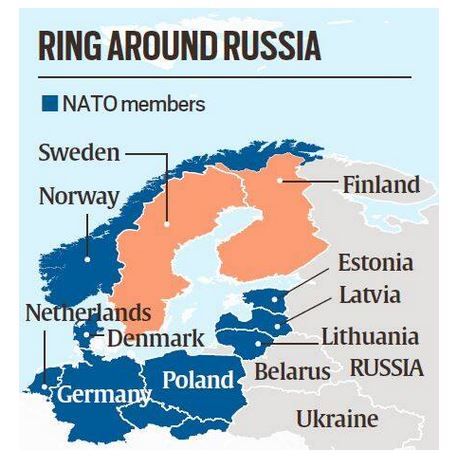
- Recently, Poland announced plans to join NATO Pipeline System (NPS) with a €4.7 billion investment.
NATO Pipeline System (NPS)
- Mandate – It was established during the Cold War. It supplies fuel and lubricants to NATO forces with modern flexibility.
- It spans about 10,000 km across 12 countries, has a storage capacity of 4.1 million cubic meters, and connects depots, air bases, airports, refineries, and transport points.
Additional Information – North Atlantic Treaty Organization (NATO)
- NATO, also called the North Atlantic Alliance, is an intergovernmental military alliance.
- Headquarters: Brussels, Belgium
- Background: It was established by 12 countries from Europe and North America with the signing of the North Atlantic Treaty (also known as Washington Treaty) in 1949 in Washington, D.C to provide collective security against the Soviet Union attack in the aftermath of World War II.
- Collective Defense: According to Article 5, NATO works on the principle of collective defense, where an attack on any NATO member is considered an attack on all NATO members. So far, Article 5 has been invoked once – in response to the 9/11 terrorist attacks in the United States in 2001.
- Members: It comprises 32 member states. Sweden became the 32nd member.
Aspirational Agriculture Districts
Syllabus:GS3/Economy
In News
- The Centre announced 100 Aspirational Agriculture Districts to be developed under the Prime Minister Dhan-Dhaanya Krishi Yojana (PMDDKY) across 29 states and UTs.
- Uttar Pradesh leads with 12 districts, followed by Maharashtra (9), Madhya Pradesh and Rajasthan (8 each) and Bihar (7).
Prime Minister Dhan-Dhaanya Krishi Yojana
- Launched in – The scheme will be launched in partnership with states.
Key Focus Areas:
- Enhancing agricultural productivity.
- Promoting crop diversification and sustainable practices.
- Expanding post-harvest storage at Panchayat and Block levels.
- Improving irrigation facilities.
- Facilitating long-term and short-term credit access.
Building Rural Prosperity and Resilience Program
- Purpose: launched in partnership with states to address under-employment in agriculture.
- Key Focus Areas: Skilling, investment, and technology to invigorate rural economy. Modernizing agriculture with improved productivity and warehousing.
- Target Beneficiaries: Rural women, young farmers, marginal & small farmers and landless families.
Additional Information – Aspirational Districts Programme (ADP)
- Launched in – 2018
- Objective – It aims to rapidly and effectively transform 112 of the country’s most socio-economically underdeveloped districts.
- Implementation – NITI Aayog
H125 Helicopters
Syllabus: GS3/ Defence
Context
- Airbus Helicopters, in partnership with Tata Advanced Systems, is setting up a final assembly line for the Indian made H125 utility helicopter in Vemagal, Karnataka.
H125 Helicopters
- The Airbus H125 is a light, single-engine utility helicopter.
- It is known for its versatility and exceptional performance in high-altitude and high-temperature conditions.
- The H125 was formerly known as the Eurocopter AS350.
- The H125 will cater to civil needs like emergency medical services, tourism, disaster relief, and law enforcement,
- Its military version (H125M) will serve India’s armed forces, especially in high-altitude areas like the Himalayas.
Ladakh Delegates Offered Terms of Article 371
Syllabus: GS2/Polity and Governance
Context
- Ladakh’s two key socio-political amalgams, Leh Apex Body (LAB) and Kargil Democratic Alliance (KDA) decided to resume talks with the Ministry of Home Affairs (MHA) on Statehood and Sixth Schedule.
- The Centre has reportedly proposed special provisions under Article 371 of the Constitution as a potential alternative to Sixth Schedule status.
Background
- In 2019, the former State of Jammu & Kashmir was bifurcated into two Union Territories — Jammu & Kashmir, and Ladakh, the latter without a Legislative Assembly.
- After its special status was removed, several political groups in Ladakh have been demanding that land, employment, and the cultural identity of Ladakh, should be protected under the Sixth Schedule.
- In 2019, the National Commission for Scheduled Tribes recommended the inclusion of Ladakh under the Sixth Schedule.
Sixth Schedule
- The Sixth Schedule under Article 244 provides for the formation of autonomous administrative divisions — Autonomous District Councils (ADCs) — that have some legislative, judicial, and administrative autonomy within a state.
- This Schedule contains provisions regarding the administration of tribal areas in the states of Assam, Meghalaya, Tripura and Mizoram.
- The Schedule also gives ARCs and ADCs the power to collect land revenue, impose taxes, regulate money lending and trading, collect royalties from licenses or leases for the extraction of minerals in their areas, and establish public facilities such as schools, markets, and roads.
Protections offered under Article 371
- Articles 371 and 371-A through J provide “special provisions” for specific states, often to give representation to certain religious and social groups and to allow these groups to exercise autonomy over their affairs without interference from the state and central governments.
- Special provisions under Article 371 would allow protections to be extended to the local population of Ladakh.
100 Years of UPSC : the guardian of meritocracy
Syllabus: GS2/Polity and Governance
Context
- The Union Public Service Commission (UPSC) marks a century of its establishment on October 1.
Union Public Service Commission (UPSC)
- Establishment: The Government of India Act, 1919, first provided for such a body, and in October 1926, the Public Service Commission was set up, following the recommendations of the Lee Commission (1924).
- Later named the Federal Public Service Commission (1937), it was renamed the Union Public Service Commission with the adoption of India’s Constitution on 26th January 1950.
- Functions- The UPSC conducts civil services examinations to select officers for the Indian Administrative Service , Indian Foreign Service and the Indian Police Service , among others.
- Members: Besides the chairman, it can have a maximum of 10 members.
- Appointment – A UPSC chairman is appointed for a term of six years or until attaining 65 years of age, all members have the same term.
- Reappointment: The UPSC Chairman is not eligible for reappointment after completing their term.
- Removal (317): Removal by President:
- Can only be done on the ground of misbehaviour.
- Requires a Supreme Court inquiry and report confirming the misbehaviour.
- Reference to the Supreme Court is made by the President.
- Can remove without Supreme Court inquiry if the person: Is adjudged insolvent, engages in paid employment outside office duties, is unfit due to mental or physical infirmity.
Civil Services Day
- Civil Services Day is observed on 21st April every year
- Reason – to commemorate the day in 1947 when Sardar Vallabhbhai Patel addressed the first batch of civil servants at the Metcalfe House, New Delhi.
- He termed civil servants as the “Steel frame of India,” emphasizing their role in maintaining unity and integrity.

Leave a Reply