
National Strategy For Financial Inclusion 2025–30
Syllabus: GS3/ Economy
Context
- The Reserve Bank of India (RBI) has released the National Strategy for Financial Inclusion (NSFI) 2025–30, outlining a five-year plan (Panch-Jyoti) to deepen and widen financial inclusion in India.
Strategic Pillars of the Panch-Jyoti
- Enhancing Financial Services: Provide equitable, responsible, and affordable financial services for households and micro-enterprises.
- Gender-Sensitive Inclusion: Implement women-centric strategies and support vulnerable and underserved groups.
- Linking Livelihoods and Finance: Integrate skill development and livelihood programmes with formal financial services.
- Financial Education: Use financial literacy to promote responsible financial behaviour and discipline.
- Consumer Protection: Strengthen customer protection and grievance redressal mechanisms for better reliability and accessibility.
Government initiatives for financial inclusion
- Pradhan Mantri Mudra Yojana (PMMY): It was launched in 2015, to support small and micro enterprises with loans up to ₹10 lakh.
- Financial Inclusion Index (FI-Index) – It was launched by the Reserve Bank of India (RBI) to track the process of ensuring access to financial services.
- Pradhan Mantri Suraksha Bima Yojana (PMSBY): Launched in 2015, PMSBY is an accident insurance scheme covering death and disability.
- Pradhan Mantri Jeevan Jyoti Bima Yojana (PMJJBY): Launched in 2015, PMJJBY is a government-backed life insurance scheme.
- Atal Pension Yojana (APY): It was launched in 2015 and provides social security to unorganised sector workers.
- Pradhan Mantri Jan Dhan Yojana (PMJDY): Launched in 2014, PMJDY aimed to bring the unbanked into the formal financial system by expanding access to savings accounts, credit, remittance, insurance, and pensions.
Biological Weapons Convention (BWC)
Syllabus: GS2/Global Grouping in India’s Interest; GS3/Security
Context
- 50 Years of Biological Weapons Convention (BWC)
Bioterrorism
- Definition – It refers to the deliberate release of biological agents — such as bacteria, viruses, or toxins — to cause illness or death among humans, animals, or plants.
- Examples – Bacillus anthracis (anthrax), Variola major (smallpox), and toxins like botulinum.
- The Biological Weapons Convention (BWC) serves as the key international treaty prohibiting the development, production, and possession of biological weapons.
Biological Weapons Convention (BWC)
- It was established and entered into force on March 26, 1975.
- Uniqueness – It is the first multilateral disarmament treaty to ban an entire category of weapons of mass destruction.
- Objective – It prohibits the development, production, acquisition, transfer, stockpiling, and use of biological and toxin weapons.
- Implementation – United Nations Office for Disarmament Affairs (UNODA).
- Membership: 189 countries including India.
The Central Excise (Amendment) Bill, 2025
Syllabus: GS2/ Polity and Governance
Context
- The Central Excise (Amendment) Bill, 2025 was introduced in Lok Sabha on December 1, 2025.
The Central Excise (Amendment) Bill, 2025
- The Bill seeks to amend the Central Excise Act, 1944.
- The Act provides for the levy and collection of central excise duties on goods manufactured or produced in India.
- The Bill increases central excise duty on unmanufactured tobacco, manufactured tobacco, tobacco products, and tobacco substitutes.
- Unmanufactured tobacco (such as sun-cured tobacco leaves) from 64% to 70%.
Sanchar Saathi App
Syllabus: GS2/Government Initiatives
Context
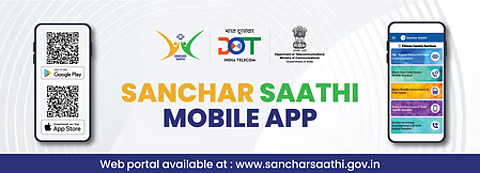
- Department of Telecommunications (DoT) has directed phone makers to pre-install the Sanchar Saathi app on devices sold from March 2026 onwards.
Sanchar Saathi
- Launched by – Department of Telecommunications
- Objective – to help users report and protect against mobile related fraud and theft.
Key Features
- Chakshu: Users report suspected fraud via calls, SMS, or WhatsApp, targeting scams like fake KYC updates.
- IMEI Tracking and Blocking: Tracks and blocks lost/stolen phones nationwide across all telecom networks.
- Verify Mobile Handset Genuineness: Checks if a device is authentic using IMEI or barcode scan.
- Report Masked International Calls: Flags calls from abroad disguised as local (+91 followed by 10 digits).
- Know Your Internet Service Provider: Searches wireline ISPs by PIN code, address, or name.
Pradhan Mantri Virasat Ka Samvardhan (PM VIKAS)
Syllabus: GS2/Welfare Schemes
In News
- PM VIKAS is uplifting minority communities through skill development and promoting entrepreneurship .
Pradhan Mantri Virasat Ka Samvardhan (PM VIKAS)
- Financing – Central Sector Scheme
- Implementation – Ministry of Minority Affairs
- It converges five erstwhile schemes vi ‘Seekho Aur Kamao’, ‘Nai Manzil’, ‘Nai Roshni’ and ‘USTTAD’ & ‘Hamari Dharohar’ .
- Aim – It focuses on upliftment of six notified minority communities through skill development; entrepreneurship and leadership of minority women; and education support for school dropouts.
Do you know?
- Six officially recognized minority groups in India —Muslims, Christians, Sikhs, Buddhists, Jains, and Zoroastrians (Parsis)—on socio-economic fronts.
Heron Mk II UAVs
Syllabus: GS3/ Defence

Context
- India has initiated the procurement of Heron MK-II drones from Israel under emergency provisions invoked after Operation Sindoor.
Heron Mk II UAVs
- Developer: Israel Aerospace Industries (IAI)
- Capability: The Heron Mk II is a medium-altitude, long-endurance (MALE) UAV.
- It can carry close to 500 kg of payload and sustain more than 24 hours of continuous flight.
Leave a Reply