
International Atomic Energy Agency (IAEA)
International
News
- The Director General of the International Atomic Energy Agency (IAEA has said that there has been no evidence of Iran building a nuclear bomb.
International Atomic Energy Agency (IAEA)
- It was established in 1957 as the world’s “Atoms for Peace” organisation within the UN.
- It serves as the UN’s nuclear watchdog, promoting peaceful atomic energy use while verifying safeguards against proliferation.
- Headquartered in Vienna, the body got the 2005 Nobel Peace Prize for non-proliferation efforts.
- The IAEA has 178 member states, India being one of the founding members of it.
Project HANUMAN
Environment
News
- Project HANUMAN is a new initiative by the Andhra Pradesh government to mitigate human-wildlife conflicts through advanced rescue, monitoring, and community protection measures.
Project HANUMAN
- Acronym – Healing and Nurturing Units for Monitoring, Aid and Nursing of Wildlife.
- Objective – It targets forest-fringe areas prone to incidents like elephant raids and snake bites, promoting coexistence via scientific tools and local involvement.
Key Features
- 100 GPS-enabled vehicles, 93 rapid response units and 7 wildlife ambulances for quick rescues and aid.
- Four rescue centers in Visakhapatnam, Rajamahendravaram, Tirupati, and Birlut (or Byrluti).
- ‘Vajra’ volunteer teams at village level for minor incidents like snake rescues.
- AI systems for tracking animal movements and early warnings to settlements.
- HANUMAN app for reporting conflicts and coordination.
- Enhanced compensation like ₹10 lakh for human deaths, ₹2 lakh for injuries, market value for livestock.
Sungudi Saris
Art and Culture
News
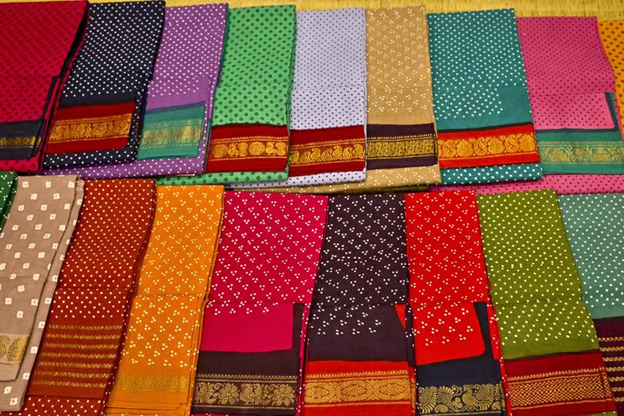
- Sungudi sarees are gaining popularity among consumers looking for distinctive and eco-friendly fashion.
Sungudi saris
- Sungudi saris are traditional cotton saris which are Perfected by the Saurashtrian community, who migrated from Gujarat to Madurai (Tamil Nadu) in the 17th century.
- It features intricate tie-and-dye patterns inspired by the night sky.
- It is hand-knotted, dyed, washed, starched, and sun-dried, often revealing over 15,000 delicate white dots.
- The process takes more than 15 days, producing breathable, culturally rich garments prized across generations.
- The Madurai Sungudi sari received the Geographical Indication (GI) tag in December 2005.


Leave a Reply