
Indo-Tibetan Border Police (ITBP)
Syllabus: GS3/Defence
Context
- The Indo-Tibetan Border Police force is establishing 10 all-woman Border Outposts along the Line of Actual Control (LAC), marking a significant step toward gender inclusion in border security.
Indo-Tibetan Border Police (ITBP)
- Raised: 24 October 1962, after the India-China war.
- Status: A Central Armed Police Force under the Ministry of Home Affairs.
- Motto: “Shaurya-Dridhata-Karma Nishtha”
- Operational Roles: Guarding the 3,488 km-long India-China border from the Karakoram Pass (Ladakh) to Jachep La (Arunachal Pradesh).
- Legal Framework: In 1992, the ITBPF Act was enacted; in 2004, the entire India-China border was assigned to ITBP for border guarding duties.
African Grey Parrot
Syllabus: GS3/Species
In News
- According to state forest departments, there are no officially registered breeders or authorized pet shops for African grey parrots in India, despite their widespread availability in markets.
African Grey Parrot
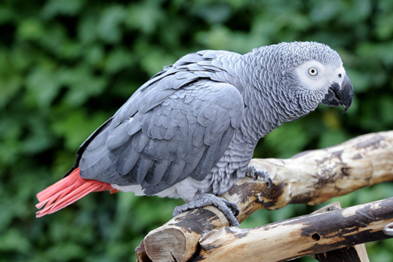
- Scientific name – Psittacus erithacus) is a medium-sized, highly intelligent parrot.
- It is often regarded as the “The Einsteins of the Bird World.”
- It is native to West and Central Africa, inhabiting savannas & coastal mangroves.
- There are two main subspecies: the Congo African Grey (CAG), known for its bright red tail, and the Timneh African Grey (TAG), with a darker maroon tail.
- Uniqueness – African greys are notable for their exceptional talking and comprehension abilities, capable of large vocabularies and contextual speech.
- IUCN Status – Endangered by the IUCN.
Mount Semeru
Syllabus: GS1/ Physical Geography
In News
- Mount Semeru, located in eastern Java (Indonesia), erupted recently.
Why is Indonesia Prone to Volcanic Eruptions?
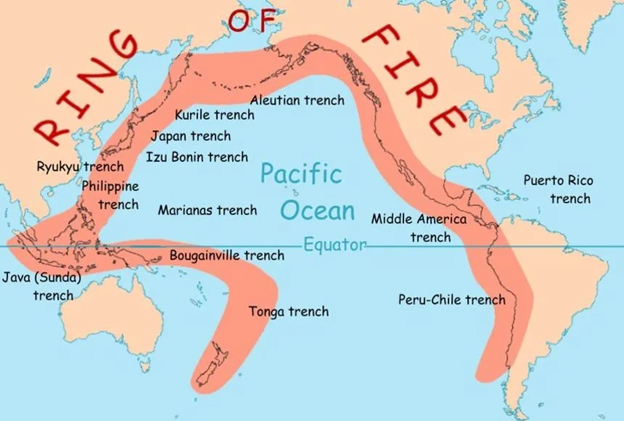
- Indonesia sits on the convergent boundary where the Indo-Australian Plate subducts under the Eurasian Plate
- This process forms a chain of stratovolcanoes across Java, Sumatra, and the Sunda Arc.
- It lies at the heart of the Ring of Fire, which accounts for 75% of the world’s volcanoes and 90% of earthquakes.
Geological Survey of India (GSI)
Syllabus: GS1/ Geography
In News
- The International Seminar titled “Unearthing the Past, Shaping the Future: 175 Years of GSI” was inaugurated by the Union Minister of Coal & Mines as part of the Geological Survey of India’s (GSI) 175th Foundation Year celebrations.
Geological Survey of India
- It is India’s premier national geoscientific organization
- Functions under – Ministry of Mines
- Established in – 1851 by Sir Thomas Oldham.
- The term “Geological Survey of India” was first used in 1848 during coal investigations led by John McClelland.
Key Functions
- Geological Mapping and Surveys: Comprehensive mapping of surface and subsurface geology, including ground, airborne, and marine surveys.
- Mineral Exploration: Scientific exploration and assessment of mineral, energy (including coal, oil), and water resources.
- Geohazard Studies: Conducting seismotectonic research, glaciology, climate-related geostudies, and hazard risk analysis.
- Geotechnical and Geoenvironmental Studies: Supporting infrastructure planning, groundwater studies, land stability analysis, and environmental assessments.
Integrated Child Development Services Programme
Syllabus: GS2/Welfare Scheme
In News
- Integrated Child Development Services programme has expanded widely and improved nutrition, education, and early childhood care through anganwadis.
Integrated Child Development Services programme
- Launched on – 2 October 1975
- It is India’s flagship early childhood care and development programme.
- It provides a package of nutrition, health and pre-school education services to children under 6 years and their mothers through a nationwide network of Anganwadi centres.
- Financing – It is a centrally sponsored scheme
- It is now subsumed under the Saksham Anganwadi and POSHAN 2.0 umbrella to integrate nutrition and early childhood care.
Amoebic Meningoencephalitis
Syllabus: GS2/ Health
In News
- Karnataka has issued guidelines for Sabarimala pilgrims following cases of amoebic meningoencephalitis or brain fever.
Amoebic Meningoencephalitis
- Pathogen – It is a rare brain infection caused by Naegleria fowleri.
- fowleri is a free-living amoeba found in warm freshwater and soil.
- Transmission: Infection typically occurs when contaminated water enters the nose during activities like swimming, nasal cleansing in religious rituals, or sinus irrigation.
- It does not spread through drinking water or person-to-person contact.
- Symptom : It travels to the brain, destroying tissue and causing brain swelling.
- Treatment and Precautions : To reduce risk, limit water entering the nose during water activities.


Leave a Reply