
India, Nepal Ink Pact to Step Up Trade Ties
Syllabus: GS2/IR
Context
- India and Nepal have amended the Treaty of Transit to facilitate the movement of rail-based freight between Jogbani in India and Biratnagar in Nepal.
India – Nepal Relations
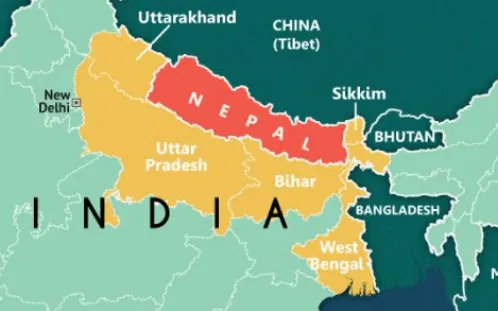
- Shared Border: The country shares a border with five Indian states – Sikkim, West Bengal, Bihar, Uttar Pradesh and Uttarakhand.
- India-Nepal Treaty of Peace and Friendship – Signed in 1950, it forms the special relations that exist between India and Nepal.
- Defence Cooperation: Both countries conduct Joint Military Exercise SURYA KIRAN alternately in India and in Nepal.
- The Gorkha regiments of the Indian Army are raised partly by recruitment from hill districts of Nepal.
- Trade and Economic: India remains Nepal’s largest trade partner and Investment where Indian firms account for 33.5 % of total FDI stock in Nepal.
- Operation Maitri & post-earthquake reconstruction assistance: In the wake of the 2015 earthquake in Nepal, GoI was the first responder and carried out its largest disaster relief operation abroad (Operation Maitri).
- Cultural Ties: The leaders of the two countries have often noted the age-old ‘roti beti’ relationship, which refers to cross-border marriages between people of the two countries.
Areas of Concerns between India & Nepal
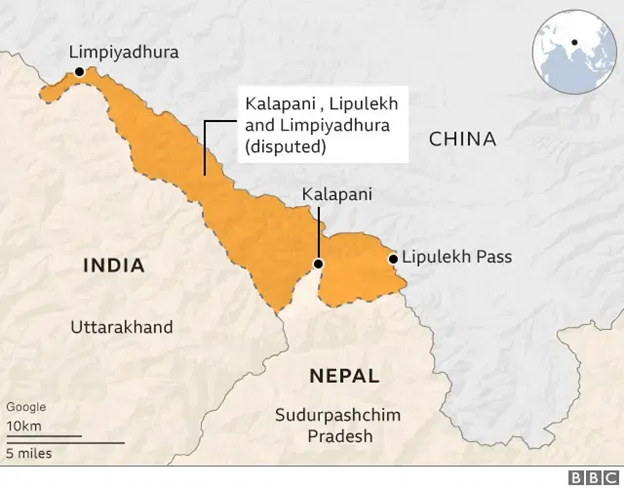
- Kalapani dispute: The area is in India’s control but Nepal claims the region because of historical reasons. The area is the largest territorial dispute between Nepal and India.
Workplace Stress & Diabetes
Syllabus: GS2/Health
Context
- India has an estimated 10.1 crore people living with diabetes according to ICMR–INDIAB, 2023, and workplace stress may be one of the factors heightening this burden.
- World Diabetes Day is observed on November 14.
Diabetes Burden in India
- India is often called the diabetes capital of the world.
- According to the ICMR–INDIAB Study, the diabetic population jumped from about 32 million in 2000, to almost 90 million adults in 2024.
- Recent reports estimate that 1 in 9 Indian adults live with diabetes
Diabetes
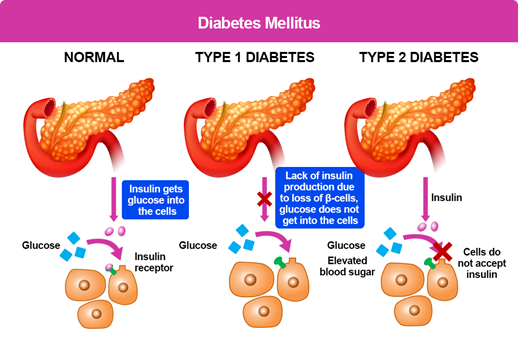
- Diabetes is a chronic metabolic disorder in which the body either does not produce enough insulin or cannot effectively use the insulin it produces.
- This leads to high levels of glucose (sugar) in the blood.
- Insulin: Insulin is a hormone produced by the pancreas.
- It helps glucose (from food) enter cells, where it is used for energy.
Types of Diabetes
- It is an autoimmune disease where the body’s immune system destroys insulin-producing cells. The body produces little or no insulin.
- It usually begins in childhood or adolescenc
- It requires lifelong insulin injections.
Type 2 Diabetes
- This is the most common type of diabetes. The body doesn’t produce enough insulin.
- It is usually linked to obesity, sedentary lifestyle, unhealthy diet and family history.
- It can be managed with diet, exercise, oral medications, and sometimes insulin.
Gestational Diabetes:
- This occurs during pregnancy and usually disappears after delivery, but increases the risk of type 2 diabetes later in life.
Hepatitis A
Syllabus: GS2/Health
Context
- As India debates the inclusion of the typhoid conjugate vaccine in its Universal Immunisation Programme, it raises the question whether Hepatitis A deserves a priority for inclusion.
Hepatitis
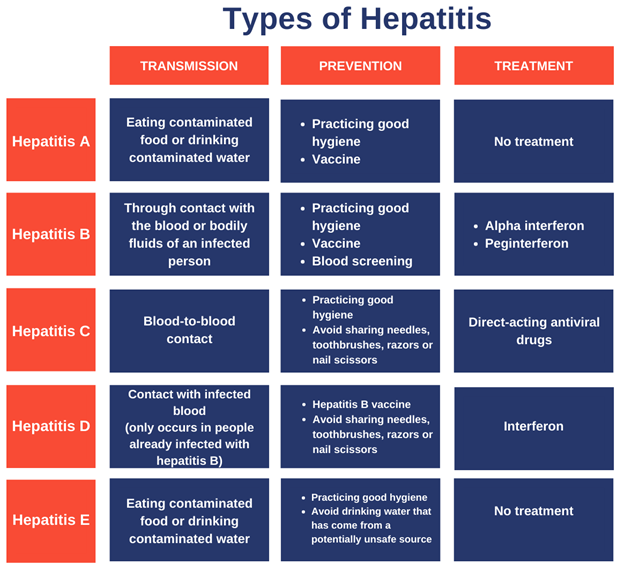
- Hepatitis is an inflammation of the liver. There are five main strains of the hepatitis virus, referred to as types A, B, C, D and E.
- Types B and C lead to chronic disease and together are the most common cause of liver cirrhosis, liver cancer and viral hepatitis-related deaths.
Hepatitis A:
- It is caused by the Hepatitis A Virus (HAV). It does not cause chronic infection and is usually self-limiting.
- It spread through contaminated food and water (fecal–oral route).
- It is entirely preventable where vaccines offer protection rates exceeding 90 to 95%.
Hepatitis B:
- It is known to cause acute infection, liver failure happens in severe cases.
- Spread: Spread through blood and body fluids, sexual contact, mother-to-child transmission.
- Treatment: Hepatitis B can be prevented with a vaccine, providing nearly 100% protection against the virus. The vaccine is usually given soon after birth with boosters a few weeks later.
Hepatitis C:
- The severity from a mild illness to a serious, lifelong illness including liver cirrhosis and cancer.
- Spread: The hepatitis C virus is a bloodborne virus and most infections occur through exposure to blood from unsafe injection practices.
- Treatment: Direct-acting antiviral medicines (DAAs) can cure more than 95% of persons, there is currently no effective vaccine against hepatitis C.
Hepatitis D:
- It only affects people who are already infected with hepatitis B, as it needs the hepatitis B virus to be able to survive in the body.
- It is usually spread through blood-to-blood contact or sexual contact.
- There’s no vaccine specifically for hepatitis D, but the hepatitis B vaccine can prevent it.
Hepatitis E:
- It is generally a mild and short-term infection that does not require any treatment, but it can be serious with a weakened immune system.
- There’s no vaccine for hepatitis E.
Rheumatoid Arthritis
Syllabus: GS2/Health; GS3/Science and Tech
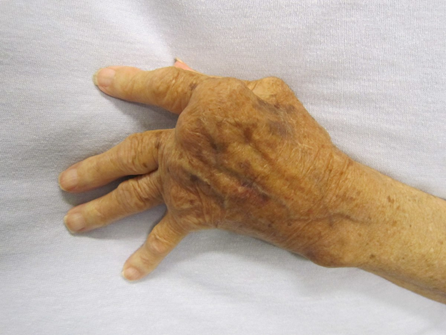
Context
- A new study in which researchers mapped the hidden preclinical evolution of rheumatoid arthritis.
Rheumatoid Arthritis (RA)
- It is a chronic autoimmune disease in which the immune system mistakenly attacks the joints.
- Age & Gender Pattern: It commonly affects individuals between 30–60 years. Women are three times more likely to develop RA than men.
- Causes and Risk Factors: The exact cause remains unclear. Likely contributors include – genetic factors, hormones, and environmental triggers such as smoking or certain infections.
- Systemic Nature: It is a systemic disease, affecting not just joints but also lungs, heart, eyes, skin, nerves, and blood vesse
- Persistent inflammation increases the risk of heart disease and contributes to fatigue, fever, and depression.
- Treatment and Management: It is not curable, but early diagnosis and timely management can; reduce symptoms, slow disease progression, and prevent long-term disability.


Leave a Reply