
India-European Free Trade Association Trade and Economic Partnership
Syllabus GS3/Economy
In News
- India-European Free Trade Association(EFTA) Trade and Economic Partnership Agreement (TEPA) came into effect .
European Free Trade Association Trade and Economic Partnership
- It is the intergovernmental organisation of Iceland, Liechtenstein, Norway and Switzerland.
- It was set up in 1960 by its then seven Member States for the promotion of free trade and economic integration between its members.
The India-EFTA Trade and Economic Partnership Agreement (TEPA)
- It is a modern and ambitious agreement signed by India with a commitment linked to investment and job creation.
The agreement was signed in March 2024 at New Delhi.
Climate Change Spurs Growth in Amazon Rainforest Trees
Syllabus: GS1/ Geography, GS3/ Environment
Context
- A recent study published in Nature Plants reveals that trees in the Amazon rainforest are steadily increasing in size due to rising levels of atmospheric carbon dioxide (CO₂).
Amazon Rain Forests
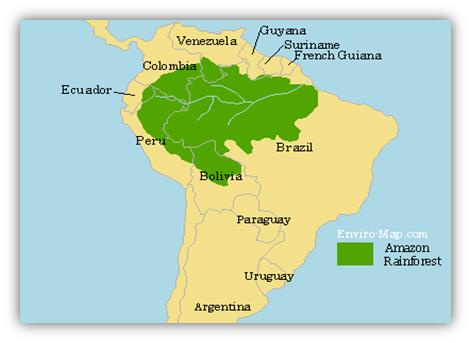
- Location: The region belongs to nine nations of the South American continent.
- Surrounded by – It is bounded by the Guiana Highlands to the north, the Andes Mountains to the west, the Brazilian central plateau to the south, and the Atlantic Ocean to the east.
- Area Covered: The majority of the forest, 60%, is in Brazil, followed by Peru with 13%, Colombia with 10%, and with minor amounts in Bolivia,Ecuador,French Guiana, Guyana, Suriname and Venezuela.
- Climate: Hot and humid climate with temperatures of 26-30°C throughout the year.There are no periodic seasons.The precipitation ranges from 2,000 mm to 10,920 mm annually.
- Tribes: Yanomamo,Kayapo,Akuntsu,Matses,Tupi etc.
- Fauna: Anaconda,Jesus lizard,howler monkey, golden lion tamarin, jaguar,sloth, spider monkey,Amazon River dolphin,toucan and the scarlet macaw,poison dart frog and the glass frog.
- Flora: Moist broadleaf tropical rainforest like myrtle,laurel,palm, acacia,rosewood,Brazil nut,rubber tree, mahogany and Amazonian cedar.
Significance of the Rainforests
- Lungs of the planet: Rainforests generate about 20% of the world’s oxygen and its trees play a key role in reducing pollutant levels.
- Fight climate change: They act as a crucial buffer in the global fight against climate change as it holds tremendous capacity to store carbon.
- Medicinal Properties: Many of these plants contain bioactive compounds capable of treatmenting diseases that are not yet curable, especially cancer.
Threat to the forests
- Climate Change: Due to climate change the forests are witnessing various challenges like changes in rainfall patterns,pollution etc.
- Deforestation: The size of the Amazon forest shrank dramatically as a result of settlers’ clearance of the land to obtain lumber and to create grazing pastures and farmland.
- Wildfires: It causes threat to the survival of ecosystems and biodiversity. The 2019 forest fires in the region have led to widespread devastation in the region.
Additional Information – Amazon River
- It is the largest river by volume of water and second longest river after the Nile river of Africa in the world.
- Source:River has its source in the Peruvian Andes, at an elevation of 5,598 m.
- Length:6400 km.
- Basin:The basin includes the greater part of Brazil and Peru,some parts of Colombia, Ecuador and Bolivia and a small area of Venezuela.
- Tributaries:Japurá , Juruá, Madeira, Negro, Purus, and Xingu rivers.
Mouth:Atlantic Ocean on the northeastern coast of Brazil.
Historic India–Bhutan Railway Projects Set to Transform Connectivity
Syllabus: GS2/ International Relations
Context
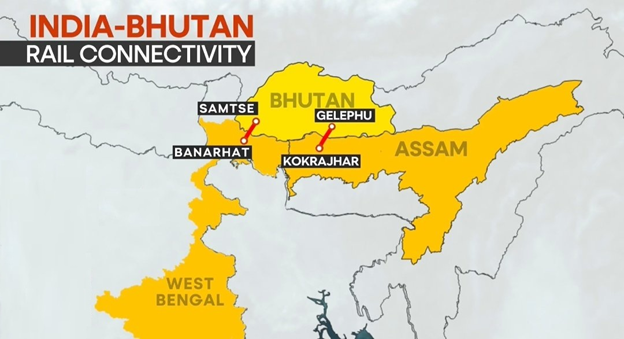
- The Union Government announced two cross-border railway projects which will connect Bhutan with the bordering areas of Assam and West Bengal.
Basics – Gelephu and Samtse
- Gelephu and Samtse are the major export-import hubs in Bhutan and serve the 700-km long India-Bhutan border.
- Gelephu is being developed as “Mindfulness City” and Samtse is being developed as an industrial town by the Government of Bhutan.
Rail Projects
- Kokrajhar–Gelephu Line: It will connect Sarpang district in Bhutan with Kokrajhar and Chirang districts in Assam.
- It will span 69 km and is estimated to cost Rs 3,456 crore.
- Banarhat–Samtse Line: It will connect Samtse district in Bhutan with Jalpaiguri district in West Bengal.
The line will cover 20 km and is estimated to cost Rs 577 crore.
Interstellar Mapping and Acceleration Probe (IMAP)
Syllabus :GS3/Science and Technology
In News
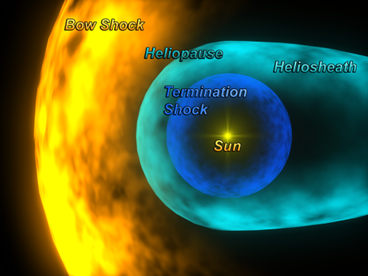
- NASA launched the Interstellar Mapping and Acceleration Probe (IMAP) to map the heliosphere’s boundary, track energetic particles, and enhance space weather forecasting.
Interstellar Mapping and Acceleration Probe (IMAP)
- It is a space mission designed to explore the heliosphere—the Sun’s protective bubble around the solar system—and its interaction with interstellar space.
- It is positioned at the Earth-Sun Lagrange Point 1 (L1).
- It uses 10 instruments to study solar wind, energetic particles, magnetic fields, and cosmic remnants.
Features and Objectives
- It aims to uncover how solar particles are energized and how the heliosphere shields Earth from galactic radiation.
It also provides real-time space weather data to protect astronauts and technology, while advancing our understanding of cosmic materials and the habitability of planetary systems.
India’s first Dugong Conservation Reserve in Palk Bay
Syllabus :GS3/Species
In News
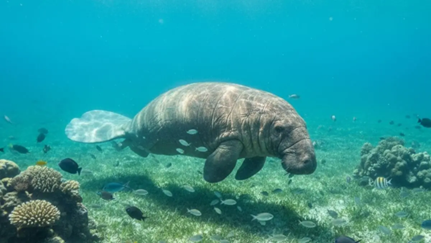
- The International Union for Conservation of Nature (IUCN) has officially recognized India’s first Dugong Conservation Reserve in Palk Bay, Tamil Nadu, at the 2025 IUCN World Conservation Congress.
India’s first Dugong Conservation Reserve
- It was established in September 2022, by the Tamil Nadu government under the Wildlife Protection Act, 1972.
- It covers34 sq. km. in northern Palk Bay and is home to over 12,250 hectares of seagrass meadows, vital feeding grounds for dugongs (Dugong dugon)
Dugongs(Dugong dugon)
- Dugongs are primarily herbivorous, grazing on 30 kg-40 kg of seagrass a day.
- They are known as “sea cows,” and peacefully graze on seagrass in shallow coastal waters of the Indian and western Pacific Oceans.
- They are often referred to as the “farmers or gardeners of the sea” for their important role in preserving the coastal ecosystems and aiding fish production.
- Geographic Range: These gentle giants are found in warm waters along coastlines, mainly confined to seagrass beds which occur in calm sheltered habitats such as bays and lagoons.
- Distribution – They are found in the Gulf of Mannar, the Palk Bay, the Gulf of Kutch and the Andaman and Nicobar Islands in India.
- Threats – Their population was on the decline over the past several decades owing to a variety of factors, including hunting for meat, commercial fishing practices leading to accidental drowning, and habitat degradation.
Protection status :
- International Union for Conservation of Nature (IUCN) Red List – Vulnerable
Wild Life (Protection) Act, 1972 – Schedule I
Payments Regulatory Board (PRB)
Syllabus :GS3/Economy
In News
- The Reserve Bank of India (RBI) has constituted a six-member Payments Regulatory Board (PRB) to oversee the country’s payment systems.
Payments Regulatory Board (PRB)
- It replaces the Board for Regulation and Supervision of Payment and Settlement Systems (BPSS), a committee of the RBI’s Central Board.
- Legal status – The new board derives its authority from the Payment and Settlement Systems Act, 2007.
- It will be supported by the RBI’s Department of Payment and Settlement Systems (DPSS), which will report directly to it.
Composition( total members)
- Chaired by – RBI Governor
- Two other RBI officials – the Deputy Governor and Executive Director for Payment Systems
- Three Central Government nominees.
- Note – Decisions will be made by majority vote, with the chairperson (or deputy governor in absence) holding a casting vote in case of a tie.
- The Board must meet at least twice annually.
Functions
The Board is responsible for the regulation and supervision of all payment systems including electronic and non-electronic, domestic and cross-border systems.

Leave a Reply