
Coal India Limited (CIL)
Syllabus: GS3/ Energy and Infrastructure
Context
- Coal India Limited (CIL), is marking the completion of 50 years of its establishment.
Coal India Limited
- It is a Maharatna Public Sector Undertaking under the Ministry of Coal.
- It was established in November 1975.
- Headquarters: Kolkata.
- Products: CIL produces coking coal, semi-coking coal, non-coking coal, washed and beneficiated coal, coal fines, and coke.
- Strategic Relevance: It contributes to 80% of total domestic coal production and 75% of total coal based generation.
Additional Information – Public Sector Undertakings (PSUs)
- Meaning: These are government-owned companies or corporations in which the central or state government holds a majority stake (51% or more).
- GDP Contribution: Contributed around 13–14% to India’s GDP ( Ministry of Finance).
- Role in Job Creation: Directly employ about 9–10 lakh individuals, with a much larger indirect employment impact across core and infrastructure sectors.
- Total CPSEs: India has over 250 Central Public Sector Enterprises, categorized into Maharatna, Navratna, and Miniratna.
- Core Sector Dominance: PSUs retain a major role in energy, mining, defense, and transport, but private sector presence is rising.
North Eastern Science & Technology (NEST) Cluster
Syllabus: GS3/Infrastructure
Context
- The Union Minister for Communications and Development of North Eastern Region inaugurated the North Eastern Science & Technology (NEST) Cluster at IIT Guwahati.
North Eastern Science & Technology (NEST) Cluster
- Mandate – It will serve as the centre of the Northeast’s innovation ecosystem, transforming local wisdom into global solutions.
It will focus on four verticals:
- Grassroots Innovation
- Semiconductors & Artificial Intelligence
- Bamboo-Based Technologies
- Biodegradable Plastics.
International Day for Biosphere Reserves
Syllabus: GS3/Environment Conservation
Context
- The International Day for Biosphere Reserves was observed on 3rd November.
International Day for Biosphere Reserves
Biosphere reserves
- Definition – They are the protected areas identified by national governments for conserving biodiversity and promoting sustainable development.
- It includes terrestrial, marine and coastal ecosystems.
- They are nominated by national governments and remain under the sovereign jurisdiction of the states where they are located.
- Biosphere reserves in India – India has 18 Biosphere Reserves covering 91,425 sq. km, with 13 recognized by UNESCO.
- Note – In 2025, India’s Cold Desert Biosphere Reserve in Himachal Pradesh was included in UNESCO’s World Network of Biosphere Reserves.
Additional Information – World Network of Biosphere Reserves (WNBR)
- Established in – It was established by UNESCO in 1971.
- It covers internationally designated protected areas, known as biosphere reserves.
- They are created under the Man and the Biosphere Programme (MAB).
- Recognised by – These are internationally recognized within the UNESCO’S Man and the Biosphere Programme (MAB Programme).
|
Connect with the basics Man and the Biosphere (MAB) program ● Launched in – It is an intergovernmental scientific program launched in 1971 by UNESCO to establish a scientific basis for enhancing the relationship between people and their environments. ● World Network of Biosphere Reserves(WNBR) – Under the program, UNESCO has established the World Network of Biosphere Reserves(WNBR). ● 12 biosphere reserves of India – There are 12 biosphere reserves of India which have been recognized internationally under the Man and Biosphere(MAB) Reserve program. 1) Nilgiri 2) Gulf of Mannar 3) Sunderban 4) Nanda Devi 5) Nokrek 6) Pachmarhi 7) Similipal 8) Achanakmar – Amarkantak 9) Great Nicobar 10) Agasthyamala 11) Khangchendzonga (2018) 12) Panna(2020) 13)Cold Desert, Himachal Pradesh(2025) – newly added |
|
Biosphere Conservation ● A scheme called Biosphere Reserve has been implemented by the Government of India since 1986. ● The State Government prepares the Management Action Plan which is approved and monitored by the Central MAB Committee. Biosphere Reserves in India ● There are 18 biosphere reserves in India
|
Torkham Border
Syllabus:International relations
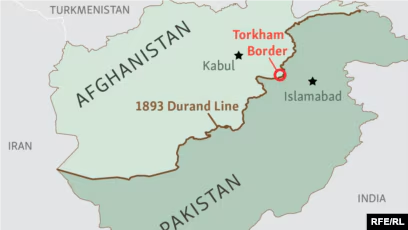
Context
- The Torkham border crossing between Afghanistan and Pakistan has reopened after nearly weeks of closure following deadly border clashes.
Torkham Border
- Location – The Torkham border is a major crossing point between Afghanistan and Pakistan, located along the Grand Trunk Road on the international border.
- Connectivity – It connects Nangarhar province of Afghanistan with Khyber Pakhtunkhwa province of Pakistan.
- It is the busiest port of entry between the two nations, serving as a key hub for transport, trade, and logistics.


Leave a Reply