
Biomedical Research Career Programme
Syllabus: GS3/ S&T
In News
- The Union Cabinet has approved Phase-III (2025-26 to 2030-31) of the Biomedical Research Career Programme (BRCP) to significantly boost India’s biomedical research ecosystem and global impact.
Biomedical Research Career Programme
- Objective – The programme aims to strengthen research systems, reduce regional disparities in scientific capabilities, and establish world-class biomedical research capacity.
- BRCP is implemented through a partnership between the Department of Biotechnology (DBT), Government of India; the Wellcome Trust (WT), United Kingdom; and the India Alliance—a Special Purpose Vehicle (SPV) created for this initiative.
US Tomahawk Missiles
Syllabus: GS3/ Defence
Context
- Ukraine has requested long-range Tomahawk cruise missiles from the United States.
Tomahawk missiles
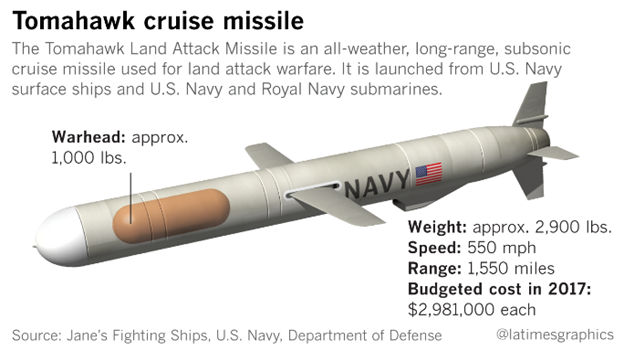
- Tomahawks are long-range subsonic cruise missiles that can be launched from ships, submarines or ground launchers.
- They have long-range, deep-strike capabilities, and can hit targets 1,250km-2,500km away.
- They carry high-explosive warheads designed to penetrate hardened targets like military bunkers.
- They avoid radar detection by flying at high subsonic speeds while maintaining low altitudes.
India Emerges as the Fastest-Growing Dairy Producer Worldwide
Syllabus: GS3/ Agriculture
Context
- India’s dairy sector has expanded by 70% in the past 11 years, with milk production rising from 146 million tonnes in 2014-15 to 239 million tonnes in 2023-24.
Dairy Sector of India
- Global Leadership: India is the world’s largest milk producer, contributing 76% of global milk output.
- Economic Contribution: Dairy is India’s single largest agricultural commodity, contributing 5% to GDP and employing over 8 crore farmers.
- Per Capita Availability: Rose to 471 g/day in 2023–24, substantially above the world average of 322 g/day.
- Top Producing states: Uttar Pradesh, Rajasthan, and Madhya Pradesh.
Key Enablers of India’s Dairy Success
- National Dairy Development Board (NDDB) – It was established in 1965 at Anand to replicate the Amul cooperative model across India.
- Operation Flood(1970) – It transformed India into the world’s largest milk producer by creating a nationwide cooperative structure for procurement and distribution.
India-Russia Celebrate 25 Years of Strategic Partnership
Syllabus: GS2/IR
In News
- Russia and India have significantly advanced their 25-year strategic partnership amid a changing global landscape.
Background
- In 2000, Russian President Vladimir Putin and Indian Prime Minister Atal Bihari Vajpayee signed the declaration on strategic partnership, which opened a new chapter in bilateral relations.
- In December 2010, the Strategic Partnership was upgraded to a “Special and Privileged Strategic Partnership.”
- Multiple institutional dialogues, including the Intergovernmental Commission and 2+2 Dialogue, ensure strong cooperation across politics, defense, trade, science, and culture.
Leadership-level engagements
- The India-Russia Annual Summit is the highest dialogue mechanism, with 22 meetings held alternately in both countries.
- The Indian PM received Russia’s highest honor, the Order of Saint Andrew.
Multilateral engagement
- India and Russia closely cooperate in multilateral forums like the UN, G20, BRICS, and SCO.
- Russia supports India’s bid for a permanent UN Security Council seat.
Trade & Economic relations
- India and Russia aim to boost bilateral trade to $100 billion by 2030 and investment to $50 billion by 2025.
- In FY 2023-24, trade hit a record $65.7 billion, with India exporting pharmaceuticals and machinery, and importing oil, fertilizers, and minerals from Russia.
Defence & Security Cooperation
- Joint military exercises – INDRA, Vostok & ZAPAD.
- Defence projects include – S-400 systems, T-90 tanks, Su-30 MKI jets, MiG-29 and Kamov helicopters, INS Vikramaditya, AK-203 rifles, and BrahMos missiles..
- Science & Technology Cooperation – nanotech, quantum computing, and nuclear energy (Kudankulam plant).
Leave a Reply