Author: instakas

  • Pravasi Bharatiya Divas – 18th edition | PANKHUDI Portal | Graham-Blumenthal Sanctions Bill | Spina Bifida | U.S. Withdraw From International Solar Alliance | Satellite Tagging of Sea Turtles Aims to Aid Conservation

    Pravasi Bharatiya Divas – 18th edition

    International

    Context

    • The Pravasi Bharatiya Divas (PBD) is celebrated once in two years on 9th January.

    Pravasi Bharatiya Divas (PBD)

    • Objective – It is a significant event that honors the contributions of the Indian diaspora to their homeland.
    • Historic background – It symbolises Mahatma Gandhi’s return from South Africa in 1915.
    • Organised by – Ministry of External Affairs. Since 2015, it has evolved into a biennale event.

    Indian Diaspora

    • The diaspora encompasses a group of people who can either trace their origins to India or who are Indian citizens living abroad, either temporarily or permanently.
    • As per the Indian Ministry of External Affairs [2024], the global Indian diaspora numbers approximately 35.42 million, consisting of 85 million non-resident Indians (NRIs) and 19.57 million people of Indian origin (PIOs).
    • Top 5 countries where the Indian diaspora resides: United States of America (USA): 5.4Mn, United Arab Emirates (UAE): 3.6Mn, Malaysia: 2.9Mn, Canada: 2.8Mn and Saudi Arabia: 2.4Mn.
    • India is the origin of the largest number of international migrants in the world, touching nearly 18 million, according to the UN World Migration Report 2024.

    Importance of the Diaspora

    • Remittances: In 2024, India received an estimated $129.1 billion worth of remittances, the highest ever for a country in any year.
    • India’s share in global remittances was 14.3% in 2025, the highest such share since the turn of the millennium for any country.
    • These contribute significantly to foreign exchange reserves and rural household incomes.
    • Investment & Trade: NRIs and PIOs invest in Indian real estate, startups, and infrastructure, and act as trade facilitators between India and their countries of residence.
    • Tech & Innovation: Indian-origin professionals in Silicon Valley, academia, and global corporations contribute to knowledge transfer, mentorship, and innovation linkages.
    • Cultural Ambassadors: The diaspora promotes Indian languages, yoga, cuisine, Cinema, and festivals globally.
    • Policy Advocacy: Diaspora communities often influence foreign policy decisions in host countries in favor of India.
    • Citizen Diplomacy: Diaspora involvement helps India manage relations during bilateral tensions or negative media coverage.
    • Global Recognition: Their achievements enhance India’s image as a land of talent and opportunity.

    PANKHUDI Portal

    Health and Society
    In News

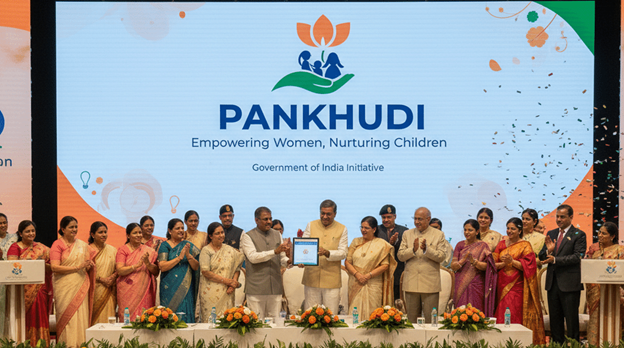
    • The Ministry of Women and Child Development launched PANKHUDI Portal.

    PANKHUDI Portal

    • It is an integrated Corporate Social Responsibility (CSR) and partnership facilitation digital portal.
    • Objective – It is aimed at strengthening coordination, transparency, and structured stakeholder participation in initiatives for women and child development.

    Features

    • It is developed as a single-window digital platform that brings together individuals, Non-Resident Indians (NRIs), Non-Governmental Organisations (NGOs), Corporate Social Responsibility (CSR) contributors, corporate entities, and government agencies working in the domain of women and child development.
    • It supports and strengthens the implementation of the Ministry’s flagship missions—Mission Saksham Anganwadi & Poshan 2.0, Mission Vatsalya, and Mission Shakti—through a structured and transparent digital mechanism.

    AdditionalInformation – Mission Saksham Anganwadi & Poshan 2.0

    • This is an integrated nutrition support program focused on combating malnutrition and improving early childhood development.
    • Target Beneficiaries: Children (0–6 years), adolescent girls (14–18 years), and pregnant/lactating women.

    Mission Vatsalya

    • This mission focuses on child protection and the welfare of children in difficult circumstances, aiming to ensure “No Child is Left Behind”.
    • Objectives: To secure a healthy, happy childhood for every child through better implementation of the Juvenile Justice Act (2015) and POCSO Act (2012).

    Mission Shakti

    • This umbrella scheme is dedicated to the safety, security, and economic empowerment of women. It is divided into two sub-schemes:

    Sambal (Safety and Security):

    • One Stop Centres (OSC): Integrated support for victims of violence.
    • Women Helpline (181): 24/7 emergency assistance.
    • Beti Bachao Beti Padhao (BBBP): Prevention of gender-biased sex selection and promotion of girls’ education.
    • Nari Adalats: Community-level alternative dispute resolution forums.

    Samarthya (Empowerment):

    • Shakti Sadan: Rehabilitation homes (merging former Swadhar Greh and Ujjawala schemes).
    • Pradhan Mantri Matru Vandana Yojana (PMMVY): Maternity benefit scheme.
    • Hub for Empowerment of Women (HEW): Facilitating access to government services.

    Graham-Blumenthal Sanctions Bill

    International

    Context

    • S. President Donald Trump has given his nod to the Graham-Blumenthal sanctions bill that will authorise the US President to levy up to 500% tariffs on nations that knowingly purchase Russian oil or uranium.

    Graham-Blumenthal Sanctions Bill

    • Objective – This Bill would give the US tremendous leverage against countries like China, India, and Brazil to incentivise them to stop buying the cheap Russian oil.
    • In 2018, under similar pressure from the previous Trump administration, India had “zeroed out” its oil imports from Iran and Venezuela as well.
    • Tariffs on India: The United States has imposed high tariffs on Indian goods, up to 50%.
    • Part of this tariff is connected to India’s continued purchase of Russian oil.
    • India’s Stand: India says the decision to buy oil from Russia is based on national interest. It wants to ensure energy security and keep fuel prices affordable for its people.

    Spina Bifida

    Health and Society
    Context

    • Many countries launched national awareness campaigns and programs to prevent spina bifida through folic acid supplementation.

    Spina Bifida

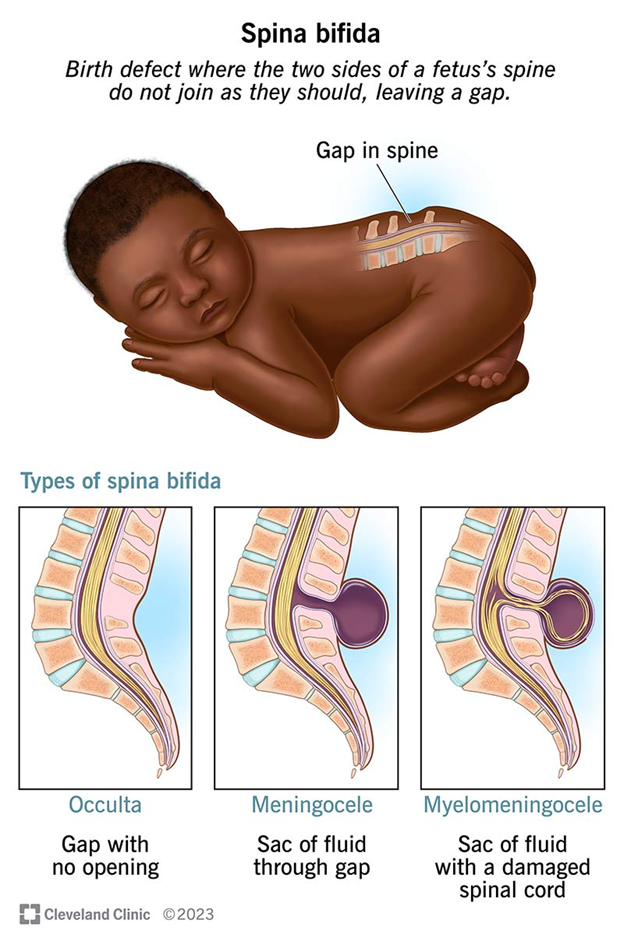
    • It is a congenital defect of the spinal cord caused by improper closure of the neural tube during early pregnancy.
    • The condition results in varying degrees of paralysis, ranging from mild weakness of the feet to complete paralysis of the lower limbs.
    • Many affected children also suffer from hydrocephalus, urinary and bowel incontinence, and orthopaedic deformities such as clubfoot.
    • Role of Folic Acid in Prevention: Periconceptional folic acid intake prevents over 70% of Spina Bifida cases.
    • Folic acid is a B-complex vitamin that supports neural tube development in the embryo.

    U.S. Withdraw From International Solar Alliance

    International

    Context

    • The United States has announced its withdrawal from the International Solar Alliance (ISA).

    International Solar Alliance

    • Started – The ISA, is an Indian initiative that was launched by the Prime Minister of India and the President of France on 30th November 2015 in Paris.
    • Solar powered countries – It is an initiative with 124 solar resource rich countries lying fully or partially between the tropic of Cancer and the tropic of Capricorn.
    • Objective – To collectively address key common challenges to the scaling up of solar energy in ISA member countries.
    • Headquarter – National Institute of Solar Energy (NISE) campus, Gurugram.
    • Members: Member Countries are countries which have signed and ratified the Framework Agreement of the ISA.
    • At present,  120 countries are signatories to the ISA Framework Agreement.

    Satellite Tagging of Sea Turtles Aims to Aid Conservation

    Geography & Environment

    Context

    • In a first-of-its-kind initiative, Olive Ridley sea turtles nesting on Chennai’s coast have been satellite-tagged and released as part of a two-year telemetry study (2025–27) to strengthen conservation efforts.
    • It will track turtle movements, nesting behaviour, migratory routes, and interactions with fishing activities across key sites.

    Olive ridley turtles (Lepidochelys olivacea)

    • They are the smallest and most abundant of all sea turtles in the world.
    • Distribution – They get their name from the olive green colour of their heart-shaped shell, and inhabit warm waters of the Pacific, Atlantic, and Indian oceans.
    • These are carnivores and feed mainly on jellyfish, shrimp etc.
    • These turtles are best known for their unique mass nesting called Arribada, where thousands of females come together on the same beach to lay eggs.
    • Major nesting sites in India are Rushikulya rookery coast (Odisha), Gahirmatha beach (Bhitarkanika National park) and the mouth of the Debi River.
    • Odisha is the largest mass nesting site for Olive Ridleys in the world.

    Conservation status 

    • Protection status: IUCN Red List: Vulnerable
    • CITES: Appendix I
  • Commonwealth Games | Sri Lankan PM’s State Visit to India | Mass Surrender of Maoists | SC Forms Panel on Transgender Persons | Henley Passport Index | SC Allows Sale of Green Fireworks in Delhi | WTI Founder Menon Becomes First Asian to Chair Key IUCN Panel

    Commonwealth Games

    Syllabus: Miscellaneous

    Context

    • Gujarat’s largest city Ahmedabad has been recommended as the “proposed host” by the executive board of Commonwealth Sport.
    • India last hosted the CWG in Delhi in 2010.

    Commonwealth Games

    • Started in 1930 (inaugural event in Hamilton, Canada) as the British Empire Games.
    • It is a multi-sport international event, modeled on the Olympics, involving athletes from the Commonwealth of Nations and their associated territories.
    • The Commonwealth of Nations, or simply the Commonwealth, is a voluntary association of 54 sovereign countries, most of which were former colonies of the British Empire.
    • Commonwealth Games is the world’s second-largest multi-sport event from 71 nations and territories.

    Sri Lankan PM’s State Visit to India

    Syllabus: GS2/IR

    Context

    • The Sri Lankan Prime Minister is on a state visit to India.

    India and Sri Lanka Relations

    • Diplomatic Ties: Diplomatic relations established in 1948 after Sri Lanka’s independence.
    • Trade Relations: India-Sri Lanka Free Trade Agreement (ISFTA) in 2000 contributed significantly towards the expansion of trade between the two countries.
    • Maritime Security and Defence Cooperation: In 2011, a decision was taken to establish the Colombo Security Conclave which aims to further promote maritime security in the Indian Ocean Regi
    • India and Sri Lanka conduct a joint Military exercise named ‘Mitra Shakti’, Trilateral Maritime Exercise “Dosti”, and a Naval exercise named SLINEX.
    • Multilateral Forum Collaboration: India and Sri Lanka are member nations of several regional and multilateral organizations such as the South Asian Association for Regional Cooperation (SAARC) and BIMSTEC.

    Mass Surrender of Maoists

    Syllabus: GS3/Internal Security

    Context

    • 210 Maoists surrendered in Dandakaranya region of Chhattisgarh, following a similar event in Maharashtra, as a part of a broader strategy by the Union and state governments to abandon violence and embrace rehabilitation.

    Maoism, or Left-Wing Extremism (LWE)

    • It was rooted in radical communist ideology, advocating armed struggle to overthrow the state and establish a classless society.
    • Left-Wing Extremism in India traces its roots to the Naxalbari uprising of 1967 in West Bengal, inspired by Mao Zedong’s revolutionary tactics.
    • The movement gained momentum through the formation of groups like the Communist Party of India (Marxist–Leninist) and later the CPI (Maoist), which rejected electoral politics and embraced violent revolution.

    Reasons for Maoism, or Left-Wing Extremism (LWE) in India

    • Left-Wing Extremism: LWE has historically thrived in regions marked by poverty, illiteracy, and lack of basic service

    Many tribal communities have faced:

    1. Land alienation due to mining and industrial projects;
    2. Displacement without adequate rehabilitation;
    3. Limited access to education, healthcare, and employment;
    4. Governance Deficit: Remote districts often suffer from weak administrative presence and poor delivery of public services.

    This vacuum allowed Maoist groups to:

    1. Establish parallel governance structures;
    2. Exploit local grievances;
    3. Gain legitimacy among disenfranchised populations;
    4. Tribal Discontent: Tribal populations, especially in forested regions have long felt excluded from mainstream development.

    Decline in Influence

    • Red Corridor – Once widespread across the ‘Red Corridor’, Maoist influence has significantly declined due to sustained government action.

    Government Strategy To Tackle LWE

    • The National Policy and Action Plan (2015) to address LWE outlines a holistic approach:
    1. Enhancing security infrastructure and personnel;
    2. Promoting road connectivity and telecom access;
    3. Ensuring rights and entitlements of tribal communities;
    • MHA has reaffirmed the government’s resolve to eliminate LWE by March 31, 2026, urging Maoists to abandon violence and join the mainstream.

    Security Measures:

    • Deployment of Central Armed Police Forces (CAPFs) and specialized anti-Naxal units.

    Development Initiatives:

    1. Road connectivity projects in remote tribal areas to improve access and mobility.
    2. Expansion of telecom networks, electricity, and banking services.
    3. Focus on education, healthcare, and livelihood programs to address socio-economic grievances.
    • Transformation of ‘Red Zones’ into Growth Corridors through targeted investment.
    • Seminars like ‘Bharat Manthan 2025 – Naxal Mukt Bharat’ aim to build consensus and share best practices across states.

    SC Forms Panel on Transgender Persons

    Syllabus: GS1/Social Issues

    In News

    • The Supreme Court set up a committee under former Justice Asha Menon to formulate an equal opportunity policy for transgender individuals.

    Challenges Transgender Facing

    1. Institutional gaps in implementing the Transgender Persons (Protection of Rights) Act, 2019 and Rules.
    2. Lack of data and representation in policymaking.
    3. Healthcare discrimination.
    4. Workplace barriers.
    5. Social stigma.

    Steps Taken To Improve the Lives of Transgender Persons

    • Transgender Persons (Protection of Rights) Act, 2019 – It is aimed at protecting the rights of transgender individuals and their welfare. The act prohibits discrimination against transgender people in areas like education, employment, healthcare, and public services.
    • NALSA (2014): Recognized transgender persons as a third gender.
    • National Portal for Transgender Persons: Enables online applications for identity certificates.
    • SMILE scheme: It is aimed at rehabilitation and support for transgender persons, including livelihood and social security components.

    Henley Passport Index

    Syllabus: GS2/ Miscellaneous

    In News

    • India’s passport ranked 85th, granting visa-free access to 57 countries, a drop from 80th place in 2024. Singapore currently holds the top spot.

    Henley Passport Index

    • Mandate – It is a popular ranking of global passports that measures passport strength by the number of destinations that holders can visit without a prior visa.
    • The index ranks countries based on statistics provided by the International Air Transport Association (IATA).
    • Published by – It started in 2006 Henley & Partners.

    Key Highlights of Henley Passport Index 2025

    • Globally, Singapore leads the 2025 list with visa-free access to 193 destinations, followed by South Korea (190) and Japan (189).
    • The United States has slipped out of the top 10 for the first time in two decades, ranking 12th this year with access to 180 destinations
    • India’s rank – 85th, granting visa-free access to 57 countries

    SC Allows Sale of Green Fireworks in Delhi

    Syllabus: GS3/Environment

    In News

    • The Supreme Court relaxed its earlier blanket ban and permitted the sale and use of green firecrackers in the Delhi–NCR region, subject to strict conditions.
    • The court noted that blanket bans had led to smuggling and use of more harmful conventional fireworks, and cited its 2018 Arjun Gopal judgment, which introduced green firecrackers and showed reduced emissions.

    Green firecrackers

    • They are eco-friendly alternatives to traditional fireworks, developed to address air pollution concerns.
    • They emit 30–35% less particulate matter and harmful gases like SO₂, NOx, and CO, and exclude toxic substances such as barium nitrate.
    • They are developed and approved by CSIR labs (NEERI and CEERI).
    • They comply with prescribed noise limits and are identifiable by green logos and QR codes.

    WTI Founder Menon Becomes First Asian to Chair Key IUCN Panel

    Syllabus: GS3/Environment

    In News

    • The International Union for Conservation of Nature (IUCN) elected Wildlife Trust of India’s (WTI) founder Vivek Menon as the new chair of the Species Survival Commission (SSC), making him the first Asian to hold the post.

    Species Survival Commission (SSC)

    • The IUCN Species Survival Commission (SSC) is a science-based network of more than 10,500 volunteer experts from almost every country of the world.
    • It is one of the six expert commissions under the global body that advises the IUCN secretariat on matters concerning biodiversity and species conservation.
    • The commission and its specialist groups play a key role in preparing the IUCN’s red list of threatened species.

    Additional Information – International Union of Conservation of Nature

    • Establishment – 1948.
    • Set up in – Gland, Switzerland.
    • Objective – To promote international cooperation and to provide scientific knowledge and tools to aid conservation action.
    • IUCN Red List – It established the IUCN Red List of Threatened Species in 1964.

    IUCN Red List

    • It is a list compiled by the IUCN, which contains the world’s most comprehensive information on the conservation status of plants, animals, and fungus species.

    ●    Species in the IUCN Red List – There are 143000 species on the Red List.

    ●    India’s membership in IUCN – India became a member in 1969

    ●    The IUCN classification – The IUCN classification of species is based on their extinction/conservation status.

    They are as follows 

    • Extinct (EX)
    • Extinct in the Wild (EW)
    • Critically Endangered (CR)
    • Endangered (EN), Vulnerable (VU)
    • Near Threatened (NT)
    • Least Concern (LC)
    • Data Deficient (DD)
    • Not Evaluated (NE)
  • We Rise Initiatives | UPOV Convention | Rotavirus Vaccine Effective Against Gastroenteritis in Children | State Mining Readiness Index | State of Finance for Forests (SFF) Report | REDD+ Programme | BrahMos

    We Rise Initiatives

    Syllabus: GS2/ Women Empowerment

    In News

    • ‘We Rise (Women Entrepreneurs Reimagining Inclusive and Sustainable Enterprises) initiative was launched recently.

    We Rise Initiatives

    • Objective – to empower women entrepreneurs to expand globally through trade facilitation, mentorship, and strategic partnerships.
    • Launched by – by NITI Aayog’s Women Entrepreneurship Platform (WEP) under its Award to Reward (ATR) initiative

    Women Entrepreneurship Platform (WEP)

    • Launched in NITI Aayog in 2018
    • It serves as a national aggregator to strengthen India’s women entrepreneurship

    Award to Reward (ATR) initiative

    • It was launched in 2023
    • Objective – to institutionalize WEP’s partnership framework by bringing together ecosystem stakeholders to address specific needs of women entrepreneurs while celebrating their success stories.

    UPOV Convention

    Syllabus: GS2/IR

    Context

    • A new report by GRAIN warns of growing corporate control over seeds via free trade agreements.
    • Powerful economies — including the US, EU, Japan and the UAE — are pushing harsh IP rules on plant varieties.

    Union for the Protection of New Varieties of Plants (UPOV) Convention 1991

    • Mandate – It is an international treaty that provides a framework for intellectual property rights for plant breeders.
    • Adoption and Enforcement- The 1991 Act, which entered into force in 1998
    • Significance – It strengthens breeders’ rights compared to earlier versions of the convention and has significant implications for farmers and the seed industry.

    Rotavirus Vaccine Effective Against Gastroenteritis in Children

    Syllabus: GS2/ Health

    Context

    • According to a recent study India’s indigenous rotavirus vaccine, Rotavac, has significantly reduced rotavirus-related gastroenteritis cases among children since its introduction in the Universal Immunisation Programme (UIP).

    Rotavac

    • Introduction: India introduced Rotavac, an indigenous oral rotavirus vaccine, in 2016 under the Universal Immunisation Programme, administered at 6, 10, and 14 weeks of age.

    Rotavirus

    • Responsible pathogen – A highly contagious, double-stranded RNA virus from the Reoviridae family.
    • Target population: Primarily affects infants and young children under the age of five. Adults can also be infected, but symptoms are typically mild.
    • Symptoms: Fever, nausea, vomiting, abdominal cramps, and severe, watery diarrhea. The biggest concern is severe dehydration, which can be life-threatening if untreated.
    • Transmission: Occurs primarily through the fecal-oral route—by contact with contaminated hands, surfaces, or objects. It can also spread through contaminated food and water.

    State Mining Readiness Index

    Syllabus: GS3/ Economy

    Context

    • The Ministry of Mines has released the State Mining Readiness Index (SMRI) and corresponding State rankings.

    State Mining Readiness Index (SMRI)

    • Mandate – This index is designed to benchmark State performance in facilitating and reforming the mining sector.
    • The index aims to promote transparency, efficiency, and sustainable mining by encouraging competition among States.
    • Indicators-
    1. Auction performance,
    2. Early mine operationalization,
    3. Thrust on exploration
    4. Sustainable mining pertaining
    5. Non-coal minerals.

    Categorisation of States

    • States have been divided into three categories based on their mineral endowment;
    • The top three ranked States in Category A (Mineral-rich States): Madhya Pradesh, Rajasthan, and Gujarat.
    • The top three ranked States in Category B (Moderately endowed States): Uttar Pradesh, and Assam.
    • The top three ranked States in Category C (Lesser-endowed States): Punjab, Uttarakhand, and Tripura.

    State of Finance for Forests (SFF) Report

    Syllabus :GS3/Environment

    In News

    • The first State of Finance for Forests (SFF) report was recently released by the United Nations Environment Programme (UNEP).

    State of Finance for Forests (SFF)

    • It provides a global overview of public and private forest finance in 2023,
    • It compares current flows with the investments needed to realize forests’ potential to address climate change, biodiversity loss, and land degradation.

    Key Findings

    • In 2023, global forest finance stood at US$84 billion, far below the US$300 billion needed annually by 2030 and US$498 billion by 2050, leaving a US$216 billion yearly gap.

    REDD+ Programme

    Syllabus: GS3/Environment

    Context

    • According to a study, only a small number of tropical forests have achieved significant cuts in deforestation, with just 19% meeting their reported targets.
    • These offset projects are a part of the REDD+ programme.

    REDD+ (Reducing Emissions from Deforestation and Degradation Plus)

    • It is a climate change initiative under the United Nations Framework Convention on Climate Change (UNFCCC)
    • It offers financial incentives for developing countries to reduce greenhouse gas emissions from deforestation and forest degradation.
    • The “plus” in REDD+ includes additional activities like the conservation and sustainable management of forests and the enhancement of forest carbon stocks.
    • The goal is to provide a financial value for forests that encourages developing countries to protect them

    BrahMos

    Syllabus: GS3/Defence

    Context

    • Defence Minister Rajnath Singh and Chief Minister of Uttar Pradesh Yogi Adityanath flagged off the first batch of BrahMos missiles manufactured at the BrahMos Aerospace unit in Lucknow, Uttar Pradesh.

    BrahMos Missile

    • Joint Venture: Between DRDO (India) and NPO Mashinostroyeniya (Russia).
    • Name Origin: Derived from the Brahmaputra (India) and Moskva (Russia)
    • First Test: Conducted on June 12, 2
    • Type: “Fire and forget” supersonic cruise missile — can be launched from land, sea, or air in all-weather conditions, and is nearly impossible to intercept.
    • Combat Use: Reportedly used for the first time during Operation Sindoor.

    Speed:

    • Current: Mach 2.8 (Supersonic)
    • Future: Mach 5+ (Hypersonic version under development)

    Range:

    • Initially 290 km (under MTCR limit)
    • Extended to 400 km, with a 600+ km variant under development.

    Additional information – Missile Technology Control Regime (MTCR)

    • Objective – The Missile Technology Control Regime (MTCR) is a group of 35 member states that seeks to limit the proliferation of missiles and missile technology.
    • Established in – The group was formed in 1987.
    • India became a member of the MTCR in 2016
  • LEAPS 2025 | Rhodamine B | Seals and Birds Under Threat in IUCN’s New Red List | Snow Leopards

    LEAPS 2025

    Syllabus: GS3/Infrastructure

    Context

    • Union Minister for Commerce and Industry, launched the Logistics Excellence, Advancement, and Performance Shield (LEAPS) 2025.

    LEAPS 2025

    • Launched by – It is a flagship initiative of the Department for Promotion of Industry and Internal Trade (DPIIT) under the Ministry of Commerce and Industry.
    • Purpose: To benchmark and recognize excellence in the logistics sector, promoting efficiency, sustainability, innovation, and technology adoption.
    • Alignment: Supports National Logistics Policy (2022), PM GatiShakti, and initiatives like Make in India and Atmanirbhar Bharat.

    Objectives:

    • Promote best practices in logistics operations.
    • Encourage ESG (Environmental, Social, Governance) compliance and green logistics.
    • Foster collaboration between government, industry, and academia.

    Rhodamine B

    Syllabus: GS3/ Science & Technoly

    In Context

    • Scientists at the Raman Research Institute (RRI) in India have developed an effective and sensitive method to detect toxic molecules like Rhodamine B.

    Rhodamine B

    • Rhodamine B is a water-soluble synthetic dye known for its bright pink fluorescent color.
    • Rhodamine B is toxic and has carcinogenic potential; it can cause damage to skin, eyes, and the respiratory system.

    Seals and Birds Under Threat in IUCN’s New Red List

    Syllabus: GS3/ Environment

    Context

    • Arctic seals and global bird populations are facing severe threats from climate change and human activities. It is highlighted in the latest IUCN Red List of Threatened Species released at the World Conservation Congress in Abu Dhabi.

    Key Findings of the Report

    • Status of Arctic Seals: The IUCN Red List now includes 172,620 species, of which 48,646 are threatened with extinction.
    • The hooded seal has been moved from Vulnerable to Endangered status.
    • Bearded and harp seals are now classified as Near Threatened.
    • Status of global bird populations: 61% of bird species are experiencing population decline, up from 44% in 2016.
    • Out of 11,185 bird species, 1,256 (11.5%) are globally threatened.
    • The green sea turtle has been downlisted from endangered to least concern after its population rose by 28% since the 1970s.

    International Union of Conservation of Nature

    • Establishment – 1948.
    • Set up in – Gland, Switzerland.
    • Objective – To promote international cooperation and to provide scientific knowledge and tools to aid conservation action.
    • IUCN Red List – It established the IUCN Red List of Threatened Species in 1964.

    IUCN Red List

    • It is a list compiled by the IUCN, which contains the world’s most comprehensive information on the conservation status of plants, animals, and fungus species.

    • Species in the IUCN Red List – There are 143000 species on the Red List.

    • India’s membership in IUCN – India became a member in 1969

    • The IUCN classification – The IUCN classification of species is based on their extinction/conservation status.

    They are as follows 

    • Extinct (EX)
    • Extinct in the Wild (EW)
    • Critically Endangered (CR)
    • Endangered (EN), Vulnerable (VU)
    • Near Threatened (NT)
    • Least Concern (LC)

    Snow Leopards

    Syllabus: GS3/Species in News

    In News

    • The snow leopard, known as the elusive “ghost of the mountains”, has the lowest genetic diversity among big cats, even lower than the critically endangered cheetah.

    More about the news

    • A Stanford University study, using whole-genome sequencing of 37 snow leopards, concluded that this low diversity is likely due to a persistently small population over evolutionary history rather than recent inbreeding.

    Snow Leopard

    • Scientific name – Panthera uncia
    • Habitats – The Snow Leopard lives at high altitudes in the steep mountains of Central and Southern Asia, and in an extremely cold climate.
    • Range states – Jammu and Kashmir, Himachal Pradesh, Uttarakhand, Sikkim .
    • Ghost of the mountains – The Snow Leopard is also known as Ghost of the mountains
    • Bio indicator – It acts as an indicator of the health of the mountain ecosystem
    • Snow Leopard capital of the world – Hemis, Ladakh.
    • International Snow Leopard Day – It is observed on 23rd October.

    Conservation status 

    • IUCN Red List- Vulnerable
    • CITES convention – Appendix I
    • Indian Wildlife (Protection) Act 1972– Schedule I

    Conservation Efforts Launched by India

    1. Project Snow Leopard (PSL)
    • Launched in – 2009
    • Objective – To promote an inclusive and participatory approach to conserve snow leopards and their habitat.
    1. Species recovery programme – Snow Leopard is in the list of 21 critically endangered species for the recovery programme of the Ministry of Environment Forest & Climate Change.
    2. Snow Leopard conservation breeding programme – It is undertaken at Padmaja Naidu Himalayan Zoological Park, Darjeeling, West Bengal.
    3. HimalSanrakshak – It is a community volunteer programme, to protect snow leopards, launched on 23rd October 2020.
    4. First National Protocol –  was also launched In 2019.
    5. SECURE Himalaya – Global Environment Facility (GEF) , United Nations Development Programme (UNDP) funded the project on conservation of high altitude biodiversity and reducing the dependency of local communities on the natural ecosystem.

    International Conservation Efforts

    • SNOW LEOPARD ECOSYSTEM PROTECTION PROGRAM – It seeks to address high-mountain development issues using the conservation of the endangered snow leopard as a flagship program.
    • Bishkek Declaration – In 2013, the 12 snow leopard range countries signed and agreed to secure at least 20 snow leopard landscapes across by 2020
    • International Year of the Snow Leopard – Year ‘2015’ was designated as International Year of the Snow Leopard

    Recent Census

    • The exercise reported 718 snow leopards in India
    • It was conducted from 2019 to 2023.
    • Conducted by – The program was conducted by the Wildlife Institute of India (WII) with the help of all snow leopard range states and two conservation partners – the Nature Conservation Foundation, Mysuru (Karnataka), and WWF (World Wildlife Fund)-India.
    • Based on data analysis, the estimated population of 718 snow leopards in different states/UTs are as follows – Ladakh (477), Uttarakhand (124), Himachal Pradesh (51), Arunachal Pradesh (36), Sikkim (21), and J & K (9).
  • Strengthening and Safeguarding Dams in India | PM Surya Ghar Muft Bijli Yojana | UNESCO’s new Virtual Museum of Stolen Cultural Objects | Delhi Declaration on 6G

    Strengthening and Safeguarding Dams in India

    Syllabus: GS3/Infrastructure; Disaster Management

    Context

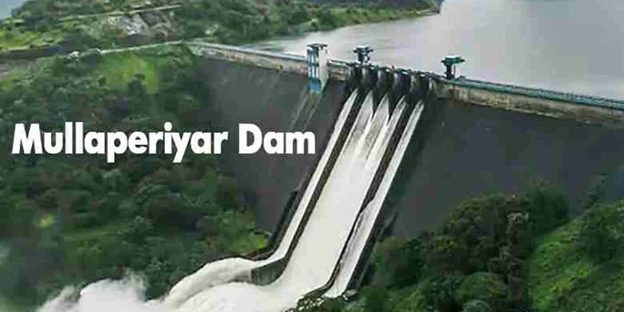
    • Recently, the Supreme Court of India issued notices to various stakeholders calling for urgent directions to reinforce the aging structure of the 130-year-old Mullaperiyar dam.

    Mullaperiyar Dam

    • It is a gravity dam built on the Periyar River in the Idukki district of Kerala that was constructed between 1887 and 1895.
    • The dam is operated and maintained by Tamil Nadu, under a 999-year lease agreement signed in 1886 between the Maharaja of Travancore and the British government.
    • It diverts water to the Vaigai basin in Tamil Nadu for irrigation across 68,558 hectares.

    India’s Dam Landscape – According to the National Register of Large Dams (NRLD) maintained by the Central Water Commission (CWC)

    • India ranks third globally — after China and the United States — in the number of large dams, with over 6,000 operational dams.
    • Functions of Dams – irrigation (supporting agriculture across vast regions); hydropower generation; flood control; and drinking water supply.
    • There are concrete gravity dams (e.g., Bhakra Dam), earthen dams (e.g., Banasura Sagar Dam), rock-fill dams, and arch dams (rare in India), based on topography, geology, and hydrological needs.

    Legal and Institutional Framework

    • Dam Safety Act, 2021: Enacted to ensure surveillance, inspection, operation, and maintenance of dams. It mandates:
    • National Dam Safety Authority (NDSA): It coordinates dam safety efforts across states.
    • Dam Rehabilitation and Improvement Project (DRIP): It was launched by the CWC with World Bank support. It focuses on rehabilitation of aging dams; improved safety monitoring; and capacity building for dam operators and engineers;

    PM Surya Ghar Muft Bijli Yojana

    Syllabus: GS3/Environment

    Context

    • A report on the performance of PM Surya Ghar Yojana has been jointly published by the Institute for Energy Economics and Financial Analysis (IEEFA) and JMK Research & Analytics.

    PM Surya Ghar Muft Bijli Yojana

    • Launched in – 2024
    • Ministry: Ministry of New and Renewable Energy.
    • Objective: Installing rooftop solar (RTS) & providing free electricity for up to 300 monthly units for 1 Crore households.
    • Uniqueness – It is the world’s largest domestic rooftop solar initiative, transforming India’s energy landscape
    • Subsidy: The scheme offers a subsidy of up to 40% to households.

    PM-Surya-Ghar-Muft-Bijli-Yojana-eligibility– Model Solar Village:

    • An allocation of ₹800 crore has been designated for this component, with ₹1 crore provided to each selected Model Solar Village.
    • To qualify as a candidate village, it must be a revenue village with a population of over 5,000 (or 2,000 in special category states).
    • This initiative aims to promote solar energy adoption and empower village communities to achieve energy self-reliance.

    UNESCO’s new Virtual Museum of Stolen Cultural Objects

    Syllabus: GS1/Culture

    News

    • UNESCO officially launched the Virtual Museum of Stolen Cultural Objects at MONDIACULT 2025.

    UNESCO’s new Virtual Museum of Stolen Cultural Objects

    • It offers a globally accessible digital platform to raise awareness about stolen heritage.
    • It currently showcases around 240 missing objects from 46 countries, with the goal of gradually “emptying itself” as items are recovered and returned to their countries of origin.
    • It is financially supported by Saudi Arabia and implemented with INTERPOL.

    Delhi Declaration on 6G

    Syllabus: GS3/Science and Technology

    In News

    • Recently, the leading global 6G research alliance including Bharat 6G, 6G-IA, ATIS’ Next G Alliance issued a Joint Declaration to develop 6G as a global public good at the International Bharat6G Symposium 2025 in New Delhi.

    Delhi Declaration on 6G

    • The declaration endorsed key principles to ensure that 6G networks are trusted, secure, resilient, open, inclusive, affordable, and sustainable.

    6G (sixth-generation wireless)

    • 6G (sixth-generation wireless) is the next-generation cellular technology following 5G
    • It is expected to offer numerous advantages including significantly higher data speeds, drastically reduced latency, and the integration of communication and sensing capabilities within the network.
  • IUCN World Heritage Outlook 2025 | Exercise AUSTRAHIND 2025 | Kenton R. Miller Award | Abel Prize 2025 | Civil Registration System (CRS) 2023 Report

    IUCN World Heritage Outlook 2025

    Syllabus: GS3/ Environment

    News

    • The IUCN World Heritage Outlook 4 revealed a worrying global environmental trend that climate change has emerged as the greatest threat to natural World Heritage sites.

    Key Points

    • The report finds that 43% of sites face severe climate threats, while invasive alien species affect 30%, and wildlife and plant diseases are rising sharply, now impacting 9% of sites, up from just 2% in 2020.
    • Note – Khangchendzonga National Park is the only site rated “Good” in conservation outlook.
    • Sundarbans National Park has deteriorated from “Good with Some Concerns” (2020) to “Significant Concern” (2025) due to sea-level rise, salinity, and cyclones.
    • Manas National Park is in significant Concern category persists due to poaching and encroachment.

    Additional information – Khangchendzonga National Park (KNP)

    • World Heritage Site: Declared a UNESCO mixed World Heritage Site in 2016, meaning it has both natural and cultural significance.
    • It was also designated as part of the World Network of Biosphere Reserves in 2018.
    • Location: Situated in the eastern Himalayas on the border of Sikkim state and eastern Nepa

    Geography and ecosystem:

    • Encompasses diverse landscapes from plains and valleys to mountains, glaciers, and forests.
    • Home to the world’s third-highest peak, Mt. Khangchendzonga.
    • It contains the 26 km long Zemu Glacier.
    • Recognized for the widest and most extensive zone of krummholz (stunted forest) in the Himalayan region.

    Biodiversity:

    • Flora: Includes a vast number of medicinal plants, orchids, rhododendrons, and a significant portion of India’s flowering plants.
    • Fauna: A haven for a wide variety of species, including:
    • Mammals: Snow leopard, red panda, Himalayan black bear, musk deer, golden cat, clouded leopard, and Tibetan wolf.
    • Birds: Over 300 bird species, including the blood pheasant (Sikkim’s state bird), Himalayan monal, and satyr tragopan.
    • Others: Reptiles, amphibians, and various insects.

    Exercise AUSTRAHIND 2025

    Syllabus: GS3/Defence

    In News

    • The 4th edition of Exercise AUSTRAHIND 2025 began in Australia.

    AUSTRAHIND 2025

    • Launched in-2022
    • It is an annual bilateral military exercise, held alternately in India and Australia.

    Kenton R. Miller Award

    Syllabus: Miscellaneous

    Context

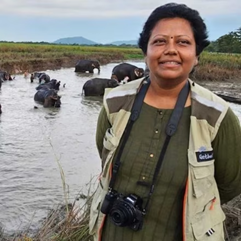
    • Dr Sonali Ghosh, Field Director of Kaziranga National Park became the first Indian to receive the prestigious WCPA-Kenton Miller Award at the IUCN World Conservation Congress held in Abu Dhabi, UAE.

    Kenton R. Miller Award

    • Established in – 2006
    • Awarding organisation – It is presented every two years by the World Commission on Protected Areas (WCPA).
    • Note – WCPA is one of the six technical commissions of the International Union for Conservation of Nature (IUCN).
    • Objective – The award honors individuals who demonstrate innovation and leadership in conserving national parks and protected areas, particularly in ensuring their long-term sustainability.
    • Named after – Dr. Kenton R. Miller, a former IUCN Director General and a prominent global leader in protected area management.

    Abel Prize 2025

    Syllabus: Miscellaneous

    Context

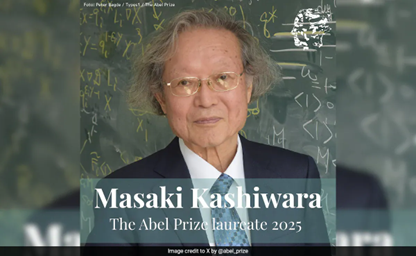
    • Japanese mathematician Masaki Kashiwara was awarded the Abel Prize 2025 for contributions to algebraic analysis and representation theory.

    Contributions of Masaki Kashiwara

    • He pioneered the theory of D-modules, an algebraic framework to study systems of linear partial differential equations (PDEs).
    • His work on sheaf theory, deepened understanding of how local analytical data connects to global geometric structure.

    Abel Prize

    • It is an international award recognizing outstanding scientific work in mathematics, often considered the equivalent of a Nobel Prize for mathematicians.
    • Named after – 19th-century Norwegian mathematician Niels Henrik Abel.
    • Awarded by: The Norwegian Academy of Science and Letters on behalf of the Government of Norway.
    • It can be awarded to mathematicians of any age and nationality.

    Notable Laureates

    • Jean-Pierre Serre: First laureate (2003) for contributions in algebraic geometry and topology.
    • Srinivasa S. R. Varadhan: Indian-origin mathematician, won in 2007.
    • Michel Talagrand (France) For contributions to probability theory and functional analysis won in 2024.

    Civil Registration System (CRS) 2023 Report

    Syllabus: GS1 / Society and GS2 / Governance

    Context

    • The Registrar General of India (RGI) released the “Vital Statistics of India Based on the Civil Registration System (CRS)”,

    Key Findings of the CRS 2023 Report

    • Births Registered: 2.52 crore births were registered in 2023
    • Deaths Registered: 86.6 lakh deaths were registered in 2023
    • Sex Ratio at Birth (SRB):is the number of female births per 1,000 male births
      • Lowest SRB: Jharkhand (899), Bihar (900), Telangana (906), Maharashtra (909), Gujarat (910), Haryana (911), and Mizoram (911).
      • Highest SRB: Arunachal Pradesh (1,085), Nagaland (1,007), Goa (973), Tripura (972), and Kerala (967).

    Additional Information – Civil Registration System (CRS)

    • It is a unified process for the continuous, permanent, and compulsory recording of vital events such as births, deaths, and stillbirths.
    • It does not include registration of marriages or divorces.
    • The system operates under the Registration of Births and Deaths (RBD) Act, 1969, which mandates compulsory reporting of all births and deaths.

    Nobel Prize 2025 Winners List

    Context

    • The 2025 Nobel Prizes in six categories —Physics, Chemistry, Physiology or Medicine, Literature, Peace, and Economic Sciences —were awarded.

    Nobel Prize

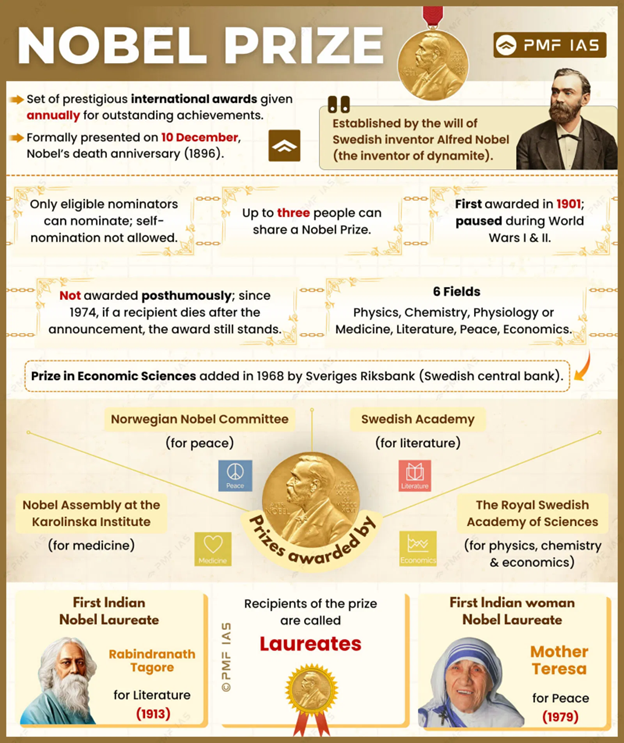
    • It is a set of prestigious international awards given annually for outstanding achievements.
    • Recipients of the prize are called
    • It was established by the will of Swedish inventor Alfred Nobel (the inventor of dynamite).
    • The first Nobel Prizes were awarded in 1901, and they have been awarded annually since then. They were not awarded  during World War I (1914–1918) and II (1939–1945).
    • It is formally presented on December 10, the anniversary of Nobel’s death in 1896.
    • Given in 6 fields: Physics, Chemistry, Physiology or Medicine, Literature, Peace, and Economic Sciences.
    • Prize in Economic Sciences was introduced in 1968 by Sveriges Riksbank (Swedish central bank)
    • A Nobel Prize can be shared by up to three individual In the case of the peace prize, it can also be awarded to an organisation.
    • To become a Nobel Prize laureate one must be nominated for a prize by an eligible nominator. Self-nomination is not allowed.
    • The Nobel Prize cannot be awarded posthumously. However, since 1974, if the recipient dies after the prize has been announced, they can still be awarded it

    Note

    • First Indian Nobel Laureate was Rabindranath Tagore, for Literature (1913).
    • The first Indian woman Nobel Laureate was Mother Teresa, for Peace (1979).

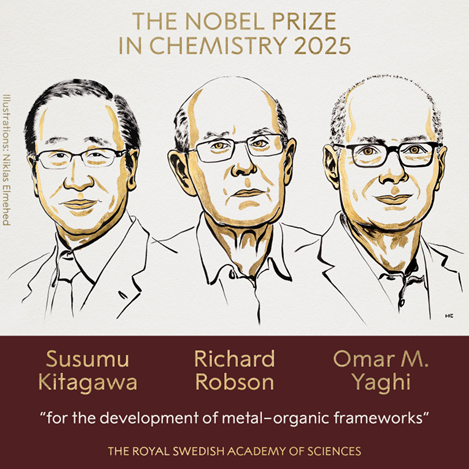
    Nobel Prize in Chemistry 2025

    • Awarded by – Royal Swedish Academy of Sciences
    • Awardees – Susumu Kitagawa (Japan), Richard Robson (Australia), and Omar M. Yaghi (USA)
    • Achievement – for their groundbreaking development of metal-organic frameworks (MOFs).

    Additional Information – Metal-Organic Frameworks (MOFs)

    • They are crystalline, porous materials made of metal ions as “nodes” connected by organic molecules called “linkers.”
    • Functionality: Their lattice structure creates large cavities that can store substances, catalyse reactions, or conduct electricity.

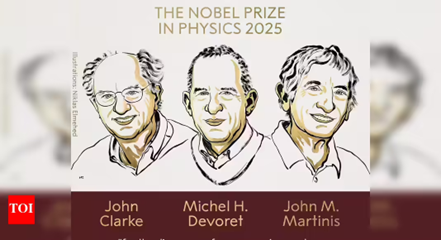
    Nobel Prize in Physics 2025

    • Awarded by – Royal Swedish Academy of Sciences
    • Awardees – John Clarke (UK), Michel Devoret (France), and John Martinis (USA)
    • Achievement – for the discovery of macroscopic quantum mechanical tunnelling and energy quantisation in an electric circuit.
    • Their discovery confirmed that quantum phenomena, once thought limited to subatomic particles, can also manifest in macroscopic systems, expanding the boundaries of quantum mechanics.

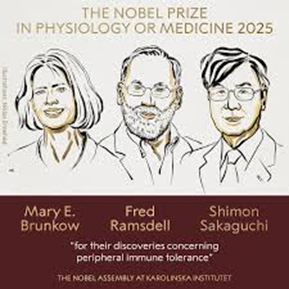
    Nobel Prize in Physiology or Medicine 2025

    • Awarded by – Nobel Assembly at the Karolinska Institute in Stockholm, Sweden, for outstanding contributions to medical research.

    Awardees –

    1. Shimon Sakaguchi (Japan) received the award for discovering regulatory T-cells.
    2. Mary E. Brunkow and Fred Ramsdell (USA) were honoured for identifying the Foxp3 gene, which controls immune regulation.
    3. Significance of the discovery – groundbreaking discoveries concerning peripheral immune tolerance that prevents the immune system from harming the body.

    Did you know?

    ●    First Laureate: In 1901, Emil von Behring received it for developing serum therapy to treat diphtheria.

    ●    Indian–Origin Laureate: In 1968, Har Gobind Khorana became the first Indian winner for decoding the genetic code guiding protein synthesis.

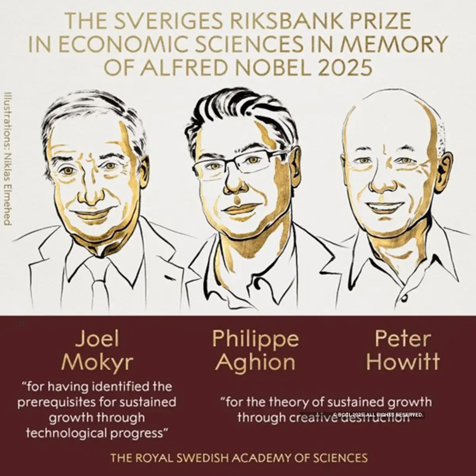
    Nobel Prize in Economics 2025

    • Awarded by – Royal Swedish Academy of Sciences
    • Awardees – Joel Mokyr, Philippe Aghion and Peter Howitt “
    • Achievement – for having explained innovation-driven economic growth”.
    • The official name for the Nobel Prize in Economics is the Sveriges Riksbank Prize in Economic Sciences in Memory of Alfred Nobel.
    • It was established in 1968 by Sweden’s central bank (Sveriges Riksbank) in memory of Alfred Nobel, and first awarded in 1969.

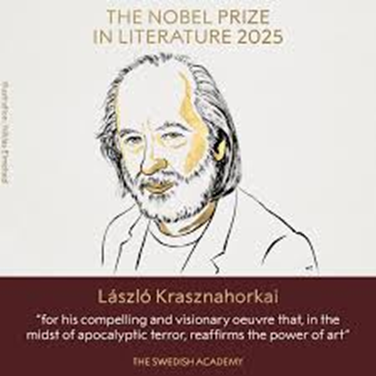
    Nobel Prize in Literature 2025

    • Awarded by – Royal Swedish Academy of Sciences
    • Awardee – to Hungarian novelist and screenwriter László Krasznahorkai.
    • He is known for distinct long sentences that can span dozens of pages, his acclaimed works include Satantango (1985) and The Melancholy of Resistance (1989).

    Nobel Peace Prize 2025

    • Awarded by – Norwegian Nobel Committee
    • Awardee – to Venezuelan opposition leader María Corina Machado.
    • Achievement – She was honoured for promoting democratic rights and advocating a peaceful transition from dictatorship to democracy in Venezuela.
    • Political Role: Machado, the leader of the Vente Venezuela party, has mobilised civic movements demanding judicial independence, electoral transparency, and human rights protection.
  • Himachal natural farming | Pradhan Mantri Dhan-Dhaanya Krishi Yojana and Self-Reliance in Pulses Mission | Durand Line | Thalassemia | Maitri II: India’s New Frontier in Antarctica | International Blue Flag Certification

    Himachal natural farming

    Syllabus:GS3/Economy

    In News

    • Farmers in Himachal Pradesh are increasingly adopting natural farming, supported by the State’s flagship Prakritik Kheti Khushhal Kisan Yojana (PK3Y), which promotes chemical-free agriculture.

    Natural Farming

    • It is a chemical free farming, involving livestock (preferably local breed of cow) integrated natural farming methods and diversified crop systems rooted in the Indian traditional knowledge.
    • It is largely based on on-farm biomass recycling with major stress on biomass mulching, use of on-farm cow dung-urine formulations; maintaining soil aeration and exclusion of all synthetic chemical inputs.

    Additional Information- National Mission on Natural Farming (NMNF)

    • Launched in – November 2024
    • It is a centrally sponsored Scheme
    • Objective – to promote chemical-free, ecosystem-based natural farming rooted in traditional knowledge.

    Pradhan Mantri Dhan-Dhaanya Krishi Yojana and Self-Reliance in Pulses Mission

    Syllabus: GS3/ Agriculture

    Context

    • PM Modi launched two new agriculture schemes, the PM Dhan Dhaanya Krishi Yojana (PMDDKY) and the Mission for Aatmanirbharta in Pulses, at a special Krishi programme in New Delhi.

    Prime Minister Dhan-Dhaanya Krishi Yojana

    • Launched in – The scheme will be launched in partnership with states.

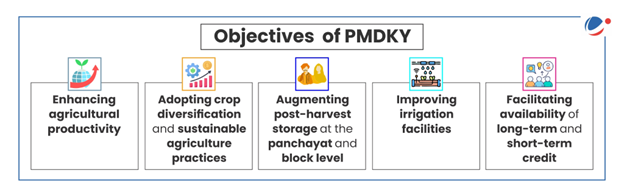
    Key Focus Areas:

    • Enhancing agricultural productivity.
    • Promoting crop diversification and sustainable practices.
    • Expanding post-harvest storage at Panchayat and Block levels.
    • Improving irrigation facilities.
    • Facilitating long-term and short-term credit access.

    Building Rural Prosperity and Resilience Program

    • Purpose: launched in partnership with states to address under-employment in agriculture.
    • Key Focus Areas: Skilling, investment, and technology to invigorate rural economy. Modernizing agriculture with improved productivity and warehousing.
    • Target Beneficiaries: Rural women, young farmers, marginal & small farmers and landless families.

    Mission for Aatmanirbharta in Pulses

    • The Mission was launched for 2025–26 to 2030–31 with a budgetary allocation of ₹11,440 crore.
    • Objective – It aims to make India self-sufficient in pulses production, reducing dependence on imports in light of rising domestic demand.
    • It aims to ensure 100 percent procurement of Tur, Urad, and Masoor at MSP for four years.

    Additional Information- Pulses Production and Consumption in India

    • Global Leader: India is the largest global producer (25%), consumer (27%), & importer (14%) of pulses.
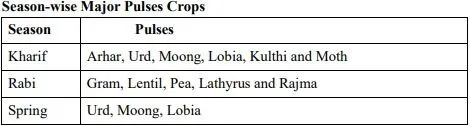
    • Seasonal Production: Pulses are grown in Kharif and Rabi seasons

    • Madhya Pradesh, Maharashtra and Rajasthan are the top three pulses producing states in the country.

    Government Initiatives for Achieving Self-Sufficiency in Pulse Production

    • National Food Security Mission (NFSM-Pulses): Boosts area, production, and productivity through HYV seeds, improved agronomy, and demonstrations.
    • Minimum Support Price (MSP) for Pulses: Regularly revised MSPs (E.g., Tur ₹7000/qtl in 2023-24) ensure price security and encourage pulse cultivation.
    • Seed Hub Program by ICAR-IIPR: Expands availability of certified, short-duration, and high-yielding pulse seeds at the grassroots level.
    • PM-AASHA Scheme: Ensures MSP realisation via Price Deficiency Payment (PDP) and targeted procurement by private and public agencies.
    • Climate-Resilient Varieties Development (ICAR): Develops varieties resistant to drought, pests, and diseases suited to changing climates.
    • e-NAM Integration for Pulses: Enhances market access, reduces middlemen, and enables transparent price discovery through online pulse trading.

    Durand Line

    Syllabus: GS1/Geography; GS2/IR

    News –

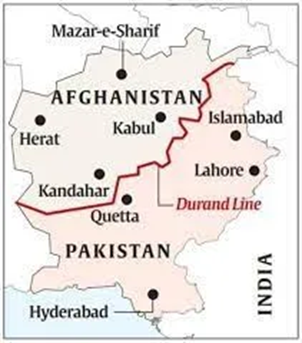
    • Border clashes erupted between Afghanistan and Pakistan along the Durand Line.

    Durand Line

    • It is a 2,640 km land border established in 1893 following an agreement between Sir Mortimer Durand, then Foreign Secretary of British India, and Amir Abdur Rahman Khan, the ruler of Afghanistan.
    • The line was intended to define the spheres of influence between British India and Afghanistan, effectively splitting ethnic Pashtun and Baloch communities between the two sides.

    Thalassemia

    Syllabus: GS2/Health

    News

    • Thalassemia patients in Kerala are facing serious health risks due to a shortage of leukocyte filter sets and iron chelation drugs.

    Thalassemia

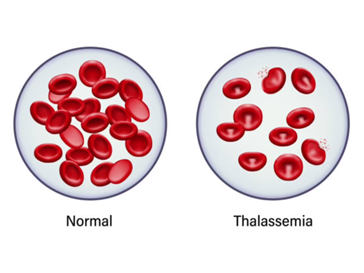
    • Thalassemia is an inherited blood disorder (passed from parents to children through genes) where the body cannot produce enough hemoglobin (it is the protein in red blood cells (RBCs) that carries oxygen).
    • Symptoms – Anemia, weak bones, delayed or slow growth, Iron overload (due to frequent transfusions), poor appetite, enlarged spleen or liver, and pale skin.
    • Note – India is known as the thalassemia capital of the world, with over 1,00,000 patients dying before the age of 20 due to lack of access to treatment.
    • In India, thalassemia, along with two other blood disorders (Hemophilia and Sickle Cell disease) are recognised under Rights of Persons with Disabilities Act, of 2016.
    • Every year, World Thalassemia Day is observed on May 8 to raise awareness among the public and policymakers.

    Thalassemia Bal Sewa Yojana (TBSY)

    • Launched by – Union Health Ministry, in partnership with Coal India Limited
    • Objective –  to Rs. 10 lakh financial aid to eligible patients for bone marrow transplants (BMT) at 17 empanelled hospitals nationwide,

    Maitri II: India’s New Frontier in Antarctica

    Syllabus: GS3/ Science & Technology

    Context

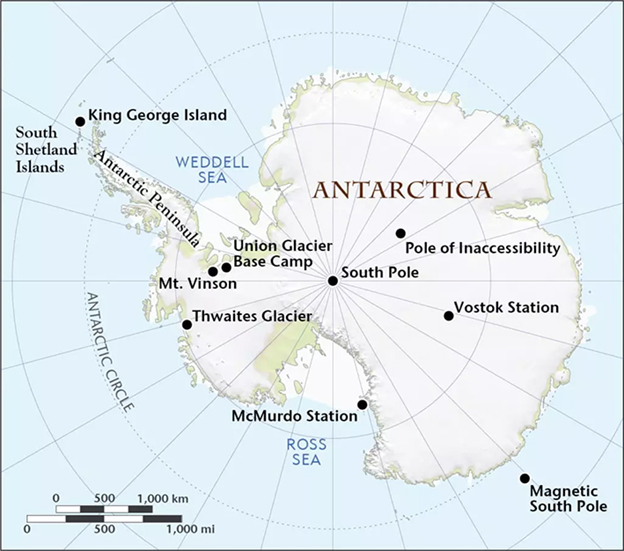
    • The Ministry of Finance has approved the establishment of Maitri II, India’s upcoming research station in eastern Antarctica, to be completed by January 2029.

    India’s Antarctic Presence

    • In 1983, India established the first permanent base in Antarctica named Dakshin Gangotri. However it is no longer in operation.
    • India presently has two research stations at Antarctica namely ‘Maitri’ and ‘Bharati’.

    Maitri II

    • Nodal Agency: National Centre for Polar and Ocean Research (NCPOR), Goa.
    • Estimated Cost: ₹2,000 crore over seven years.
    • Location: Eastern Antarctica, near the Schirmacher Oasis, replacing the aging Maitri station.
    • Green Research Base: Designed to operate on renewable energy sources, solar during summer and wind energy year-round, reducing dependence on fossil fuels.

    Additional Information – Antartica

    • Antarctica is the world’s southernmost and fifth largest continent.
    • Uniqueness – It is also the world’s highest, driest, windiest, coldest, and iciest continent.
    • The continent is divided into East Antarctica (Greater Antarctica) and West Antarctica (Lesser Antarctica). They are separated by Transantarctic Mountains.
    • East Antarctica is composed of older, igneous and metamorphic rocks whereas West Antarctica, is made up of younger, volcanic and sedimentary rock.
    • West Antarctica, is part of the “Ring of Fire,” a tectonically active area around the Pacific Ocean.
    • Mount Erebus, located on Antarctica’s Ross Island, is the southernmost active volcano on Earth.
    • Longest River: Onyx
    • Largest Lake: Vostok

    Conservation efforts to protect Antartica

    Antarctica treaty

    • The Treaty covers the area south of 60°S latitude.
    • It was signed at Washington D.C. in 1959 with the objective of the Demilitarisation of Antarctica.
    • The signatories are supposed to bring laws so that no activity in contravention of the treaty takes place.
    • India signed the treaty in 1983.

    The Convention on the Conservation of Antarctic Marine Living Resources (CCAMLR):

    • Signed in – Canberra in 1980
    • Objective – to protect and preserve the Antarctic environment and, particularly, for the preservation and conservation of marine living resources in Antarctica.
    • India ratified the CCAMLR in 1985.

    The Protocol on the Environmental Protection to the Antarctic Treaty (Madrid Protocol)

    • Signed in – Madrid in 1991.
    • Objective – It aims to strengthen the Antarctic Treaty system and develop a comprehensive regime for the protection of the Antarctic environment and dependent and associated ecosystems.
    • India ratified the Madrid Protocol in 1998.

    Council of Managers of the National Antarctic Programme (COMNAP)

    • India is also a member of the COMNAP which shows the significant position that India holds among the nations involved in Antarctic research.

    Indian Antarctic Bill, 2022

    • Objective: To demilitarize Antarctica; use of Antarctica for peaceful purposes; promote international scientific cooperation in Antarctica.
    • Prohibited activities: The Bill prohibits certain activities in Antarctica including:
      • Nuclear explosion or disposal of radioactive wastes
      • Discharge of garbage, plastic or other substances into the sea which is harmful to the marine environment.

    International Blue Flag Certification

    Syllabus: GS3/ Environment

    In News

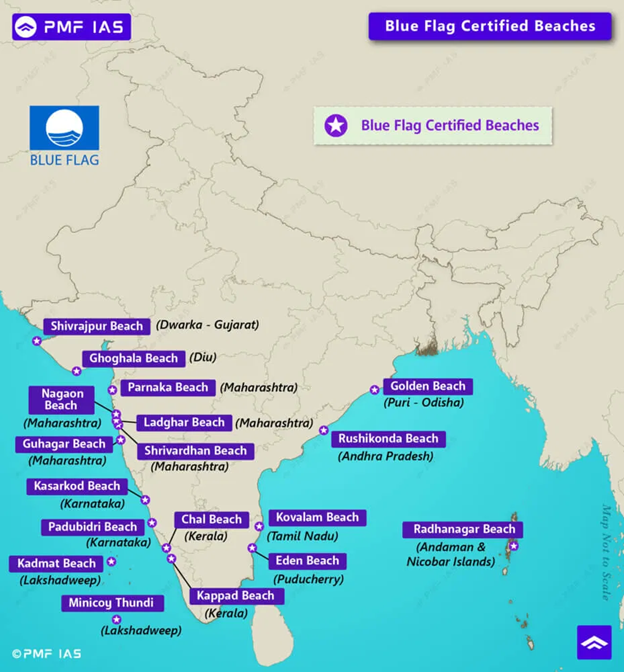
    • Five beaches in Maharashtra have received the international Blue Flag certification.
    • The list includes Shrivardhan and Nagaon beaches, Parnaka, and Guhagar and Ladghar beaches.

    Blue Flag Certification

    • Objective – ‘Blue Flag’ is a certification that can be obtained by a beach, marine, or sustainable boating tourism operator, and serves as an eco-label.
    • Awarded by – The certification is awarded by the Denmark-based non-profit Foundation for Environmental Education.
    • Parameters – The certification is accorded based on four major parameters:
    1. Environmental education and information
    2. Bathing water quality
    3. Safety and services at the beaches
    4. Environment management and conservation

    Indian Sites under Blue Flag

    • There are now a total of 10 sites under Blue Flag Certification.
    1. Shivrajpur – Gujarat
    2. Ghoghla – Diu
    3. Kasargod – Karnataka
    4. Padubidri – Karnataka
    5. Kappad – Kerala
    6. Rushikonda – Andhra Pradesh
    7. Golden – Odisha
    8. Radhanagar – Andaman and Nicobar
    9. Kovalam – TamilNadu
    10. Eden beach – Pondicherry.
    11. Minicoy Thundi (Lakshadweep)
    12. Kadmat (Lakshadweep).
    13. Shrivardhan (Maharashtra)
    14. Nagaon (Maharashtra)
    15. Parnaka (Maharashtra)
    16. Guhagar (Maharashtra)
    17. Ladghar beaches (Maharashtra)
  • Biomedical Research Career Programme | THE World University Rankings 2026 | Official Visit of the UK Prime Minister to India | Appointment of District Judges

    Biomedical Research Career Programme

    Syllabus: GS3/Science and Technology

    Context

    • The Union Cabinet has approved Phase III of the Biomedical Research Career Programme (BRCP).

    Biomedical Research Career Programme (BRCP)

    • It is a strategic investment in India’s health and innovation landscape, supported by a ₹1,500 crore Indo-UK partnership that aligns global expertise with national priorities.
    • Aim: To build a world-class research ecosystem in biomedical sciences, clinical, and public health research
    • Expected Outcomes: The initiative targets training 2,000+ researchers, high-impact publications, patentable discoveries, and peer recognition.

    THE World University Rankings 2026

    Syllabus: Miscellaneous

    Context

    • Oxford University has maintained its global number one ranking for the tenth consecutive year, according to the Times Higher Education (THE) World University Rankings 2026.

    THE World University Rankings 2026

    • Published by – Times Higher Education
    • Objective – It evaluates 2,191 universities from 115 countries and territories across 18 performance indicators in five areas: teaching, research environment, research quality, international outlook, and industry impact.
    • Beyond the top 100, universities are assigned “rank bands” instead of specific positions.

    University rankings 2026: Highlights

    • India: Ranked as the second most-represented country, behind only the U.S., with a record 128 institutions — up from 107 last year and just 19 in 2016.
    • The Indian Institute of Science is placed in the 201–250 rank band, followed by Saveetha Institute of Medical and Technical Sciences at 351–400.
    • China: Five universities are in the top 40, up from three last year. Tsinghua University, ranked 12th, remains Asia’s top university.
    • United States: Seven of the top 10 positions are occupied by the US.

    Official Visit of the UK Prime Minister to India

    Syllabus: GS2/IR

    In News

    • The Prime Ministers of India and the UK have reaffirmed the India-UK Comprehensive Strategic Partnership during the recent official UK PM visit to India.

    Key Outcomes

    • Economic & Trade: Strengthening of the UK-India Comprehensive Economic and Trade Agreement (CETA), expected to boost market access, reduce tariffs, and generate jobs.
    • Climate & Energy: Establishment of advanced R&D centres in AI and climate change, and launch of Critical Minerals Supply Chain Observatory, including a new campus at IIT-ISM Dhanbad.
    • Agreed to cooperate on Offshore Wind and through the Global Clean Power Alliance (GCPA).
    • Launched the India–UK Climate Finance Initiative.
    • Defence and Security: Enhanced cooperation on maritime security in the Indo-Pacific, including establishing a Regional Maritime Security Centre of Excellence (RMSCE) under India’s Indo-Pacific Oceans Initiative.
    • India–UK Connectivity and Innovation Centre

    Appointment of District Judges

    Syllabus: GS2/Polity and Governance

    Context

    • The Supreme Court unanimously held that judicial officers who have completed seven years of practice as advocates before joining the service will be eligible for direct recruitment as District Judges under Article 233.

    Eligibility Expansion for District Judges

    • Previously, only practising lawyers with seven years’ experience could be directly appointed; in-service judicial officers were excluded.
    • The Court held that Article 233(2) provides for qualification for advocates but does not specify any separate qualification for in-service candidates.

    Appointment of District Judges

    • Authority of Appointment: District judges are appointed by the Governor of the State, but only after consulting the High Court of that state.
    • This ensures judicial independence, giving the High Court a significant role in selection.
    • Eligibility: Traditionally, appointments were made from:
    • Members of the State Judicial Service (subordinate judicial officers), or practising advocates with a minimum of 7 years’ experience.
    • Recent judicial interpretations have clarified that judicial officers with 7 years of prior Bar experience before joining the judicial service are also eligible for elevation to District Judge.
  • Foreign Minister of Afghanistan Visited India | National Red List Roadmap and Vision 2025–2030 | Sawalkote Hydroelectric Project | Bharat Taxi | CCRAS Launches SPARK 4.0 | Three Major Ports Recognised as Green Hydrogen Hubs Under The National Green Hydrogen Mission

    Foreign Minister of Afghanistan Visited India

    Syllabus: GS2/IR

    Context

    • Afghanistan’s Taliban foreign minister met external affairs minister S. Jaishankar in New Delhi.

    India–Taliban Diplomatic Engagement

    • Assurance for Terror Concerns: Afghanistan reassured India that it would not allow any group to use its territory against another country
    • India’s Embassy Reopening: External Affairs Minister S. Jaishankar announced that India would reopen its full embassy in Kabul.
    • Diplomatic Context: Around a dozen countries — including China, Russia, Iran, Pakistan, and Turkey — already operate embassies in Kabul.
    • Strategic Balance: The move reflects India’s pragmatic approach to maintain influence in Afghanistan amid Pakistan and China’s growing presence.
    • Counterterrorism Focus: India’s emphasis on Afghan soil not being used for terrorism directly addresses concerns about groups like LeT and JeM.

    National Red List Roadmap and Vision 2025–2030

    Syllabus:GS3/Environment

    In News

    • India has officially launched its National Red List Roadmap and Vision 2025–2030 at the IUCN World Conservation Congress 2025.
    • It marks a transformative step in species assessment and conservation planning.

    National Red List Roadmap and Vision 2025–2030

    • Mandate – It envisions publishing Red Data Books for both flora and fauna, providing authoritative documentation of threatened species.
    • It is developed by the Zoological Survey of India (ZSI), Botanical Survey of India (BSI), IUCN India, and the Centre for Species Survival.
    • India aims to publish National Red Data Books for both flora and fauna by 2030.

    Key Features

    • It will assess nearly 11,000 species of plants and animals by 2030, including terrestrial and marine biodiversity
    • It adheres to IUCN Red List protocols and supports India’s commitments under the Convention on Biological Diversity and the Kunming-Montreal Global Biodiversity Framework.
    • It includes a centralized digital platform for data collection, monitoring, and public access to conservation status.

    Relevance for India

    • India, one of the world’s 17 megadiverse countries, is home to four of the 36 global biodiversity hotspots, the Himalayas, Western Ghats, Indo-Burma, and Sundaland.
    • It occupies just 2.4% of the world’s land area and it harbours nearly 8% of global flora and 7.5% of global fauna, with over 28% of plants and 30% of animals being endemic.

    Sawalkote Hydroelectric Project

    Syllabus: GS1/Geography

    In News

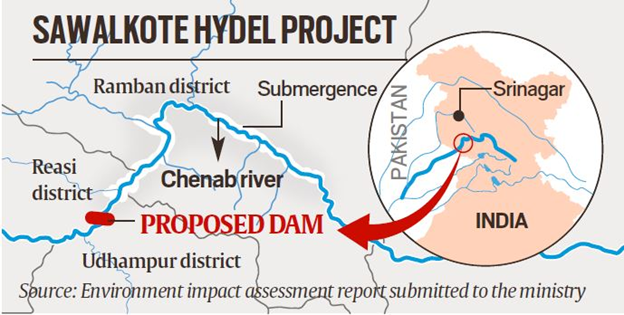
    • Recently, an apex committee of the Environment Ministry has accorded a fresh environmental clearance to the Sawalkote hydroelectric project.

    Sawalkote Hydroelectric Project

    • Origin: First proposed 1984,
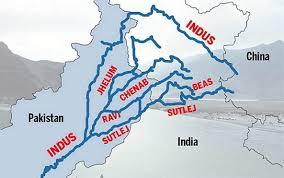
    • Location – It is a run-of-the-river hydroelectric initiative located on the Chenab River in Jammu and Kashmir.
    • Developed by – National Hydroelectric Power Corporation (NHPC).
    • Energy capacity – It is one of India’s largest hydroelectric projects in the Indus basin, with a proposed capacity of 1,856 MW.
    • Additional Information – Chenab river
    • Origin: The Chenab is formed at Tandi in Himachal Pradesh by the confluence of the Chandra and Bhaga rivers.
    • Source: The Chandra and Bhaga rivers originate from the Barelacha Pass in the Himalayas.
    • Flow: It flows through Himachal Pradesh and the Jammu region of Jammu and Kashmir, India, before entering Pakistan.
    • Joining the Indus: In Pakistan, it joins the Sutlej River to form the Panjnad, which then merges with the Indus River.

    Key facts for UPSC

    • Other name: It is also known as the Chandrabhaga river.
    • Historical name: In ancient texts, it was called
    • Indus Waters Treaty: As a transboundary river, it is governed by the 1960 Indus Waters Treaty. Pakistan is allocated the Chenab’s waters, but India is permitted to use the water for non-consumptive purposes like hydroelectric power generation.
    • Tributaries: The Marusudar is a major tributary of the Chenab.

    Bharat Taxi

    Syllabus: GS2/ Governance

    In News

    • A new cooperative ride-hailing platform called “Bharat Taxi” is set to launch in December 2025.

    Bharat Taxi

    • Launched by – The platform is being built with support from the National e-Governance Division (NeGD) and will integrate with national digital platforms like DigiLocker and UMANG.
    • Promotion: The initiative is jointly promoted by a number of major cooperative and financial institutions, including NCDC, IFFCO, Amul, KRIBHCO, NAFED, NABARD, NDDB, and NCEL.
    • Mission: It aims to create a driver-owned platform that provides higher earnings for drivers, transparent fares for riders, and an inclusive mobility ecosystem.
    • Significance – The service is designed to compete with private ride-hailing services like Ola and Uber, without surge pricing, by leveraging a cooperative pricing model.

    CCRAS Launches SPARK 4.0

    Syllabus: GS2/ Governance

    In News

    • The Central Council for Research in Ayurvedic Sciences (CCRAS), under the Ministry of Ayush, announced the fourth edition of its flagship Studentship Program for Ayurveda Research Ken (SPARK) for 2025–26.

    Studentship Program for Ayurveda Research Ken (SPARK)

    • Objective – It aims to promote scientific curiosity and research skills among undergraduate Ayurveda students across the country.

    Features –

    • Under SPARK–4.0, 300 Bachelor of Ayurvedic Medicine and Surgery (BAMS) students from colleges recognised by the National Commission for Indian System of Medicine (NCISM) would be receiving a studentship of ₹50,000, disbursed as ₹25,000 per month over two months.
    • The student would get short-term independent research projects and a certificate on completion.
    • Significance – to strengthen Ayurveda’s research ecosystem.

    Three Major Ports Recognised as Green Hydrogen Hubs Under The National Green Hydrogen Mission

    Syllabus:GS3/Environment

    In News

    • The Ministry of New and Renewable Energy has designated Deendayal, V.O. Chidambaranar, and Paradip ports as Green Hydrogen Hubs under the National Green Hydrogen Mission.

    Green Hydrogen

    • Green Hydrogen: It is produced using electrolysis of water with electricity generated by renewable energy.
    • Benefit: It is a clean burning element that can decarbonise a range of sectors including iron and steel, chemicals, and transportation.
    • Hydrogen can be stored for long periods of time which can be used to produce electricity using fuel cells.

    National Green Hydrogen Mission

    • Aim: To make India a global hub for the production of green hydrogen.
    • Implementing Ministry: Ministry of New and Renewable Energy(MNRE)

    Additional Information – Hydrogen

    • Symbol and Atomic number – Hydrogen is the chemical element with the symbol H and atomic number 1.
    • Hydrogen is the lightest element and the most abundant chemical substance in the universe, constituting roughly 75% of all normal matter.
    • It is colorless, odorless, tasteless, non-toxic, and highly combustible gas.
  • Supreme Court on Retrospective Application of Surrogacy Act | World Mental Health Day | Atacama Desert | Africa’s Great Green Wall project | UN to Cut 25% of its Global Peacekeeping Force | Saksham

    Supreme Court on Retrospective Application of Surrogacy Act

    Syllabus: GS2/ Health

    In News

    • In a landmark judgment, the Supreme Court ruled that the age restrictions under the Surrogacy (Regulation) Act, 2021, cannot be applied retrospectively to couples who had frozen embryos and initiated the surrogacy process before the Act came into force.

    Surrogacy (Regulation) Act, 2021

    • Definition of Surrogacy – The Act defines surrogacy as a practice where a woman gives birth to a child for an intending couple with the intention to hand it over to them after the birth.
    • It is permitted only for altruistic purposes or for couples who suffer proven infertility or disease.
    • Surrogacy is prohibited for commercial purposes including for sale, prostitution or any other forms of exploitation.
    • Abortion: Abortion of such a fetus is allowed only with the consent of the surrogate mother and the authorities and must adhere to the provisions of the Medical Termination of Pregnancy Act.
    • Eligibility and Conditions for Couples: A couple should procure certificates of eligibility and essentiality in order to have a child via surrogacy.
      • The couple is deemed ‘eligible’ if they have been married for five years, the wife is aged between 23-50 years and the husband is between 26-55 years.
      • The couple must not have any living child (biological, adopted or surrogate.)
      • A child with mental or physical disabilities, or one suffering from a life-threatening disorder has been exempted from the above criterion.
      • The couple can get an ‘essential’ certificate if suffering from proven infertility of either partner certified by a District Medical Board.
      • They must also have insurance coverage for 16 months for the surrogate mother, covering any postpartum complications.
    • Eligibilty to be a surrogate – A surrogate mother has to be a close relative of the couple, a married woman with a child of her own, aged between 25-35 years, who has been a surrogate only once in her life.
    • She must also possess a certificate of medical and psychological fitness for surrogacy.
    • Regulation: The Centre and State governments will constitute a National Surrogacy Board (NSB) and State Surrogacy Boards (SSB) respectively.
    • Offences: Offences under the Act include commercial surrogacy, selling of embryos, exploiting, abandoning a surrogate child etc.
    • These may invite up to 10 years of imprisonment and a fine of up to Rs. 10 lakh.
    • Importance : The Act expands access to reproductive options for individuals and couples who are unable to conceive or carry a pregnancy due to medical reasons.

    World Mental Health Day

    Syllabus: GS2/Health

    Context

    • On October 10, every year, World Mental Health Day highlights the extent of mental illness in the world.
    • Global Mental Health Issue (as per WHO): More than a billion people are living with mental health disorders.

    World Mental Health Day

    • Most Common Mental Health Disorders: Anxiety and depressive disorders together accounted for more than two-thirds of all mental health conditions in 2021.
    • Mental Health in India: India has a 7% lifetime prevalence of mental disorders in the country.
    • According to the latest NCRB data, 1,71,418 suicides were reported in India in 2023, a 0.3% increase from 2022, with Maharashtra recording the highest number.
    • Even more alarming, student suicides reached 13,892, a 64.9% rise over the past decade.

    Rise in Mental Health Issues Among Youth

    • Excessive internet & social media use: Leads to anxiety, sleep disorders, and attention issues.
    • Lack of family engagement: Weak social support systems negatively impact emotional well-being.
    • Hostile workplaces & long working hours: Cause burnout, stress, and reduced productivity.
    • Unhealthy lifestyle choices: Ultra-processed foods and lack of physical activity worsen mental and physical health.

    Understanding Mental Wellbeing

    The India’s National Mental Health Survey defines mental well-being as a multidimensional concept that includes:

    1. Emotional health: Managing stress and emotions effectively.
    2. Social health: Building healthy relationships and a supportive community.
    3. Cognitive health: Enhancing focus, decision-making, and problem-solving abilities.
    4. Physical health: Maintaining overall fitness through a healthy lifestyle.

    Key Initiatives by the Government of India

    • Mental Healthcare Act, 2017: The act decriminalised suicide attempts in India and also included WHO guidelines in the categorisation of mental illnesses.
    • The most significant provision in the act was “advance directives”, which allowed individuals with mental illnesses to decide the course of their treatment.
    • It also restricted the use of electro-convulsive therapy (ECT) and banned its use on minors, finally introducing measures to tackle stigma in Indian society.
    • Rights of Persons with Disabilities Act, 2017: The Act acknowledges mental illness as a disability and seeks to enhance the Rights and Entitlements of the Disabled.
    • In Sukdeb Saha vs State of Andhra Pradesh, the Supreme Court of India reinforced mental health as a fundamental right under Article 21.
    • District Mental Health Programme (DMHP): Delivered in 767 districts, offering services like suicide prevention, stress management, and counseling.
    • National Tele Mental Health Programme (NTMHP): Launched in 2022 to provide access to mental health services through 53 Tele MANAS Cells across 36 states/UTs.

    Atacama Desert

    Syllabus: GS1/ Geography

    In News

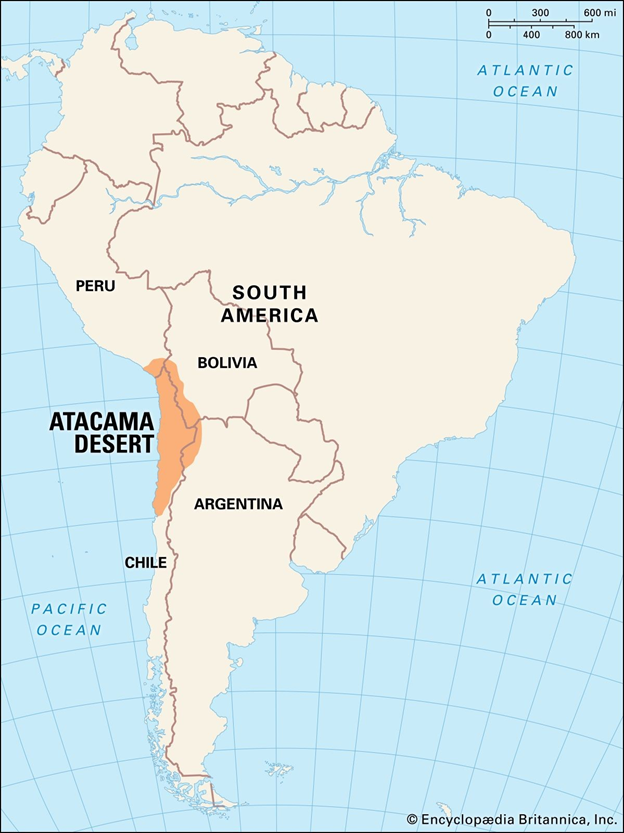
    • A rare burst of winter rains has triggered in Chile’s Atacama Desert

    Atacama Desert

    • Location: It is the driest desert in the world, located in northern Chile.
    • It is nestled between the Andes Mountains on the east and the Pacific Ocean on the west.
    • It forms a continuous strip for nearly 1,000 km along the narrow coast of the northern third of Chile.
    • Bordered by: It is bordered by Argentina, Peru, and Bolivia
    • It also hosts 12 volcanoes, mainly located in the western outliers of the Andes.
    • Rainfall: Average rainfall in this region is about 1 mm per year. Some locations within the desert have never had any rainfall whatsoever.
    • Temperature: Temperatures are comparatively mild throughout the year. The average temperature in the desert is about 63 degrees F (18 degrees C).
    • Natural Resources: This region has the largest natural supply of Sodium Nitrate, which can be used for producing fertilizers and explosives, amongst other things.
    • Chinchorro Mummies: The oldest artificially mummified human remains have been found in the Atacama Desert.

    Africa’s Great Green Wall project

    Syllabus: GS2/IR

    Context

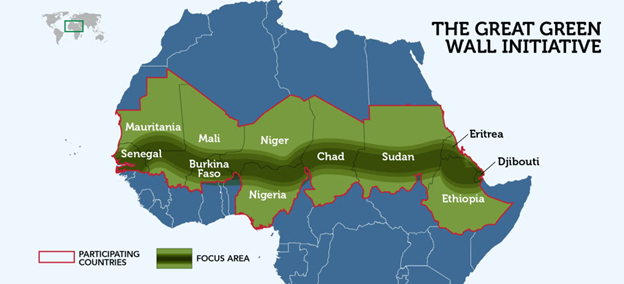
    • Despite ambitious goals to restore 100 million hectares of land across Africa, the Great Green Wall project faces significant challenges in Senegal.

    Africa’s Great Green Wall project

    • Launched by – African Union in 2007,
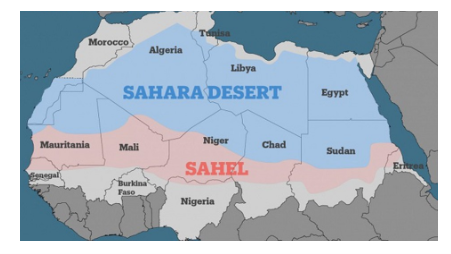
    • Objective – It aims to combat desertification and land degradation across the Sahel region by creating a mosaic of green and productive landscapes.

    Key aspects of the Great Green Wall

    • Location: The project focuses on the Sahel region, a semi-arid zone that stretches across Africa, forming a transition between the Sahara Desert to the north and the savannas to the south.
    • Countries involved: Originally involving 11 countries, the initiative now includes over 20 nations across Africa’s width, from Senegal in the west to Djibouti in the east. Core participating countries include Burkina Faso, Chad, Djibouti, Eritrea, Ethiopia, Mali, Mauritania, Niger, Nigeria, and Sudan.

    Objectives

    • Land restoration: To restore 100 million hectares of degraded land by 2030.
    • Climate change mitigation: To sequester 250 million tonnes of carbon from the atmosphere.
    • Livelihood improvement: To create 10 million green jobs for local communities, enhancing food security and reducing poverty.

    Additional Information – African Union

    • The African Union (AU) is a continental body consisting of the 55 member states that make up the countries of the African Continent.
    • It was officially launched in 2002 as a successor to the Organisation of African Unity (OAU, 1963-1999).
    • Aim: integration of African states to drive Africa’s growth and economic development.

    UN to Cut 25% of its Global Peacekeeping Force

    Syllabus:GS2/IR

    In News

    • The United Nations is going to reduce its global peacekeeping operations by 25%, with 13,000–14,000 personnel expected to withdraw from nine missions due to significant U.S. funding cuts.

    United Nations peacekeepers

    • The United Nations (UN) Peacekeepers, commonly known as the ‘Blue Helmets’
    • They are military, police, and civilian personnel deployed by the United Nation
    • Objective – to help countries transition from conflict to peace.
    • Duties – It includes protecting civilians, preventing conflict, strengthening security, and supporting peace processes.
    • Peacekeeping operations are authorized by the UN Security Council and supported by member states, with personnel drawn from many countries around the world.

    Saksham

    Syllabus:GS3/Defence

    In News

    • The Indian Army has initiated the procurement of SAKSHAM (Situational Awareness for Kinetic Soft and Hard Kill Assets Management).

    Saksham

    • It is an indigenously developed Counter-Unmanned Aerial System (CUAS) Grid System, to bolster operational readiness against emerging drone threats.
    • It is a modular Command and Control (C2) system that integrates real-time sensor data, AI-driven analytics, and counter-drone capabilities to secure the Tactical Battlefield Space (TBS).
    • It was developed in collaboration with Bharat Electronics Limited (BEL).