
2026 Delhi Declaration
Syllabus: GS2/IR
Context
- India hosted the second India-Arab Foreign Ministers Meeting
India–Arab League Engagement
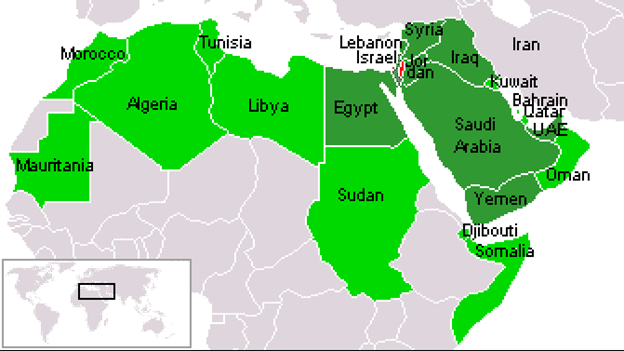
- The Arab League, officially known as the League of Arab States.
- It was established in Cairo in 194
- Member states – 22.
- The India–Arab Foreign Ministers’ Meeting is the highest institutional mechanism guiding India’s engagement with the Arab League.
- India holds observer status in the Arab League, which represents countries across West Asia and North Africa.
Highlights of the Delhi Declaration
- The Delhi Declaration reiterates support for the sovereignty, unity and territorial integrity of Sudan, Libya and Somalia.
- Sudan: UAE is accused of backing the Rapid Support Forces (RSF), which has fought the Sudanese state since 2023 and formed a parallel government in 2025; the Declaration aligns with Sudan and condemns civilian atrocities.
- Somalia: Israel alone recognises Somaliland; UAE’s 2025 recognition of Somaliland passports diverges from Arab League consensus. India firmly rejected recognition and backed Somalia’s territorial integrity.
- Yemen: India and the Arab League explicitly condemned Houthi attacks in the Red Sea, marking a shift from India’s earlier indirect language post-2023.
- Support for Yemen’s unity aligns with Saudi actions against the UAE-backed Southern Transitional Council.
Gyan Bharatam
Syllabus: GS1/Culture
In News
- Over 7.5 lakh manuscripts have been digitized under Gyan Bharatam, of which 1.29 lakh manuscripts are accessible on the Gyan Bharatam Portal.
Gyan Bharatam Mission
- Purpose – The mission aims to preserve and protect manuscripts found across the country.
- Objective: To undertake the “survey, documentation and conservation” of more than one crore manuscript heritage lying with academic institutions, museums, libraries, etc.
- Significance of Mission: Preserving historical value, unveiling ancient Indian knowledge to the world, ensuring longevity and round-the-clock access to Manuscripts, etc.
Basic terms – Manuscripts
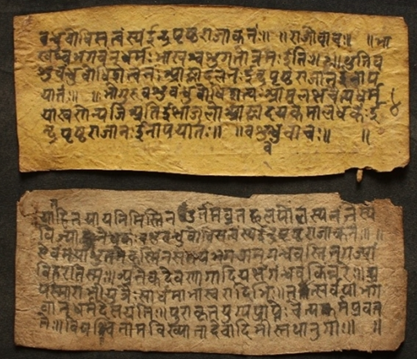
- A manuscript is a handwritten composition on paper, bark, palm leaf etc. dating back at least 75 years that has significant scientific, historical or aesthetic value.
- g. Bakhshali manuscript (Third or fourth century A.D.), an ancient Indian mathematical text written on birch bark, is considered to be the earliest recorded example of use of zero.
- India possesses an estimated 10 million manuscripts in 80 ancient scripts like Brahmi, Kushan, Gaudi, Lepcha, and Maithili.
Other initiatives for manuscript conservation in India
- National Manuscripts Mission (NMM): Launched In 2003, by the Ministry of Tourism and Culture to locate and preserve manuscripts.
- National Library of India, Kolkata: It has about 3600 rare and historically important manuscripts.
- Asiatic Society of Bengal: Founded on Jan. 15, 1784, by Sir William Jones, undertakes digitization of ancient manuscripts.
National Integration Council
Syllabus: GS2/Governance
Context
- Recently, there was a demand for the revival of the National Integration Council during Zero Hour in the Rajya Sabha.
National Integration Council
- Established in – 1961.
- Objective: To promote national integration, communal harmony, and unity in diversity, and to address issues that threaten the country’s social cohesion.
- Composition: Union Ministers, Chief Ministers of States and UTs, Leaders of major political parties, Eminent public figures, thinkers, and representatives of civil society.
Key Functions:
- Discusses and recommends measures to combat communalism, casteism, regionalism, separatism, and extremism.
- Advises the government on policies to strengthen constitutional values, secularism, and social harmony.
- Acts as a forum for consensus-building on sensitive national issues.
- Nature: It is an advisory body (not statutory, not constitutional).
- Its recommendations are non-binding.
- Meetings: Not held regularly; convened as and when required depending on national circumstances.
- The National Integration Council has not had a meeting since 2013.
Bharat-VISTAAR
Syllabus: GS2/Governance; GS3/Agriculture
Context
- The Union budget 2026-27 has proposed ‘Bharat-VISTAAR’ (Virtually Integrated System to Access Agricultural Resources)
Bharat-VISTAAR
- It is a multilingual AI tool that aims to provide information to farmers in their own language on crop planning, packages of practices and pests, weather forecasts, markets, scheme information, eligibility, application, and grievance.
- It shall integrate the AgriStack portals and the Indian Council of Agricultural Research (ICAR) package on agricultural practices with AI systems.
- Significance – This will enhance farm productivity, will lead to better farmer decision making and reduce risk through customized advisory support for the farmer.
- The Finance Minister allocated Rs 150 crore for the Bharat-VISTAAR for the next financial year (2026-27).
Additional information – AgriStack portal
- It is a centralized digital ecosystem developed by the Government of India to streamline agricultural services.
- It creates a unique Farmer ID (similar to Aadhaar) that links a farmer’s identity, land records, and crop data into one secure digital “passport”.
Core Components
- Farmer Registry: A database providing unique digital identities to farmers.
- Crop Sown Registry: A standardized national database tracking seasonal crop patterns.
- Geo-referenced Village Maps: Precision mapping that links land parcels with geographic coordinates.
Key Benefits
- Direct Benefits: Faster access to PM-KISAN subsidies, crop insurance (PMFBY), and Kisan Credit Card (KCC) loans.
- Paperless Access: Once registered, land records are digitally verified, reducing the need for physical documents in future applications.
- Market Connectivity: Direct links to buyers and real-time market price updates via platforms like e-NAM.
GOBARdhan Scheme
Syllabus: GS3/Economy
In News
- The GOBARdhan scheme is contributing significantly to the rural economy by creating employment opportunities, increasing farmers’ income, developing a manure and bio-energy supply chain, and supporting rural infrastructure development.
Galvanizing Organic Bio-Agro Resources Dhan (GOBARdhan) scheme
- It was launched in 2018 under Swachh Bharat Mission (Grameen)
- Objective – It aims to positively impact village cleanliness and generate wealth and energy from cattle and organic wast
- Significance – The main focus of GOBAR-Dhan is to keep villages clean, increase the income of rural households, and generate energy and organic manure from cattle waste.


Leave a Reply