
India’s Power Sector
Economy
Context
- India’s power distribution utilities have recorded a collective Profit After Tax (PAT) of ₹2,701 crore in FY 2024–25.
India’s Power Sector
- India is the third-largest producer and consumer of electricity in the world, with an installed capacity of 476 GW as of June 2025.
- India ranks fourth globally in renewable energy installed capacity, fourth in wind power, and third in solar power as of 2025.
- Electricity consumption remains led by industry at 41.8%, followed by households at 24.3%, agriculture at 17%, and commercial use at 8.3%.
- India achieved 100% village electrification by 2018 and has since connected more than 2.8 crore households to the grid.
Government Initiatives
- National Solar Mission (NSM): It was launched in 2010, it has set ambitious targets for solar capacity installation, including grid-connected and off-grid solar power projects.
- National Clean Energy Fund (NCEF): It was established to support research and innovation in clean energy technologies and projects that help in reducing greenhouse gas emissions.
- National Wind Energy Mission: Focuses on the development and expansion of wind energy in India. The target for wind energy capacity is set at 140 GW by 2030.
- PM-KUSUM Scheme for solarizing agricultural pumps.
- Revamped Distribution Sector Scheme (RDSS) to strengthen DISCOMs.
BRICS Plus Naval Exercise
International
In News
- India skipped the BRICS Plus naval exercise “Will for Peace 2026” hosted by South Africa, opting out entirely despite holding the BRICS chair this year.
- India clarified that such naval drills are not institutionalised activities of BRICS, but ad-hoc initiatives, and therefore participation is not automatic or obligatory.
BRICS Plus Naval Exercises
- BRICS Plus naval exercises are ad-hoc maritime drills involving BRICS members and selected non-BRICS partner countries.
- They are not mandated under the BRICS framework and do not form part of official BRICS mechanisms.
- Led by China, the exercise features active naval participation from Russia, Iran, the United Arab Emirates (UAE), and South Africa.
BRICS
- Founded in – 2009
- HeadQuarters – Shanghai
- It is an acronym for the grouping of the world’s leading emerging economies, namely Brazil, Russia, India, China, and South Africa (included in 2010)
- Origin – The term “BRIC” was coined by the British Economist Jim O’Neill in 2001 to describe the four emerging economies of Brazil, Russia, India, and China.
- Member Countries: The group includes the five original members (Brazil, Russia, India, China, and South Africa) and six members admitted during the 2024-25 expansion (Egypt, Ethiopia, Indonesia, Iran, Saudi Arabia, and the United Arab Emirates).
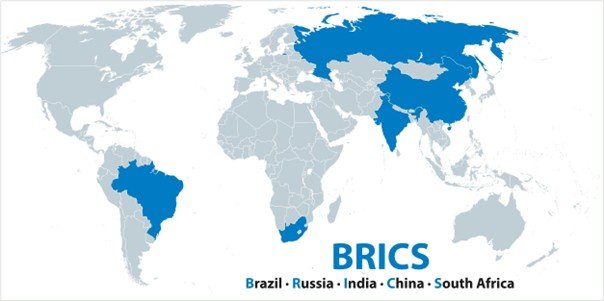
- Share of BRICS – BRICS brings together five of the largest developing countries, representing 41% of the global population, 24% of the global GDP, and 16% of the global trade (By 2028, BRICS is expected to make up 35 percent of the global economy)
- Financial Arm: The New Development Bank (NDB) acts as the group’s primary international financial organization to support infrastructure and sustainable projects.
India’s First-ever Open-sea Marine Fish Farming Project
Economy
Context
- The government launched India’s first-ever open-sea Marine Fish Farming project from the Andaman Sea.
About
- Implementation – The project is a collaboration between the Ministry of Earth Sciences, the National Institute of Ocean Technology (NIOT), and Andaman and Nicobar Islands.
- The pilot initiative focuses on open-sea cultivation of marine finfish and seaweed in natural ocean conditions, integrating scientific innovation with livelihood generation.
- The project aims to boost seafood production and reduce pressure on coastal fishing.
Open-sea Fish Farming
- Open-sea marine fish farming refers to the cultivation of marine fish species in offshore waters, away from the coastline.
- It is done using cages, or submersible systems designed to withstand high waves, currents, and wind conditions.
- Open-sea marine fish farming holds significant potential for sustainable fisheries, livelihood security, and blue economy expansion.
80 Years of Economic and Social Council (ECOSOC)
International
In News
- The United Nations Economic and Social Council (ECOSOC) completed 80 years of its functioning.
United Nations Economic and Social Council (ECOSOC)
- It is one of the six principal organs of the United Nations, acting as the central forum for international economic, social and environmental policy coordination.
- It was established in 1945 under the UN Charter.
Leave a Reply