
Supreme Court Clarifies Aravalli Boundaries, Regulates Mining
Environment
Context
- The Supreme Court, in a recent order, settled on a uniform definition of the Aravalli hills and ranges, and paused the grant of fresh mining leases across Delhi, Haryana, Rajasthan, and Gujarat.
Aravalli Range
- Location – The Aravalli Range, stretching over approximately 692 kilometers (430 miles) in a northeastern direction, traverses the Indian states of Gujarat, Rajasthan, and Haryana before culminating in Delhi
- Uniqueness – It is the oldest mountain range in India.
- Significance – The Aravallis serve as a natural barrier against desertification, and helps regulate the climate, supports diverse ecosystems, and acts as a watershed for several rivers, including the Sabarmati, Luni, and Banas.
Aravalli Green Wall Project (AGWP)
- It is a major initiative aimed at restoring 1.15 million hectares of degraded land across four states in northwestern India (Haryana, Rajasthan, Gujarat, and Delhi).
- National Goals: The project is part of India’s effort to achieve the national goal of creating an additional 2.5 billion tonnes of carbon sink by 2030.
- Broader Impact: The project contributes to India’s commitments under international conventions such as:
- UNCCD (United Nations Convention to Combat Desertification),
- CBD (Convention on Biological Diversity),
- UNFCCC (United Nations Framework Convention on Climate Change).
- Objectives and Features of AGWP: The project focuses on combating desertification, land degradation, and drought.
India Tops Global Doping Violations: WADA Report 2024
Health
In News
- The World Anti-Doping Agency (WADA) Report 2024 has ranked India as the worst doping offender globally for the third consecutive year.
Doping and its Concerns
- Doping refers to the practice of using banned chemical substances, known as performance enhancing drugs (PEDs), by athletes.
Global efforts to tackle Doping
Copenhagen Declaration
- Held in – Copenhagen Declaration on Anti-Doping in Sport was agreed upon by governments at the Second World Conference on Doping in Sport held in Copenhagen, Denmark in 2003.
- Purpose – The declaration was the political document through which governments signalled their intention to formally recognise and implement the World Anti-Doping Code.
- Significance – This declaration was the first step toward the preparation of the UNESCO International Convention against doping in sports.
- India agreed to this declaration in the year 2003.
International Convention Against Doping in Sport
- It is also known as the ‘UNESCO Anti-Doping Convention’.
- It was adopted at the General Conference of UNESCO in Paris in 2005. It entered into force in 2007.
- Objective – To promote the prevention of and the fight against doping in sports, with a view to its elimination.
- India ratified this convention in 2007.
- Note – National Anti-Doping Agency, an autonomous body under the Ministry of Youth Affairs, is responsible for adopting, implementing and enforcing anti-doping programmes in India.
World Anti-Doping Agency (WADA)
- Founded in 1999 following the Lausanne Declaration
- It is headquartered in Montreal, Canada, with regional offices in Lausanne (Europe), Cape Town (Africa), and Montevideo (Latin America).
- The agency publishes the World Anti-Doping Code and the annual prohibited list.
India’s Efforts to Tackle Doping
- National Anti-Doping Act, 2022: This landmark legislation gave the National Anti-Doping Agency (NADA) and the National Dope Testing Laboratory (NDTL) statutory status.
- National Anti-Doping (Amendment) Bill, 2025 recently introduced to strengthen institutional autonomy.
- India is a signatory to the UNESCO International Convention Against Doping in Sport.
- Athlete Passport Management Unit (APMU): A dedicated unit at NDTL was inaugurated in 2025 to monitor the Biological Passport of athletes.
- NIDAMS Portal: The NADA India Data Administration and Management System was launched in 2025. It digitalizes the entire process—from planning tests and generating mission orders for Doping Control Officers (DCOs).
- “Know Your Medicine” (KYM) App: A mobile tool that allows athletes to scan or search medicines to check if they contain substances prohibited by WADA.
Pamir Mountains/ Pamir-Karakoram Anomaly
Geography
Context
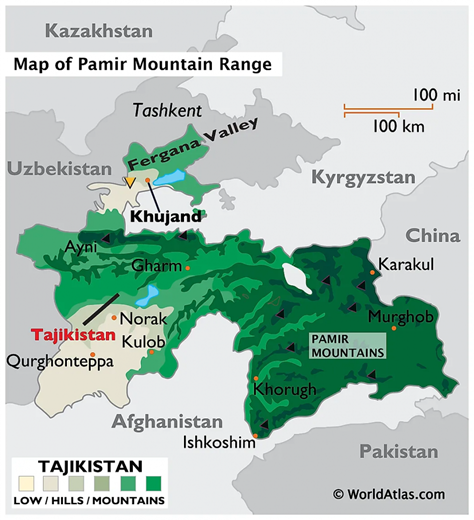
- Ice cores from the Pamir Mountains are being studied to understand why its glaciers have resisted melting despite global warming.
Pamir–Karakoram Anomaly
- It refers to the unusual behaviour of glaciers in parts of the Pamir and Karakoram ranges.
Unlike most glaciers worldwide, these glaciers have:
- Shown resistance to melting, and
- Experienced slight mass gain in recent decades.
- This makes the region scientifically significant for understanding glacier–climate interactions.
Pamir Mountains
- Geology: Formed by the collision of the Indian and Eurasian tectonic plates, making it a seismically active zone.
- Location: Spans parts of Tajikistan, Afghanistan, China, and Kyrgyzstan.
- The Pamir Mountains, also known as the “Roof of the World,” form a massive convergence zone (Pamir Knot) with the Himalayas, Karakoram, Hindu Kush, Kunlun, and Tian Shan ranges.
- Ancient Routes: Historically part of the Silk Road, with Marco Polo referencing the area.
- Major Peaks & Features: Ismoil Somoni Peak (Tajikistan), Kongur Tagh (China), Muztagh Ata (China) etc.
- Tajik National Park: A large protected area encompassing much of the Pamirs, a UNESCO World Heritage site.
- Drainage System: The Pamirs are heavily glaciated, with the Fedchenko Glacier being the largest glacier in Central Asia.
- Meltwater from glaciers feeds major rivers such as, Panj River and Vakhsh River. These rivers are part of the Amu Darya river system, crucial for Central Asia.
Exercise Desert Cyclone 2025
Defence
Context
- India-UAE Joint Military Exercise Desert Cyclone is going to begin in UAE.
About the exercise
- The first edition of Exercise Desert Cyclone was held in 2024 in Rajasthan, India.
- The aim of the exercise is to enhance interoperability and foster defence cooperation between the Indian Army and the UAE Land Forces
Navy Inducts Second Seahawks Squadron
Defence
Context
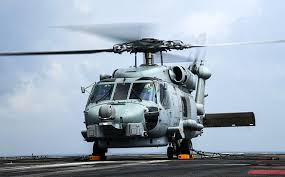
- The Indian Navy commissioned its second MH 60R helicopter squadron, INAS 335, at INS Hansa in Goa.
Seahawks Squadron
- Twenty-four of these submarine-hunting helicopters have been acquired by India from the US.
- These are US-origin Seahawks, maritime versions of the Black Hawk.
- The helicopter is designed for a wide range of operations: anti-submarine warfare (ASW), anti-surface warfare (ASuW), search and rescue (SAR) missions.
- These helicopters are replacing the ageing British-origin Sea King helicopters, which have been in service for long.
Param Vir Chakra (PVC)
Miscellaneous
Context
- Portraits of all 21 Param Vir Chakra (PVC) awardees have been installed at Rashtrapati Bhavan, replacing the portraits of 96 British Aide-de-Camps (ADCs).
- This move is part of the government’s broader effort to dismantle colonial legacies.
Param Vir Chakra
- It was instituted on 26 January 1950 (Republic Day) by Dr. Rajendra Prasad, the first President of India.
- The name Param Vir Chakra translates to “Wheel of the Ultimate Brave.”
- The medal was designed by Savitri Khanolkar, who drew inspiration from Sage Dadhichi, the Vedic rishi who sacrificed his body so that the gods could forge the Vajra (thunderbolt) from his spine.
- The medal is cast in bronze. In the centre, on a raised circle, is the state emblem, surrounded by four replicas of Indra’s Vajra, flanked by the sword of Shivaji. It is suspended from a swivelling bar and worn with a 32 mm purple ribbon.
Additional Information – Gallantry Awards
- Honoured by – Government of India
- It is given to honour acts of bravery, sacrifice, and exceptional courage by members of the armed forces, paramilitary forces, and civilians.
- They are classified as wartime (gallantry in the face of enemy) and peacetime awards.
- Administered by: Ministry of Defence (for armed forces) and Ministry of Home Affairs (for police and civilians).
- Awarded by: President of India.
- These gallantry awards are announced twice in a year – first on the occasion of the Republic Day and then on the occasion of the Independence Day.
- Wartime Gallantry Awards: Param Vir Chakra (PVC), Mahavir Chakra (MVC) and Vir Chakra.
- Peacetime Gallantry Awards: Ashok Chakra, Kirti Chakra, Shaurya Chakra.
Gallantry Awards
- Order of Precedence: Param Vir Chakra (PVC), Ashoka Chakra (AC), Maha Vir Chakra (MVC), Kirti Chakra (KC), Vir Chakra (VrC), Shaurya Chakra (SC).
All six awards can be conferred posthumously.




Leave a Reply