
Earth System Sciences Council
Syllabus: GS2/Governance
Context
- 5 institutes of the Ministry of Earth Sciences have been formally brought under a single umbrella by merging five separate Societies into one single called “Earth System Sciences Council” (ESSC).
Earth System Sciences Council
- Aim: To streamline governance and collectively address the scientific and humanitarian problems posed by the changing climate, erratic monsoons and melting polar regions.
Institutes Merged:
- Indian Institute of Tropical Meteorology (IITM) Pune
- National Centre for Polar and Ocean Research (NCPOR) Goa
- National Institute of Ocean Technology (NIOT) Chennai
- National Centre for Earth Science Studies (NCESS) Thiruvananthapuram
- Indian National Centre for Ocean Information and Services (INCOIS) Hyderabad.
Earth System Science Organisation comprises two sub-ordinate offices:
- India Meteorological Department (IMD) and the National Centre for Medium Range Weather Forecasting (NCMRWF).
- ESSC formally registered as a body in 2023, MoES Secretary will head the ESSC and the minister for Earth Sciences will act as the ESSC president.
‘YUVA AI for ALL’
Syllabus: GS3/ S&T

In News
- The Ministry of Electronics and Information Technology (MeitY), under the IndiaAI Mission, has launched ‘YUVA AI for ALL’, a first-of-its-kind free course that introduces the world of Artificial Intelligence (AI) to all Indians.
‘YUVA AI for ALL’
- It is a short, 5-hour self-paced course designed to make students, professionals and other curious learners comfortable with the basics of AI and to show how it’s transforming the world.
- It aims to empower 1 crore (10 million) citizens with foundational AI skills – helping bridge the digital divide, promote ethical AI adoption, and prepare India’s workforce for the future.
IndiaAI Mission
- Launched in – March 2024.
- Mandate – It is a comprehensive initiative aimed at fostering AI research, development, and innovation in India.
- Implementing Agency: ‘IndiaAI’ Independent Business Division under Digital India Corporation.
Hanoi Convention
Syllabus: GS3/Cybersecurity
Context
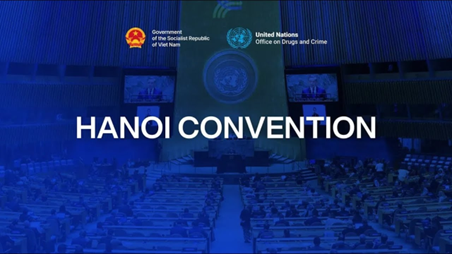
- 72 nations have signed a landmark United Nations Convention against Cybercrime treaty in Hanoi aimed at tackling cybercrime.
Hanoi Convention
- Aim: It proposes a legislative framework to boost international cooperation among law enforcement agencies and offer technical assistance to countries that lack adequate infrastructure for combating cybercrime.
- First Universal Convention: The Convention establishes the first universal framework for investigating and prosecuting offences against Cybercrime.
- Legally Binding: The UN Cybercrime Convention is a powerful, legally binding instrument.
- Adoption: It was adopted by the General Assembly in 2024 after five years of negotiation.
- The signing process is expected to remain open till next year.
Key Provisions:It criminalises the following types of crimes:
- Cyber-dependent crimes: Unauthorized access (hacking), data interference.
- Cyber-enabled crimes: Online fraud, non-consensual dissemination of intimate images.
- Child exploitation: Online sexual abuse, distribution of abuse material, solicitation/grooming.
- It facilitates the sharing of electronic evidence across borders and establishes a 24/7 cooperation network among States.
- It also makes history as the first international treaty to recognise the non-consensual dissemination of intimate images as an offence – a significant victory for victims of online abuse.
- Enforcement: It will enter into force 90 days after the 40th State deposits its ratification.
- Conference of the States Parties: After entry into force, a Conference of the States Parties will convene periodically to improve the capacity of and cooperation between States Parties.
- Secretariat: The United Nations Office on Drugs and Crime serves as the secretariat.
Connect with the basics – Types of Cyber Attacks
- Malware – It is short for malicious software, refers to any kind of software that is designed to cause damage to a single computer, server, or computer network.
Example – Ransomware, Spy ware, Worms, viruses, and Trojans are all varieties of malware.
- Phishing – It is the method of trying to gather personal information using deceptive e-mails and websites.
Types of Malware
- Spyware – Spyware is software that spies on you, tracking your internet activities in order to send advertising (Adware) back to your system.
- Virus – A virus is a contagious program or code that attaches itself to another piece of software, and then reproduces itself when that software is run. Most often this is spread by sharing software or files between computers.
- Worm – A program that replicates itself and destroys data and files on the computer. Worms work to “eat” the system operating files and data files until the drive is empty.
Recent Steps Taken in India regarding Cyber Security
- Cyber Surakshit Bharat Initiative – It was launched in 2018 with an aim to spread awareness about cybercrime and building capacity for safety measures for IT staff across all government departments.
- National Cyber security Coordination Centre (NCCC) – In 2017, the NCCC was developed to scan internet traffic and communication metadata coming into the country to detect real-time cyber threats.
- Cyber Swachhta Kendra – In 2017, this platform was introduced for internet users to clean their computers and devices by wiping out viruses and malware.
- Computer Emergency Response Team – India (CERT-IN) – It is the nodal agency which deals with cybersecurity threats like hacking and phishing.
Legislation
- Information Technology Act, 2000.
- Personal Data Protection Bill, 2019.
International Mechanisms
- International Telecommunication Union (ITU) – It is a specialised agency within the United Nations which plays a leading role in the standardisation and development of telecommunications and cyber security issues.
Budapest Convention on Cybercrime
- It is an international treaty that seeks to address Internet and computer crime (cybercrime) by harmonizing national laws, improving investigative techniques, and increasing cooperation among nations.
- It came into force on 1st July 2004.
- India is not a signatory to this convention.
Protection of Plant Variety and Farmers’ Rights Act (PPV&FRA Act)
Syllabus: GS3/Agriculture
Context
- The Union Agriculture Minister said that the Centre will amend the Protection of Plant Variety and Farmers’ Rights Act (PPV&FRA Act), incorporating suggestions from stakeholders.
Protection of Plant Variety and Farmers’ Rights Act (PPV&FRA Act) 2001
- Aim: To provide for the establishment of an effective system for the
- Protection of plant varieties,
- Rights of farmers and plant breeders
- To encourage the development of new varieties of plants.
Significance:
- Balances innovation and farmers’ traditional rights.
- Promotes agrobiodiversity conservation.
- Enhances seed industry growth while protecting rural livelihoods.
India’s Dugong (sea cows) are Under Threat
Syllabus: GS3/Species in News
In News
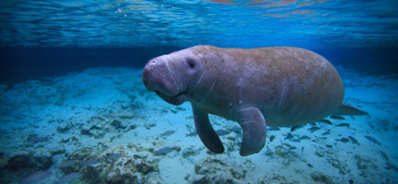
- A recent report released at the IUCN Conservation Congress in Abu Dhabi warns of the growing threat to India’s dugong population.
Dugongs(Dugong dugon)
- Dugongs are primarily herbivorous, grazing on 30 kg-40 kg of seagrass a day.
- They are known as “sea cows,” and peacefully graze on seagrass in shallow coastal waters of the Indian and western Pacific Oceans.
- They are often referred to as the “farmers or gardeners of the sea” for their important role in preserving the coastal ecosystems and aiding fish production.
- Geographic Range: These gentle giants are found in warm waters along coastlines, mainly confined to seagrass beds which occur in calm sheltered habitats such as bays and lagoons.
- Distribution – They are found in the Gulf of Mannar, the Palk Bay, the Gulf of Kutch and the Andaman and Nicobar Islands in India.
- Threats – Their population was on the decline over the past several decades owing to a variety of factors, including hunting for meat, commercial fishing practices leading to accidental drowning, and habitat degradation.
Protection status :
- International Union for Conservation of Nature (IUCN) Red List – Vulnerable
- Wild Life (Protection) Act, 1972 – Schedule I
Conservation Efforts in India
- Dugong Conservation Reserve: India established its first dugong conservation reserve in Palk Bay, Tamil Nadu, which has been recognized by the IUCN as a global model for marine biodiversity conservation.
- National Dugong Recovery Program: Launched in collaboration with Tamil Nadu, Gujarat, and the Andaman & Nicobar Islands to protect habitats and promote dugong conservation.
- International Cooperation: India’s efforts align with global conservation frameworks such as CITES and the Convention on Migratory Species (CMS).
Ginkgo-toothed Beaked Whales
Syllabus: GS3/Species in News
In News
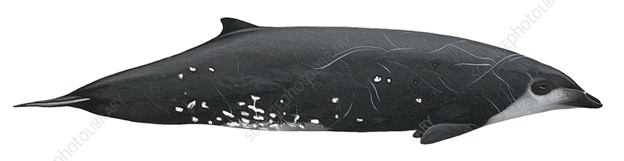
- A team of scientists has spotted the rare ginkgo-toothed beaked whales for the first time in the wild along the coast of Baja California in Mexico.
Ginkgo-toothed beaked whales (Mesoplodon ginkgodens)
- They are one of 24 species of beaked whales.
- Beaked whales are the deepest-diving mammals on Earth.
- They spend most of their lives in the oceans, only coming to the surface for air for a few minutes at a time, usually far away from coastlines.
- They are found in the tropical and warm-temperate waters of the western Pacific.
- IUCN status – Data Deficient
LeadIT
Syllabus: GS3/ Environment
In News
- At COP30 in Belém, Brazil, India’s Union Environment Minister addressed the LeadIT Industry Leaders’ Roundtable, reaffirming India’s role in driving low-carbon industrial transitions.
LeadIT
- Launch: 2019, jointly by India and Sweden, with support from the World Economic Forum at the UN Climate Action Summit.
- Purpose: To accelerate the transition of hard-to-abate, high-emitting industries—such as steel, cement, aluminium, chemicals, and heavy transport—towards net-zero by 2050.
- It was among the first global high-level initiatives focused specifically on industrial decarbonisation.
- LeadIT 2.0 (2024–2026), adopted during the LeadIT Summit at COP28 (Dubai). LeadIT 2.0 aims to move from dialogue to implementation.
CRISPR-Cas systems
In News
- Indian scientists at ICAR’s Central Rice Research Institute have developed a patented indigenous Genome-Editing(GE) technology using TnpB proteins as a compact alternative to the globally patented CRISPR-Cas systems.
Do you know?
- In May 2025, ICAR released two genome-edited rice varieties developed by Indian Institute of Rice Research (IIRR) and the Indian Agricultural Research Institute (IARI).
- IIRR enhanced yields in Samba Mahsuri rice by editing the cytokinin oxidase 2 gene using CRISPR-Cas12a, while IARI improved drought and salinity tolerance in MTU-1010 (Cottondora Sannalu) by editing the DST gene with CRISPR-Cas9.
TnpB or Transposon-associated proteins
- It acts as “molecular scissors,” and precisely cuts and modifies plant DNA, enabling desirable traits without introducing foreign genes.
- Unlike bulky Cas9 and Cas12a proteins, the hypercompact TnpB (408 amino acids) can be easily delivered into cells via viral vectors, bypassing tissue culture methods.
Additional Information- Gene Editing Technology
- It refers to technology that permits the change of an organism’s DNA by allowing genetic material to be added, removed, or altered at particular locations in the genome.
CRISPR Cas9 Technology
- Acronym – Clustered Regularly Interspaced Short Palindromic Repeats.
- Significance – With the use of the gene editing technique CRISPR, researchers can modify the DNA of living things.
- An enzyme called Cas9 functions as molecular scissors, guided by RNA molecules created to precisely match a certain DNA sequence.
- GE (Genome Editing): Involves precise modification of specific genes within an organism’s genome without introducing foreign genes, resulting in targeted genetic changes.
- GM (Genetically Modified): Involves the insertion of foreign genes from unrelated organisms into an organism’s genome to confer specific traits or characteristics.
Regulatory Bodies
- GEAC (Genetic Engineering Appraisal Committee): It is a regulatory body under the Ministry of Environment, Forest and Climate Change (MoEFCC).GEAC is responsible for evaluating and approving genetically modified organisms (GMOs)
- Cartagena Protocol on Biosafety (CPB): Ensures safe handling of GMOs that may impact biodiversity under the Convention on Biological Diversity. Nagoya-Kuala Lumpur.



Leave a Reply