
Codex Alimentarius Commission
Syllabus: GS3/ Economy
In News
- India has been re-elected to the Codex Alimentarius Commission’s Executive Committee for the Asia region until the end of CAC50 in 2027.
Codex Alimentarius Commission
- Established: 1963 by FAO and WHO.
- Objective: Protect consumer health and promote fair practices in food trade.
- Members: 189, including 188 countries and 1 organization (European Union).
- Meetings: Annual sessions rotating between Geneva and Rome.
- Source: TH
Water Budgeting
Syllabus: GS3/ Agriculture
In News
- NITI Aayog released a report on Water Budgeting in Aspiration Blocks to enhance local water security.
Water Budgeting
- Definition – Water budgeting is a systematic estimation of water availability and water demand across all sectors — agriculture, households, livestock, industry, and ecology.
- It directly supports SDG 6 (Clean Water & Sanitation) and the national push toward water-use efficiency.
- Significance – It will strengthen decentralised planning under Jal Jeevan Mission, Jal Shakti Abhiyan, and Atal Bhujal Yojana.
Indira Gandhi Peace Prize
Syllabus: Miscellaneous

Context
- Michelle Bachelet, the former President of Chile, has been awarded the Indira Gandhi Peace Prize for 2024.
Indira Gandhi Peace Prize
- It is an annual award established by the Indira Gandhi Memorial Trust in India.
- The prize is named in honor of the late Prime Minister of India, Indira Gandhi
- It was instituted in 1986.
- Prize money: Recently, the prize money has been increased from rupees 25 lakhs to rupees 1 crore.
- Objective – The award is presented to individuals or organizations that have made significant contributions to peace, the development of new international economic order, and the strengthening of democracy.
- Generally, the award is presented on the occasion of the birth anniversary of Indira Gandhi on November, 19th.
Categories: The award is presented in three categories:
- Peace: Recognizes efforts to promote and maintain international peace and security.
- Disarmament: Acknowledges contributions to the reduction and elimination of weapons of mass destruction.
- Development: Honors work in promoting economic and social development.
National Action Plan on AMR 2.0 Launched
Syllabus: GS2/Issues Related To Health
Context
- Recently, the Union Health Minister launched the second version of the National Action Plan on Antimicrobial Resistance (NAP-AMR) (2025–29).
National Action Plan on AMR 2.0 (2025–29)
- It addresses gaps from NAP-AMR 1.0 (2017–2021), including strengthening surveillance, expanding public awareness, enhancing private-sector engagement, and improving regulatory and laboratory capacity.
Connect with the basics – Antimicrobial Resistance
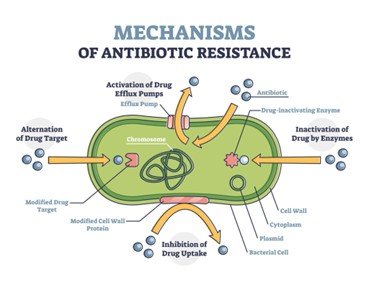
- Definition – It occurs when bacteria, viruses, fungi and parasites change over time and no longer respond to medicines making infections harder to treat and increasing the risk of disease spread, severe illness and death.
- Nearly 700,000 people die of AMR every year. The toll can rise to as many as 10 million by 2050 and eat up 3.8 per cent of annual global gross domestic product (GDP).
Causes
- Overuse and Misuse of Antibiotics
- Inadequate Dosage and Duration
- Self-Medication
- Antibiotics Consumption in Food-Animals
- Poor Sanitation
Global Efforts against Antimicrobial Resistance
- Global Action Plan on Antimicrobial Resistance (GAP)
- World Antimicrobial Awareness Week (WAAW)
- Global Antimicrobial Resistance and Use Surveillance System (GLASS)
- Global Antibiotic Research and Development Partnership (GARDP)
Measures Taken against Antimicrobial Resistance in India
- National Action Plan on Antimicrobial Resistance (NAP-AMR)
- AMR Surveillance Network
- India’s Red Line campaign: Which demands that prescription-only antibiotics be marked with a red line, to discourage the over-the-counter sale of antibiotics– is a step forward.
Removing of Ineligible Beneficiaries from NFSA List
Syllabus: GS3/Food Security
Context
- The Union Government has removed around 2.25 crore ineligible beneficiaries from the free monthly ration scheme under the National Food Security Act (NFSA) over the past four to five months.
National Food Security Act (NFSA), 2013
- The right to food is implicit in the right to life under Article 21 of the Indian Constitution.
- Mandate – It aims to provide subsidized foodgrains to a larger section of India’s population.
- It amounts to roughly35 crore people under the Targeted Public Distribution System (TPDS), based on the 2011 Census data.
It covers:
- Up to 75% of the rural population;
- Up to 50% of the urban population;
Categories of Beneficiaries: The Act divides beneficiaries into two main groups:
- Antodaya Anna Yojana (AAY) Households: Entitled to 35 kg of foodgrains per month.
- Priority Household (PHH) Individuals: Entitled to 5 kg of foodgrains per person per month.
- Currently, free foodgrains (wheat and rice) are distributed every month to poor households under these categories.
Scale of Distribution
- India currently has over 19 crore ration card holders, and around 5 lakh fair price shops operating across States and Union Territories.
- It leverages the existing infrastructure of the Public Distribution System (PDS) and integrates schemes like the Mid-Day Meal Scheme and Integrated Child Development Services (ICDS).
Targeting Only ‘Rightful’ Beneficiaries
- The government’s objective is to ensure that only genuine beneficiaries—those who truly need assistance—receive the benefits.
- The Department of Food and Public Distribution identified ineligible individuals using various criteria and shared the lists with State governments for verification and deletion.
- It used Aadhaar-based verification to identify and remove ineligible names.
Key reasons for removal included:
- Ownership of four-wheelers;
- High income above the eligibility threshold
- Company directorships;
- Deceased beneficiaries
Modified UDAN Regional Air Connectivity Scheme
Syllabus: GS3/Economy
In News
- The government has proposed a ₹30,000 crore outlay for the modified UDAN regional air connectivity scheme, to extend it beyond April 2027.
- Of this, ₹18,000 crore is earmarked for new airport development and ₹12,000 crore for viability gap funding (VGF) to support airlines connecting underserved regions.
UDAN Scheme
- It is a regional connectivity scheme launched in 2016.
- The first UDAN flight operated between Shimla and Delhi in 2017.
- Ministry: Ministry of Civil Aviation.
- Aim: To make air travel affordable and accessible to the common citizen by connecting Tier-2 and Tier-3 cities to major hubs.
Implementation: 0
- Viability Gap Funding (VGF): Financial support to airlines to ensure affordable fares.
- Airfare Cap to ensure affordability.

Leave a Reply