
High Seas Treaty
Syllabus – Environment
In News
- The High Seas Treaty, ratified by over 60 countries, will take effect in January 2026.
BBNJ Treaty (High Seas Treaty)
- Objective – It is a landmark international agreement aimed at the conservation and sustainable use of marine biological diversity in areas beyond national jurisdiction.
- Significance – It is a significant step towards protecting the ocean, promoting equity and fairness, tackling environmental degradation, and preventing biodiversity loss in the high seas.
- Adopted in – It was adopted by consensus at the 5th BBNJ Intergovernmental Conference in New York in March 2023.
- Member countries – Currently, it has been signed by representatives from more than 80 countries.
India and Bahrain’s Bilateral Relations
Syllabus: GS2/IR
Context
- External Affairs Minister S Jaishankar met Bahrain’s Foreign Minister and discussed cooperation in defence and security.
India and Bahrain’s Bilateral Relations
- Bilateral trade: USD 1.64 billion (FY 2024–25); India among Bahrain’s top five trading partners.
- Gateway to the Gulf: Bahrain, located near the western shores of the Gulf, serves as a strategic entry point for India into the Gulf Cooperation Council (GCC) region.
- Energy Security: Bahrain, though a smaller oil producer compared to other GCC states, plays a role in India’s energy diversification strategy and refined petroleum trade.
Additional Information – Bahrain (Capital: Manama)
Political Features
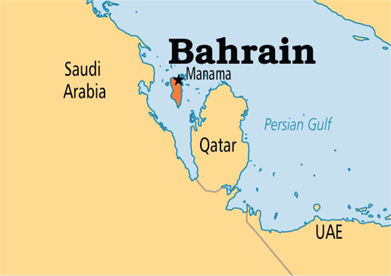
- Bahrain is the third-smallest nation in Asia.
- Location: Lies in West Asia, in the Persian Gulf.
- Border: It is an archipelago of islands and has no land borders with other countries.
- Neighbouring Water Bodies: Persian Gulf.
- Gulf Cooperation Council (GCC)
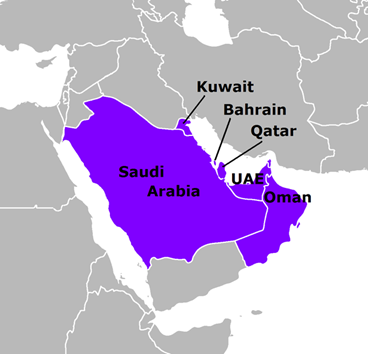
- It is a political and economic union of six Arabian Peninsula countries
- Members: Bahrain, Kuwait, Oman, Qatar, Saudi Arabia, and the United Arab Emirates.
- Establishment: Founded on May 25, 1981, through an agreement signed in Riyadh, Saudi Arabia.
- Objectives: To achieve unity and coordination among member states in all fields, including economic, security, cultural, and social cooperation.
- Headquarters: Riyadh, Saudi Arabia.
Maldives Becomes First Nation to Enforce Generational Tobacco Ban
Syllabus: GS2/ Health
In News
- The Maldives has become the first country worldwide to impose a historic generational ban on tobacco and vaping.
Generational Ban
- A generational ban on tobacco refers to a progressive legal prohibition designed to create a tobacco-free generation by banning tobacco sales and usage for all individuals born after a specified date.
Additional Information – Maldives
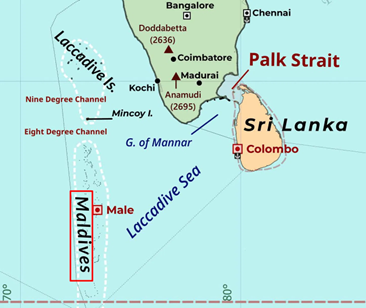
- Capital: Male
- Official language: Dhivehi (an Indo-European language); Arabic, Hindi, and English are also spoken.
- Religion: Islam is the state religion
- Economy: Heavily dependent on tourism, along with fisheries and foreign aid.
- Constitution: The 2008 Constitution defines a presidential system with direct elections for a maximum of two five-year terms.
Geographical Features
- It is home to the 7th largest coral reef system in the world, contributing 3.14% of global reef area.
- The country has no rivers or streams and the average elevation is under 2 meters, making it highly vulnerable to sea-level rise.
- The Maldives is an archipelagic state consisting of about 1,200 coral islands grouped in 26 atolls, located in the north-central Indian Ocean.
- It is strategically positioned making it vital for maritime trade and security in the IOR.
Encephalomyocarditis Virus (EMCV)
Syllabus: GS2/Health
In News
- Delhi zoo’s lone African elephant died from the rare rodent-borne encephalomyocarditis virus (EMCV) — the first such case reported in any Indian zoo.
Encephalomyocarditis Virus (EMCV)
- Pathogen– It is a small, single-stranded RNA virus
- It causes myocarditis, encephalitis, neurological disorders, reproductive issues, and diabetes across various mammalian species.
- Transmission : Consumption of food and water contaminated with rodent urine or feces
- Occurrence : EMCV was first identified in 1945 from a gibbon in Florida
National Company Law Appellate Tribunal (NCLAT)
Syllabus: GS2/ Governance
Context
- The Supreme Court refused to intervene with an order of the National Company Law Appellate Tribunal (NCLAT) which had allowed Aakash Educational Services Ltd, a subsidiary of Byju’s, to proceed with its proposed rights issue.
National Company Law Appellate Tribunal (NCLAT)
- Constituted under – Section 410 of the Companies Act, 2013, with effect from 2016.
- Legal status – It functions as a quasi-judicial body to hear appeals against orders of the National Company Law Tribunal (NCLT) and several other regulatory authorities.
- It also serves as the Appellate Tribunal for hearing appeals against orders passed by the
- National Company Law Tribunal (under Section 61 of the Insolvency and Bankruptcy Code, 2016),
- Insolvency and Bankruptcy Board of India (under Sections 202 and 211 of the IBC),
Pradhan Mantri Fasal Bima Yojana
Syllabus: GS3/Economy
In News
- The Union Agriculture Minister has ordered on-field investigations into extremely low insurance payouts under the Pradhan Mantri Fasal Bima Yojana.
Pradhan Mantri Fasal Bima Yojana(PMFBY)
- Implementation – Ministry of Agriculture & Farmers Welfare
- Launched in – It is an insurance service for farmers for their yields, launched in 2016.
Objectives:
- To provide insurance coverage and financial support to the farmers in the event of failure of any of the notified crops as a result of natural calamities, pests and diseases.
- To stabilise the income of farmers to ensure their continuance in farming.
- To encourage farmers to adopt innovative and modern agricultural practices.
- To ensure flow of credit to the agriculture sector.
Key features of the PMFBY
Premium rates
- There will be a uniform premium of only 2% to be paid by farmers for all Kharif crops and 1.5% for all Rabi crops (winter sown).
- In case of annual commercial and horticultural crops, the premium to be paid by farmers will be only 5%.
- The balance premium will be paid by the Government (to be shared equally by the central and state government).
- The idea is to provide a fully insured amount to the farmers against crop loss on account of natural calamities.


Leave a Reply