
IUCN World Heritage Outlook 2025
Syllabus: GS3/ Environment
News
- The IUCN World Heritage Outlook 4 revealed a worrying global environmental trend that climate change has emerged as the greatest threat to natural World Heritage sites.
Key Points
- The report finds that 43% of sites face severe climate threats, while invasive alien species affect 30%, and wildlife and plant diseases are rising sharply, now impacting 9% of sites, up from just 2% in 2020.
- Note – Khangchendzonga National Park is the only site rated “Good” in conservation outlook.
- Sundarbans National Park has deteriorated from “Good with Some Concerns” (2020) to “Significant Concern” (2025) due to sea-level rise, salinity, and cyclones.
- Manas National Park is in significant Concern category persists due to poaching and encroachment.
Additional information – Khangchendzonga National Park (KNP)
- World Heritage Site: Declared a UNESCO mixed World Heritage Site in 2016, meaning it has both natural and cultural significance.
- It was also designated as part of the World Network of Biosphere Reserves in 2018.
- Location: Situated in the eastern Himalayas on the border of Sikkim state and eastern Nepa
Geography and ecosystem:
- Encompasses diverse landscapes from plains and valleys to mountains, glaciers, and forests.
- Home to the world’s third-highest peak, Mt. Khangchendzonga.
- It contains the 26 km long Zemu Glacier.
- Recognized for the widest and most extensive zone of krummholz (stunted forest) in the Himalayan region.
Biodiversity:
- Flora: Includes a vast number of medicinal plants, orchids, rhododendrons, and a significant portion of India’s flowering plants.
- Fauna: A haven for a wide variety of species, including:
- Mammals: Snow leopard, red panda, Himalayan black bear, musk deer, golden cat, clouded leopard, and Tibetan wolf.
- Birds: Over 300 bird species, including the blood pheasant (Sikkim’s state bird), Himalayan monal, and satyr tragopan.
- Others: Reptiles, amphibians, and various insects.
Exercise AUSTRAHIND 2025
Syllabus: GS3/Defence
In News
- The 4th edition of Exercise AUSTRAHIND 2025 began in Australia.
AUSTRAHIND 2025
- Launched in-2022
- It is an annual bilateral military exercise, held alternately in India and Australia.
Kenton R. Miller Award
Syllabus: Miscellaneous
Context
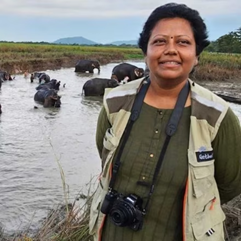
- Dr Sonali Ghosh, Field Director of Kaziranga National Park became the first Indian to receive the prestigious WCPA-Kenton Miller Award at the IUCN World Conservation Congress held in Abu Dhabi, UAE.
Kenton R. Miller Award
- Established in – 2006
- Awarding organisation – It is presented every two years by the World Commission on Protected Areas (WCPA).
- Note – WCPA is one of the six technical commissions of the International Union for Conservation of Nature (IUCN).
- Objective – The award honors individuals who demonstrate innovation and leadership in conserving national parks and protected areas, particularly in ensuring their long-term sustainability.
- Named after – Dr. Kenton R. Miller, a former IUCN Director General and a prominent global leader in protected area management.
Abel Prize 2025
Syllabus: Miscellaneous
Context
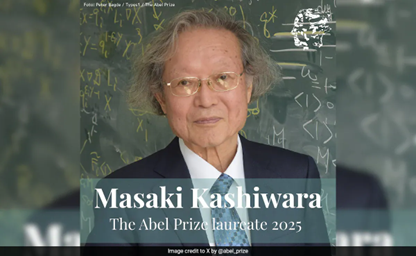
- Japanese mathematician Masaki Kashiwara was awarded the Abel Prize 2025 for contributions to algebraic analysis and representation theory.
Contributions of Masaki Kashiwara
- He pioneered the theory of D-modules, an algebraic framework to study systems of linear partial differential equations (PDEs).
- His work on sheaf theory, deepened understanding of how local analytical data connects to global geometric structure.
Abel Prize
- It is an international award recognizing outstanding scientific work in mathematics, often considered the equivalent of a Nobel Prize for mathematicians.
- Named after – 19th-century Norwegian mathematician Niels Henrik Abel.
- Awarded by: The Norwegian Academy of Science and Letters on behalf of the Government of Norway.
- It can be awarded to mathematicians of any age and nationality.
Notable Laureates
- Jean-Pierre Serre: First laureate (2003) for contributions in algebraic geometry and topology.
- Srinivasa S. R. Varadhan: Indian-origin mathematician, won in 2007.
- Michel Talagrand (France) For contributions to probability theory and functional analysis won in 2024.
Civil Registration System (CRS) 2023 Report
Syllabus: GS1 / Society and GS2 / Governance
Context
- The Registrar General of India (RGI) released the “Vital Statistics of India Based on the Civil Registration System (CRS)”,
Key Findings of the CRS 2023 Report
- Births Registered: 2.52 crore births were registered in 2023
- Deaths Registered: 86.6 lakh deaths were registered in 2023
- Sex Ratio at Birth (SRB):is the number of female births per 1,000 male births
- Lowest SRB: Jharkhand (899), Bihar (900), Telangana (906), Maharashtra (909), Gujarat (910), Haryana (911), and Mizoram (911).
- Highest SRB: Arunachal Pradesh (1,085), Nagaland (1,007), Goa (973), Tripura (972), and Kerala (967).
Additional Information – Civil Registration System (CRS)
- It is a unified process for the continuous, permanent, and compulsory recording of vital events such as births, deaths, and stillbirths.
- It does not include registration of marriages or divorces.
- The system operates under the Registration of Births and Deaths (RBD) Act, 1969, which mandates compulsory reporting of all births and deaths.
Nobel Prize 2025 Winners List
Context
- The 2025 Nobel Prizes in six categories —Physics, Chemistry, Physiology or Medicine, Literature, Peace, and Economic Sciences —were awarded.
Nobel Prize
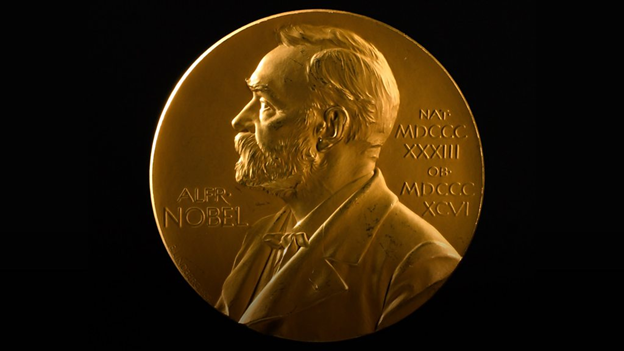
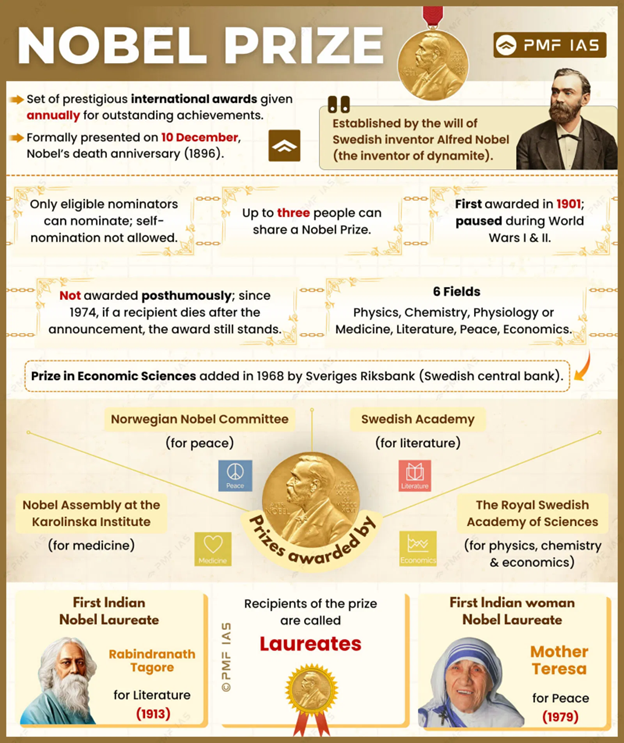
- It is a set of prestigious international awards given annually for outstanding achievements.
- Recipients of the prize are called
- It was established by the will of Swedish inventor Alfred Nobel (the inventor of dynamite).
- The first Nobel Prizes were awarded in 1901, and they have been awarded annually since then. They were not awarded during World War I (1914–1918) and II (1939–1945).
- It is formally presented on December 10, the anniversary of Nobel’s death in 1896.
- Given in 6 fields: Physics, Chemistry, Physiology or Medicine, Literature, Peace, and Economic Sciences.
- Prize in Economic Sciences was introduced in 1968 by Sveriges Riksbank (Swedish central bank)
- A Nobel Prize can be shared by up to three individual In the case of the peace prize, it can also be awarded to an organisation.
- To become a Nobel Prize laureate one must be nominated for a prize by an eligible nominator. Self-nomination is not allowed.
- The Nobel Prize cannot be awarded posthumously. However, since 1974, if the recipient dies after the prize has been announced, they can still be awarded it
Note
- First Indian Nobel Laureate was Rabindranath Tagore, for Literature (1913).
- The first Indian woman Nobel Laureate was Mother Teresa, for Peace (1979).
Nobel Prize in Chemistry 2025
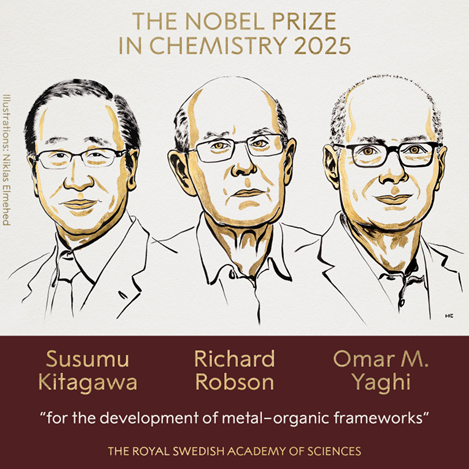
- Awarded by – Royal Swedish Academy of Sciences
- Awardees – Susumu Kitagawa (Japan), Richard Robson (Australia), and Omar M. Yaghi (USA)
- Achievement – for their groundbreaking development of metal-organic frameworks (MOFs).
Additional Information – Metal-Organic Frameworks (MOFs)
- They are crystalline, porous materials made of metal ions as “nodes” connected by organic molecules called “linkers.”
- Functionality: Their lattice structure creates large cavities that can store substances, catalyse reactions, or conduct electricity.
Nobel Prize in Physics 2025
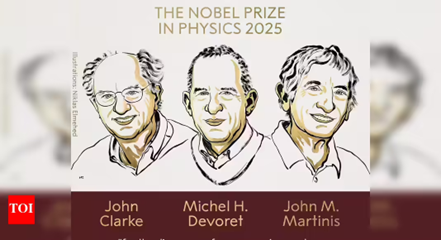
- Awarded by – Royal Swedish Academy of Sciences
- Awardees – John Clarke (UK), Michel Devoret (France), and John Martinis (USA)
- Achievement – for the discovery of macroscopic quantum mechanical tunnelling and energy quantisation in an electric circuit.
- Their discovery confirmed that quantum phenomena, once thought limited to subatomic particles, can also manifest in macroscopic systems, expanding the boundaries of quantum mechanics.
Nobel Prize in Physiology or Medicine 2025
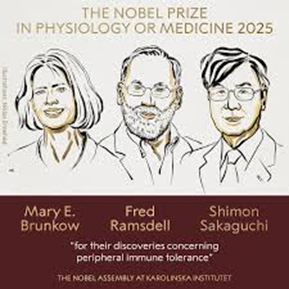
- Awarded by – Nobel Assembly at the Karolinska Institute in Stockholm, Sweden, for outstanding contributions to medical research.
Awardees –
- Shimon Sakaguchi (Japan) received the award for discovering regulatory T-cells.
- Mary E. Brunkow and Fred Ramsdell (USA) were honoured for identifying the Foxp3 gene, which controls immune regulation.
- Significance of the discovery – groundbreaking discoveries concerning peripheral immune tolerance that prevents the immune system from harming the body.
|
Did you know? ● First Laureate: In 1901, Emil von Behring received it for developing serum therapy to treat diphtheria. ● Indian–Origin Laureate: In 1968, Har Gobind Khorana became the first Indian winner for decoding the genetic code guiding protein synthesis. |
Nobel Prize in Economics 2025
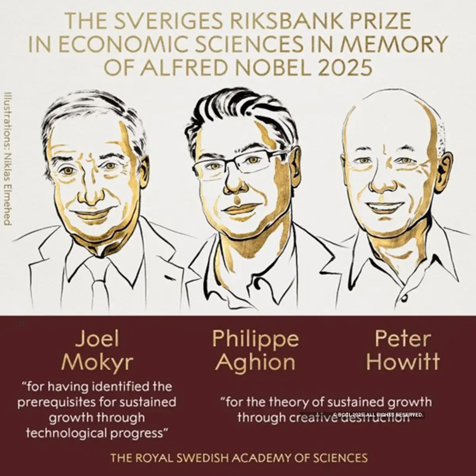
- Awarded by – Royal Swedish Academy of Sciences
- Awardees – Joel Mokyr, Philippe Aghion and Peter Howitt “
- Achievement – for having explained innovation-driven economic growth”.
- The official name for the Nobel Prize in Economics is the Sveriges Riksbank Prize in Economic Sciences in Memory of Alfred Nobel.
- It was established in 1968 by Sweden’s central bank (Sveriges Riksbank) in memory of Alfred Nobel, and first awarded in 1969.
Nobel Prize in Literature 2025
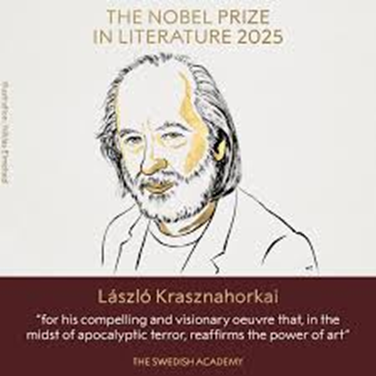
- Awarded by – Royal Swedish Academy of Sciences
- Awardee – to Hungarian novelist and screenwriter László Krasznahorkai.
- He is known for distinct long sentences that can span dozens of pages, his acclaimed works include Satantango (1985) and The Melancholy of Resistance (1989).
Nobel Peace Prize 2025
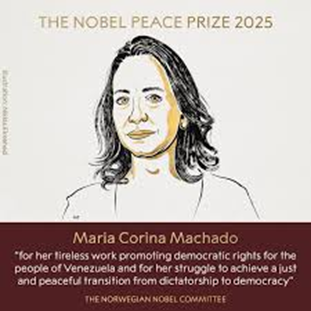
- Awarded by – Norwegian Nobel Committee
- Awardee – to Venezuelan opposition leader María Corina Machado.
- Achievement – She was honoured for promoting democratic rights and advocating a peaceful transition from dictatorship to democracy in Venezuela.
- Political Role: Machado, the leader of the Vente Venezuela party, has mobilised civic movements demanding judicial independence, electoral transparency, and human rights protection.
Leave a Reply