
VLGC Shivalik
Syllabus: GS3/Economy

Context
- The Union Minister of Ports, Shipping and Waterways (MoPSW) received India’s third Very Large Gas Carrier (VLGC), Shivalik,
Very Large Gas Carrier (VLGC), Shivalik
- It is built in South Korea and named after the Himalayan range.
- It is an 82,000 cubic metre LPG carrier equipped with advanced safety, temperature control, and operational systems.
- The vessel joins the Shipping Corporation of India Limited’s (SCI) two existing VLGCs — Sahyadri and Anandamayi.
- Significance – The arrival of Shivalik symbolizes India’s march toward maritime self-reliance.
Paramparagat Krishi Vikas Yojana (PKVY)
Syllabus: GS3/ Agriculture, GS3/ Environment
Context
- The Paramparagat Krishi Vikas Yojana (PKVY), launched in 2015 under the National Mission for Sustainable Agriculture, has emerged as a flagship initiative to promote organic farming in India.
Basics – Organic farming
- Organic farming is a sustainable agriculture system that excludes synthetic inputs like chemical fertilizers and pesticides.
- It relies on natural resources like crop residues, farmyard manure, and compost to maintain soil health and manage pests and diseases.
Organic farming in India
- India ranks at 4th place in organic farming globally in terms of area.
- Madhya Pradesh has the largest area under organic certification followed by Maharashtra, Rajasthan, Gujarat and Karnataka.
- Sikkim is India’s first fully organic state.
- India ranks first globally in terms of number of farmers practicing organic farming.
Paramparagat Krishi Vikas Yojana (PKVY)
- It was launched in 2015 under the National Mission for Sustainable Agriculture
- Aim – The schemes stress on end-to-end support to farmers engaged in organic farminge. from production to processing, certification and marketing and post-harvest management.
- Objective – to advance a scalable model of eco-agriculture that integrates low-cost, chemical-free techniques.
- Significance – to enhance food safety, income generation, and environmental sustainability.
150th anniversary of Vande Matram
Syllabus: GS1/ Culture
In Context
- The Union Cabinet announced nationwide celebration of the 150th anniversary of the national song ‘Vande Mataram’.
Vande Matram
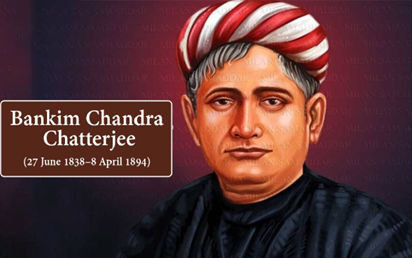
- Vande Mataram was composed by Bankim Chandra Chatterjee in Sanskrit and first appeared in the novel Anandamath(1882).
- Its first public recital by Rabindranath Tagore at the 1896 INC session gave it national exposure.
- The national song has equal status with Jana Gana Mana, as declared by a 1950 Presidential order.
- Article 51A(a) mandates respect for the anthem but not for a national song, indicating a sensitive balance.
- The song was a rallying cry for anti-colonial revolutionaries and a symbol of collective resolve during the independence movement.
Leprosy in India
Syllabus: GS2/ Health
Context
- India’s leprosy prevalence rate has fallen from 57.2 per 10,000 population in 1981 to just 0.57 in 2025.
Leprosy
- Leprosy, also known as Hansen’s disease.
- It is a chronic neuromuscular disorder. It is caused by several strains of Mycobacterium leprae.
- Leprosy can be cured with Multi-Drug Therapy (MDT).
National Leprosy Eradication Programme (NLEP)
- It is a Centrally Sponsored Scheme under the National Health Mission (NHM).
- Objective – It aims at eliminating leprosy in each of the districts by 2030.
- NIKUSTH- A real-time leprosy reporting software implemented across India..
Namchik Namphuk Coal Block
Syllabus: GS3/ Environment
In News
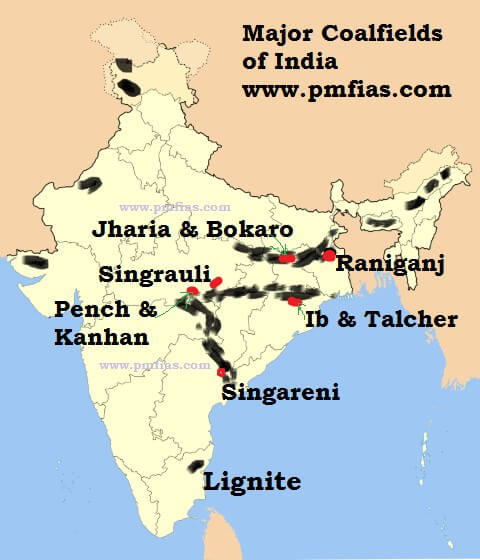
- Arunachal Pradesh has launched its first commercial coal mining project at the Namchik-Namphuk coal block in Changlang district.
Namchik-Namphuk Coal Block
- Location: Changlang district, southeastern Arunachal Pradesh, part of the Upper Assam coal belt region.
- Reserves: Estimated 5 crore tonnes of coal, enabling long-term production viability.
- Economic Impact: Expected to generate ₹100 crore annual revenue for the state.
- Environmental Features: Operates under Mission Green Coal Regions, focusing on land reclamation, afforestation, and eco-responsible mining.
- Social Impact: Creation of local employment; reduction of illegal mining activities.
- Strategic Alignment: Supports the PM EAST vision – balanced Northeast development.
Falling Camel Counts
Syllabus: GS3/Species in News
Context
- The Ministry of Fisheries, Animal Husbandry and Dairying is planning to launch the National Camel Sustainability Initiative (NCSI) — a national mission aimed at reversing the steady decline in India’s camel population.
Key findings –
- India is witnessing a rapid and alarming decline in its camel population, especially in the traditionally camel-rearing states of Rajasthan and Gujarat.
- According to the 20th Livestock Census, India’s camel population stood at 2.52 lakh in 2019, down from about 11 lakh in 1977 and 4 lakh in 2013.
- Nearly 90% of these camels are concentrated in Rajasthan and Gujarat.
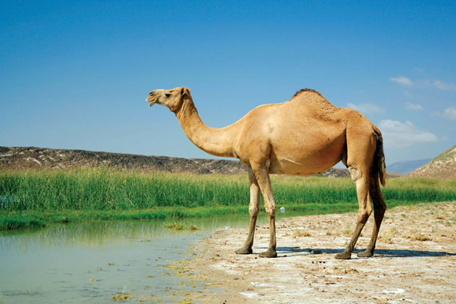
Camels in India – Dromedary Camel (Camelus dromedarius)
- India mainly has one species of camel. It is a one-humped camel, adapted to desert conditions.
- Chinkara and Camel are the two State Animals of Rajasthan.
Economic & Cultural Importance:
- Transport & Labor: Traditionally used for carrying goods, plowing, and transport in desert regions.
- Milk Production: Camel milk is nutritious and in demand.
- Tourism: Camel safaris are popular in Rajasthan.
- Cultural Festivals: Camel fairs, especially the Bikaner Camel Festival, celebrate the animal.
- Defense Use: Camels are used by the Border Security Force (BSF) in desert patrols.
Exercise KONKAN-25
Syllabus: GS3/Defence
Context
- India and the United Kingdom conducted the 2025 edition of Exercise KONKAN, an annual bilateral maritime exercise that began in 2004.
Exercise KONKAN-25
- Participating countries – India and the United Kingdom
- Type – It is an annual bilateral maritime exercise
Other India-UK Bilateral Exercises
- AJEYA WARRIOR (Army)
- Exercise Indradhanush (Air Force)
- Exercise Cobra Warrior (multinational air exercise hosted by the UK).
Leave a Reply